

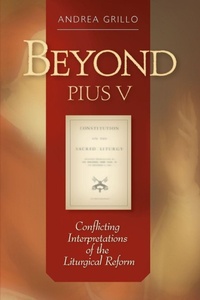
Beyond Pius V
Conflicting Interpretations of the Liturgical Reform
Published on 3. December 2013
Book
Paperback/Softback
140 pages
978-0-8146-6302-8 (ISBN)
Description
The reform of the liturgy is at risk, says Andrea Grillo. Recent developments have sown doubts and confusion within the church. While many authorities pay lip service to the importance of the liturgical reform that followed Vatican II and cite all the right documents, what they offer is "out of tune" with the fundamental reasons for the reform.
Grillo argues that the church today must refresh its collective memory of the essential meaning of the liturgical reform. For Grillo, this means understanding
* the meaning and significance of Vatican II in the history of the church in the twentieth century
* the key concept of "active participation"
* the core ideas of the original liturgical movement and the role they played during and after the reform of the liturgy
* what the reform has accomplished and what remains to be done
Beyond Pius V is not simply a set of pastoral observations. It is a strongly argued theological essay on the true meaning and purpose of liturgy and liturgical reform. That reform, Grillo says, must continue to challenge and provoke us, never to be reduced to the precious past of our ancestors; rather, like children who honor the legacy of their parents, we are called to carry on and nurture the life of the reform.
Grillo argues that the church today must refresh its collective memory of the essential meaning of the liturgical reform. For Grillo, this means understanding
* the meaning and significance of Vatican II in the history of the church in the twentieth century
* the key concept of "active participation"
* the core ideas of the original liturgical movement and the role they played during and after the reform of the liturgy
* what the reform has accomplished and what remains to be done
Beyond Pius V is not simply a set of pastoral observations. It is a strongly argued theological essay on the true meaning and purpose of liturgy and liturgical reform. That reform, Grillo says, must continue to challenge and provoke us, never to be reduced to the precious past of our ancestors; rather, like children who honor the legacy of their parents, we are called to carry on and nurture the life of the reform.
Reviews / Votes
"This book recalls for us the fundamental motives that led, with great effort, to the liturgical reforms of Vatican II. It is a timely reminder of forgotten truths of the liturgical movement, namely, that it was and is a question not only of reforming the liturgical books but of forming Christians themselves through profound and conscious participation in the liturgical rites and prayers. It provides conceptual tools for a deep theological consideration of the intentions of the reform as well as a way of confronting the theological questions that necessary emerge from Benedict XVI's motu proprio Summorum Pontificum." Jeremy Driscoll, OSB Pontifical Athenaeum Sant' Anselmo Mount Angel Seminary "Andrea Grillo advances the debate on the liturgical reform with definitive evidence: despite the conflict of interpretations on Sacrosanctum Concilium and the motu proprio Summorum Pontificum of 2007, the theology of the liturgy of Vatican II remains a key part of the great and irrepressible reformulation of the church's understanding of itself at Vatican II." Massimo Faggioli University of St. Thomas "In these five short but passionately written chapters, Andrea Grillo emphasizes how urgent it is to transcend the paralyzing polemics of recent years, provoked by reform of the liturgy, and to face with openness and determination the more fundamental but forgotten or as-yet-unknown aspects of the liturgical vision of Vatican II and of the early twentieth-century thinkers whose amazing insights prepared for it without intending to do so."Barry Hudock deserves commendation for introducing one of Italy's most prolific and highly respected theologians to the English-speaking world in such a clear and readable translation." Patrick Regan, OSB Professor Emeritus, Pontificio Ateneo Sant' Anselmo "Andrea Grillo's Beyond Pius V: Conflicting Interpretations of the Liturgical Reform is a bracing book! His passion and clear thinking have grabbed me by the lapels."Paul F. FordProfessor of Systematic Theology and Liturgy
St. John's Seminary
Camarillo, California This is a contribution not to be overlooked by scholars and pastors.
Paul Philibert, OP, Worship
More details
Edition
Revised ed.
Language
English
Place of publication
Collegeville, MN
United States
Product notice
Paperback (trade)
Dimensions
Height: 210 mm
Width: 140 mm
Thickness: 9 mm
Weight
186 gr
ISBN-13
978-0-8146-6302-8 (9780814663028)
Copyright in bibliographic data and cover images is held by Nielsen Book Services Limited or by the publishers or by their respective licensors: all rights reserved.
Schweitzer Classification
Other editions
Additional editions
E-Book
12/2013
Liturgical Press
€17.49
Available for download
Person
Andrea Grillo is professor of sacramental theology at the Pontifical Atheneum of Saint Anselm in Rome. He is the author, coauthor, or contributor of many works of liturgical and sacramental theology in Italian. Beyond Pius V is his first book to be published in English.
Content
Contents
Preface to the American Edition xi
Introduction xiii
Chapter 1
Vatican II and the "New Forms" of the Primacy of Mystery 1
1. The Second Vatican Council and Openness to the Other: A Question of Method 4
2. "Every Perceptible Element in Man" and the Persistent Temptation of Formalistic Reduction 6
3. The Liturgical Question between Anthropology and Theology: A Conciliar Synthesis That Remains Undone 7
Chapter 2
The Question of Active Participation, from Pius Parsch to Redemptionis Sacramentum 11
1. Parsch on Active Participation and Baptismal Priesthood 14
2. Parsch on Participation in the Liturgy 16
3. Ancient and Modern "Misunderstandings" in Parsch's Appraisal of Mediator Dei (1947) 19
4. Mediator Dei and Sacrosanctum Concilium: Two Different Understandings of Participation in the Liturgy 22
5. A Troubling Confirmation: The Recent Instruction Redemptionis Sacramentum 28
Chapter 3
Before and After Sacrosanctum Concilium: The Relevance of the Liturgical Movement 32
1. The Theological Method of the Liturgical Movement 36
2. The Two Anthropological Shifts of the Twentieth Century 42
3. A Different Account of the Development of the Liturgical Movement 48
4. The Two Meanings of Ressourcement 55
5. The Two Meanings of Liturgical Reform 58
6. A Brief Summary in Seven Theses 62
7. Five Examples to Clarify the Challenges of the Liturgical Movement Today 65
8. Conclusion 71
Chapter 4
The Liturgical Reform: Necessary but Insufficient 73
1. The Difficult Memory of the Liturgical Question (Allegro, ma non troppo) 76
2. The Reform of the Sacramental Triad: Form, Matter, Minister (Adagio cantabile a tre voci) 79
3. Hope, Despair, and Presumption in the Liturgical Reform (scherzo) 84
4. Conclusion: In Praise of the Truck Driver over Intellectual Arrogance (Rondo un poco capriccioso) 87
Chapter 5
Liturgical Reform and Virtual Reality: Benedict XVI's Motu Proprio Summorum Pontificum and the Ecclesia Dei Commission's Instruction Universae Ecclesiae 94
1. The Motu Proprio Summorum Pontificum: Two Forms of the Same Rite 95
2. The Letter to the Bishops: The Liturgical Reform Is Not Weakened 97
3. Critical Reflection: The Difference between Intentions and Effects, between Virtual and Real 99
4. A Preliminary Assessment, Open and Heartfelt 112
5. Universae or Introversae Ecclesiae? 115
Conclusion 119
Preface to the American Edition xi
Introduction xiii
Chapter 1
Vatican II and the "New Forms" of the Primacy of Mystery 1
1. The Second Vatican Council and Openness to the Other: A Question of Method 4
2. "Every Perceptible Element in Man" and the Persistent Temptation of Formalistic Reduction 6
3. The Liturgical Question between Anthropology and Theology: A Conciliar Synthesis That Remains Undone 7
Chapter 2
The Question of Active Participation, from Pius Parsch to Redemptionis Sacramentum 11
1. Parsch on Active Participation and Baptismal Priesthood 14
2. Parsch on Participation in the Liturgy 16
3. Ancient and Modern "Misunderstandings" in Parsch's Appraisal of Mediator Dei (1947) 19
4. Mediator Dei and Sacrosanctum Concilium: Two Different Understandings of Participation in the Liturgy 22
5. A Troubling Confirmation: The Recent Instruction Redemptionis Sacramentum 28
Chapter 3
Before and After Sacrosanctum Concilium: The Relevance of the Liturgical Movement 32
1. The Theological Method of the Liturgical Movement 36
2. The Two Anthropological Shifts of the Twentieth Century 42
3. A Different Account of the Development of the Liturgical Movement 48
4. The Two Meanings of Ressourcement 55
5. The Two Meanings of Liturgical Reform 58
6. A Brief Summary in Seven Theses 62
7. Five Examples to Clarify the Challenges of the Liturgical Movement Today 65
8. Conclusion 71
Chapter 4
The Liturgical Reform: Necessary but Insufficient 73
1. The Difficult Memory of the Liturgical Question (Allegro, ma non troppo) 76
2. The Reform of the Sacramental Triad: Form, Matter, Minister (Adagio cantabile a tre voci) 79
3. Hope, Despair, and Presumption in the Liturgical Reform (scherzo) 84
4. Conclusion: In Praise of the Truck Driver over Intellectual Arrogance (Rondo un poco capriccioso) 87
Chapter 5
Liturgical Reform and Virtual Reality: Benedict XVI's Motu Proprio Summorum Pontificum and the Ecclesia Dei Commission's Instruction Universae Ecclesiae 94
1. The Motu Proprio Summorum Pontificum: Two Forms of the Same Rite 95
2. The Letter to the Bishops: The Liturgical Reform Is Not Weakened 97
3. Critical Reflection: The Difference between Intentions and Effects, between Virtual and Real 99
4. A Preliminary Assessment, Open and Heartfelt 112
5. Universae or Introversae Ecclesiae? 115
Conclusion 119