

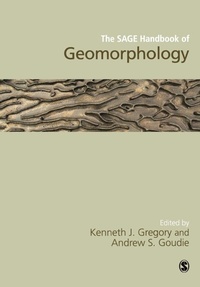
The SAGE Handbook of Geomorphology
1st Edition
Published on 30. April 2014
Book
Paperback/Softback
648 pages
978-1-4462-9584-7 (ISBN)
Description
Geomorphology is the study of the Earth's diverse physical land-surface features and the dynamic processes that shape these features. Examining natural and anthropogenic processes, The SAGE Handbook of Geomorphology is a comprehensive exposition of the fundamentals of geomorphology that examines form, process, and applications of the discipline.
Organized into five substantive sections, the Handbook is an overview of:
* Foundations and Relevance: including the nature and scope of geomorphology; the origins and development of geomorphology; the role and character of theory in geomorphology; geomorphology and environmental management; and geomorphology and society
* Techniques and Approaches: including observations and experiments; geomorphological mapping; the significance of models; process and form; dating surfaces and sediment; remote sensing in geomorphology; GIS in geomorphology; biogeomorphology; human activity
* Process and Environment: including the evolution of regolith; weathering; fluids, flows and fluxes; sediment transport and deposition; hill slopes; riverine environments; glacial geomorphology; periglacial environments; coastal environments; aeolian environments; tropical environments; karst and karst processes
* Environmental Change: including landscape evolution and tectonics; interpreting quaternary environments; environmental change; disturbance and responses to geomorphic systems
* Conclusion: including challenges and perspectives; and a concluding review
The Handbook has contributions from 48 international authors and was initially organized by the International Association of Geomorphologists. This will be a much-used and much-cited reference for researchers in Geomorphology, Physical Geography and the Environmental Sciences.
Organized into five substantive sections, the Handbook is an overview of:
* Foundations and Relevance: including the nature and scope of geomorphology; the origins and development of geomorphology; the role and character of theory in geomorphology; geomorphology and environmental management; and geomorphology and society
* Techniques and Approaches: including observations and experiments; geomorphological mapping; the significance of models; process and form; dating surfaces and sediment; remote sensing in geomorphology; GIS in geomorphology; biogeomorphology; human activity
* Process and Environment: including the evolution of regolith; weathering; fluids, flows and fluxes; sediment transport and deposition; hill slopes; riverine environments; glacial geomorphology; periglacial environments; coastal environments; aeolian environments; tropical environments; karst and karst processes
* Environmental Change: including landscape evolution and tectonics; interpreting quaternary environments; environmental change; disturbance and responses to geomorphic systems
* Conclusion: including challenges and perspectives; and a concluding review
The Handbook has contributions from 48 international authors and was initially organized by the International Association of Geomorphologists. This will be a much-used and much-cited reference for researchers in Geomorphology, Physical Geography and the Environmental Sciences.
Reviews / Votes
Geomorphology has been substantially transformed over the past couple of decades and it is fitting that the peak international body should generate a comprehensive description at this time. The book provides an overview of the whole discipline, instructive to those insiders who may have become absorbed in one of its many branches as well as to those outside the discipline, bringing them up to date on the state of geomorphology in the early 21st centuryGeographical Research
[The SAGE Handbook of Geomorphology is] aimed primarily at academics, researchers and postgraduate students... The handbook considered here comprises 33 chapters written and co-written by 49 contributors from around the world, but predominantly from North America, the UK and Australia. It is edited by two eminent and committed British geomorphologists with long careers and impeccable credentials for the task... [The SAGE Handbook of Geomorphology] provides
excellent up-to-date summaries of the current state of knowledge and reading lists for different areas of the subject, as well as succinct reviews of different stages of the historical development of the discipline.
Richard A Shakesby
Swansea University
More details
Language
English
Place of publication
London
United Kingdom
Target group
College/higher education
Professional and scholarly
Dimensions
Height: 244 mm
Width: 170 mm
Thickness: 34 mm
Weight
1097 gr
ISBN-13
978-1-4462-9584-7 (9781446295847)
Copyright in bibliographic data and cover images is held by Nielsen Book Services Limited or by the publishers or by their respective licensors: all rights reserved.
Schweitzer Classification
Other editions
Additional editions
Kenneth J. Gregory | Andrew S. Goudie
The SAGE Handbook of Geomorphology
E-Book
06/2011
1st Edition
SAGE Publications Ltd
from
€49.09
Available for download
Kenneth J. Gregory | Andrew S. Goudie
The SAGE Handbook of Geomorphology
Book
06/2011
1st Edition
SAGE Publications Inc
€202.20
Shipment within 10-20 days
Persons
Ken Gregory obtained his BSc, PhD and DSc from the University of London, was made CBE in 2007 for services to geography and higher education, and is currently President of the British Society for Geomorphology. Research interests include river channel change and management, palaeohydrology and the development of physical geography, and he has written more than 140 papers, authored and edited 30 books including The Earth's Land Surface (2010) and The SAGE Handbook of Geomorphology (2011). He has 3 Honorary degrees, and received the Founder's Medal of the Royal Geographical Society (1993), the Linton award of the BGRG (1999), and the Geographical medal of the Royal Scottish Geographical Society (2000).
Andrew Goudie is Professor of Geography at the University of Oxford and President of the British Institute in Eastern Africa.
Andrew Goudie is Professor of Geography at the University of Oxford and President of the British Institute in Eastern Africa.
Content
Introduction to the Discipline of Geomorphology - Kenneth J. Gregory and Andrew Goudie
PART ONE: FOUNDATION AND RELEVANCE
Geomorphology: Its Early History - Andrew Goudie
The Nature of Explanation in Geomorphology - Keith Richards and Nicholas J. Clifford
The Role and Character of Theory in Geomorphology - Bruce L. Rhoads and Colin E. Thorn
Geomorphology in Environmental Management - Peter W. Downs and Derek B. Booth
Geomorphology and Society - Mathias Kondolf and Herve Piegay
PART TWO: TECHNIQUES AND APPROACHES
Observations and Experiments - Michael Church
Geomorphological Mapping - Mike J. Smith and Colin F. Pain
The Significance of Models in Geomorphology: From Concepts to Experiments - Nicholas A. Odoni and Stuart N. Lane
Process and Form - Richard Huggett
Dating Surfaces and Sediments - Tony G. Brown
Remote Sensing in Geomorphology - Tom G. Farr
Geographic Information Systems in Geomorphology - Takashi Oguchi and Thad A. Wasklewicz
Biogeomorphology - Heather Viles
Human Activity and Geomorphology - Denes Loczy and Laszlo S to
PART THREE: PROCESS AND ENVIRONMENTS
The Evolution of Regolith - Graham Taylor
Rock Surface and Weathering: Process and Form - David A. Robinson and Cherith A. Moses
Fluids, Flows and Fluxes in Geomorphology - Andre G. Roy and Helene Lamarre
Sediment Transport and Deposition - Jeff Warburton
Hillslopes - David Petley
Riverine Environments - Jim Pizzuto
Glacial Geomorphology - John Menzies
Periglacial Environments - Hugh French
Coastal Environments - Colin D. Woodroffe, Peter J. Cowell, Mark E. Dickson
Aeolian Environments - Joanna E. Bullard
Tropical Environments - Michael Thomas and Vishwas Kale
Geomorphology Underground: The Study of Karst and Karst Processes - D. C. Ford, and P. W. Williams,
PART FOUR: ENVIRONMENTAL CHANGE
Landscape Evolution and Tectonics - Paul Bishop
Interpreting Quaternary Environments - Anne Mather
Environmental Change - Martin Williams
Disturbance and Responses in Geomorphic Systems - Jonathan D. Phillips
PART FIVE: CONCLUSION
Challenges and Perspectives - Mike Crozier, P. Bierman, Andreas Lang and Victor R. Baker
Conclusion - Kenneth J. Gregory and Andrew Goudie
PART ONE: FOUNDATION AND RELEVANCE
Geomorphology: Its Early History - Andrew Goudie
The Nature of Explanation in Geomorphology - Keith Richards and Nicholas J. Clifford
The Role and Character of Theory in Geomorphology - Bruce L. Rhoads and Colin E. Thorn
Geomorphology in Environmental Management - Peter W. Downs and Derek B. Booth
Geomorphology and Society - Mathias Kondolf and Herve Piegay
PART TWO: TECHNIQUES AND APPROACHES
Observations and Experiments - Michael Church
Geomorphological Mapping - Mike J. Smith and Colin F. Pain
The Significance of Models in Geomorphology: From Concepts to Experiments - Nicholas A. Odoni and Stuart N. Lane
Process and Form - Richard Huggett
Dating Surfaces and Sediments - Tony G. Brown
Remote Sensing in Geomorphology - Tom G. Farr
Geographic Information Systems in Geomorphology - Takashi Oguchi and Thad A. Wasklewicz
Biogeomorphology - Heather Viles
Human Activity and Geomorphology - Denes Loczy and Laszlo S to
PART THREE: PROCESS AND ENVIRONMENTS
The Evolution of Regolith - Graham Taylor
Rock Surface and Weathering: Process and Form - David A. Robinson and Cherith A. Moses
Fluids, Flows and Fluxes in Geomorphology - Andre G. Roy and Helene Lamarre
Sediment Transport and Deposition - Jeff Warburton
Hillslopes - David Petley
Riverine Environments - Jim Pizzuto
Glacial Geomorphology - John Menzies
Periglacial Environments - Hugh French
Coastal Environments - Colin D. Woodroffe, Peter J. Cowell, Mark E. Dickson
Aeolian Environments - Joanna E. Bullard
Tropical Environments - Michael Thomas and Vishwas Kale
Geomorphology Underground: The Study of Karst and Karst Processes - D. C. Ford, and P. W. Williams,
PART FOUR: ENVIRONMENTAL CHANGE
Landscape Evolution and Tectonics - Paul Bishop
Interpreting Quaternary Environments - Anne Mather
Environmental Change - Martin Williams
Disturbance and Responses in Geomorphic Systems - Jonathan D. Phillips
PART FIVE: CONCLUSION
Challenges and Perspectives - Mike Crozier, P. Bierman, Andreas Lang and Victor R. Baker
Conclusion - Kenneth J. Gregory and Andrew Goudie