

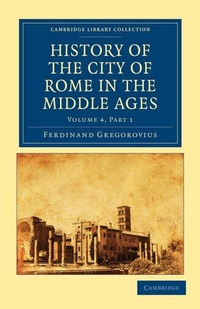
History of the City of Rome in the Middle Ages
Published on 10. June 2010
Book
Paperback/Softback
336 pages
978-1-108-01503-5 (ISBN)
Description
Ferdinand Gregorovius (1821-1891) was a celebrated German medieval historian. After studying philosophy and theology at the University of Koenigsberg, Gregorovius moved to Rome in 1852, and became immersed in researching the medieval history of the city. First published in 1872, his monumental study of medieval Rome was the first modern account of the subject, and became the standard reference. This English translation of the fourth German edition appeared between 1894 and 1902. In his work Gregorovius discusses the political, social and cultural changes in the city from 400 to 1534, making extensive use of primary sources. Gregorovius also includes the Renaissance in his study, showing how medieval thought and events influenced political and cultural life and thought during the Renaissance. Volume 4, Part 1 covers the period 1000-1100, describing the culture of Rome in the eleventh century and the sack of the city in 1084.
More details
Series
Language
English
Place of publication
Cambridge
United Kingdom
Target group
College/higher education
Product notice
Paperback (trade)
Illustrations
Worked examples or Exercises
Dimensions
Height: 216 mm
Width: 140 mm
Thickness: 20 mm
Weight
475 gr
ISBN-13
978-1-108-01503-5 (9781108015035)
Copyright in bibliographic data and cover images is held by Nielsen Book Services Limited or by the publishers or by their respective licensors: all rights reserved.
Schweitzer Classification
Persons
Content
Book VII. History of the City of Rome in the Eleventh Century: 1. Position of the city of Rome in the eleventh century in universal history; 2. The Romans drive Benedict IX out of the city and raise Sylvester in his stead; 3. Hildebrand's programme; 4. Alexander II; 5. Death of Alexander II; 6. Henry IV advances against Rome (1081); 7. Desiderius is raised by force to the papal chair as Victor III.