

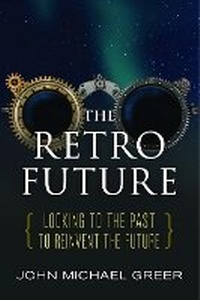
The Retro Future
Looking to the Past to Reinvent the Future
Published on 21. August 2017
Book
Paperback/Softback
256 pages
978-0-86571-866-1 (ISBN)
Description
The author of The Long Descent examines a solution for the troubles of our modern age: technical regression.
To most people paying attention to the collision between industrial society and the hard limits of a finite planet, it's clear that things are going very, very wrong. We no longer have unlimited time and resources to deal with the crises that define our future, and the options are limited to the tools we have on hand right now.
This book is about one very powerful option: deliberate technological regression.
Technological regression isn't about "going back"-it's about using the past as a resource to meet the needs of the present. It starts from the recognition that older technologies generally use fewer resources and cost less than modern equivalents, and it embraces the heresy of technological choice-our ability to choose or refuse the technologies pushed by corporate interests.
People are already ditching smartphones and going back to "dumb phones" and land lines and e-book sales are declining while printed books rebound. Clear signs among many that blind faith in progress is faltering and opening up the possibility that the best way forward may well involve going back.
A must-read for anyone willing to think the unthinkable and embrace the possibilities of a retro future.
Praise for The Retro Future
"Whether or not you accept John Michael Greer's argument that a deindustrialized future is inevitable, you'll appreciate his call for the freedom to select the best technologies of the past-worthy and sustainable tools, not pernicious prosthetics. Greer's vision of a "post-progress" world is clear, smart, and ultimately hopeful." -Richard Polt, professor of philosophy, Xavier University; author, The Typewriter Revolution: A Typist's Companion for the 21st Century
"What might your life be like without an automobile, TV, or a mobile phone? Ask John Michael Greer, who lives that way and recommends it as practice for the soon-to-be-normal. Greer says we are embarked upon the post-progress era. Climate change, loose nukes, and resource exhaustion are among its many challenges. In The Retro Future, Greer looks backward to mark the way forward." -Albert Bates, author, The Post-Petroleum Survival Guide, The Biochar Solution, and The Paris Agreement
To most people paying attention to the collision between industrial society and the hard limits of a finite planet, it's clear that things are going very, very wrong. We no longer have unlimited time and resources to deal with the crises that define our future, and the options are limited to the tools we have on hand right now.
This book is about one very powerful option: deliberate technological regression.
Technological regression isn't about "going back"-it's about using the past as a resource to meet the needs of the present. It starts from the recognition that older technologies generally use fewer resources and cost less than modern equivalents, and it embraces the heresy of technological choice-our ability to choose or refuse the technologies pushed by corporate interests.
People are already ditching smartphones and going back to "dumb phones" and land lines and e-book sales are declining while printed books rebound. Clear signs among many that blind faith in progress is faltering and opening up the possibility that the best way forward may well involve going back.
A must-read for anyone willing to think the unthinkable and embrace the possibilities of a retro future.
Praise for The Retro Future
"Whether or not you accept John Michael Greer's argument that a deindustrialized future is inevitable, you'll appreciate his call for the freedom to select the best technologies of the past-worthy and sustainable tools, not pernicious prosthetics. Greer's vision of a "post-progress" world is clear, smart, and ultimately hopeful." -Richard Polt, professor of philosophy, Xavier University; author, The Typewriter Revolution: A Typist's Companion for the 21st Century
"What might your life be like without an automobile, TV, or a mobile phone? Ask John Michael Greer, who lives that way and recommends it as practice for the soon-to-be-normal. Greer says we are embarked upon the post-progress era. Climate change, loose nukes, and resource exhaustion are among its many challenges. In The Retro Future, Greer looks backward to mark the way forward." -Albert Bates, author, The Post-Petroleum Survival Guide, The Biochar Solution, and The Paris Agreement
More details
Language
English
Place of publication
Gabriola Island
United States
Product notice
Paperback (trade)
Unsewn / adhesive bound
Illustrations
1 Plates, color
Dimensions
Height: 229 mm
Width: 152 mm
Thickness: 13 mm
Weight
426 gr
ISBN-13
978-0-86571-866-1 (9780865718661)
Copyright in bibliographic data and cover images is held by Nielsen Book Services Limited or by the publishers or by their respective licensors: all rights reserved.
Schweitzer Classification
Other editions
Additional editions
E-Book
09/2021
New Society Publishers
€18.18
Available for download
Person
One of the most consistently original social critics on the contemporary scene, John Michael Greer is the author of more than forty published books, including After Progress and Dark Age America, as well as the widely read weekly blog The Archdruid Report. He lives in an old red brick mill town in the Appalachians with his wife Sara.
Content
Preface
One: The End of Progress
Two: The Delusion of Control
Three: Going Forward by Going Back
Four: The Heresy of Technological Choice
Five: Seven Sustainable Technologies
Six: Mentats Wanted, Will Train
Seven: The Butlerian Carnival
Eight: The Future of Civilization
Notes
Bibliography
Index
One: The End of Progress
Two: The Delusion of Control
Three: Going Forward by Going Back
Four: The Heresy of Technological Choice
Five: Seven Sustainable Technologies
Six: Mentats Wanted, Will Train
Seven: The Butlerian Carnival
Eight: The Future of Civilization
Notes
Bibliography
Index