

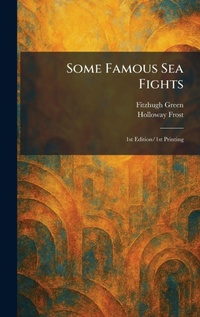
Some Famous Sea Fights
Description
"Some Famous Sea Fights" offers a comprehensive and gripping survey of the most pivotal naval engagements across history. Written by naval experts Fitzhugh Green and Holloway Frost, this work explores the evolution of maritime warfare from the ancient era to the early 20th century. The authors detail the strategic maneuvers, technological advancements, and the sheer human courage that defined legendary encounters on the high seas.
From the triremes of the Mediterranean to the massive steel dreadnoughts of the World War era, the book examines how sea power has shaped the destinies of nations. Readers will find in-depth accounts of critical clashes, highlighting the tactical decisions of renowned admirals and the geopolitical impact of their victories and defeats. "Some Famous Sea Fights" is an essential resource for military historians and maritime enthusiasts alike, providing a clear and authoritative look at the battles that secured control of the oceans and altered the course of human history. The narrative style combines historical rigor with a compelling storytelling approach, making the complex world of naval tactics accessible to a broad audience.
This work has been selected by scholars as being culturally important, and is part of the knowledge base of civilization as we know it. This work was reproduced from the original artifact, and remains as true to the original work as possible. Therefore, you may see the original copyright references, library stamps (as most of these works have been housed in our most important libraries around the world), and other notations in the work.
This work is in the public domain in the United States of America, and possibly other nations. Within the United States, you may freely copy and distribute this work, as no entity (individual or corporate) has a copyright on the body of the work.
As a reproduction of a historical artifact, this work may contain missing or blurred pages, poor pictures, errant marks, etc. Scholars believe, and we concur, that this work is important enough to be preserved, reproduced, and made generally available to the public. We appreciate your support of the preservation process, and thank you for being an important part of keeping this knowledge alive and relevant.