

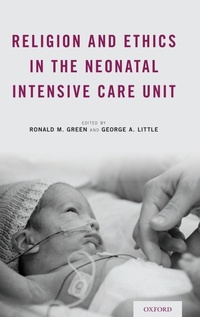
Religion and Ethics in the Neonatal Intensive Care Unit
Published on 10. October 2019
Book
Hardback
280 pages
978-0-19-063685-2 (ISBN)
Description
Each year, neonatal Intensive care units (NICUs) in the U.S. and around the world help thousands of sick or premature newborns survive. NICUs are committed to the ideals of family-centered care, which encourages shared decision-making between parents and NICU caregivers. In cases of infants with conditions marked by high mortality, morbidity, or great suffering, family-centered care affirms the right of parents to assist in making decisions regarding aggressive treatment for their infant. Often, these parents' difficult and intimate decisions are shaped profoundly by their religious beliefs. In light of this, what precisely are the teachings of the major world religious traditions about the status and care of the premature or sick newborn? Few studies have grappled with what major religious traditions teach about the care of the newborn or how these teachings may bear on parents' decisions.
This volume seeks to fill this gap, providing information on religious teachings about the newborn to the multidisciplinary teams of NICU professionals (neonatologists, advance practice nurses, social workers), as well as to parents of NICU patients, and students of bioethics. In chapters dealing with Judaism, Catholicism, Denominational Protestantism, Evangelical Protestantism, African American Protestantism, Sunni and Shi'a Islam, Hinduism, Buddhism, Navajo religion, and Seventh Day Adventism, leading scholars develop the teachings of these traditions on the status, treatment, and ritual accompaniments of care of the premature or sick newborn.
This is an essential book that will serve as a first resort for clinicians who need to understand the religious dynamics influencing anyone making a difficult decision about her sick newborn.
This volume seeks to fill this gap, providing information on religious teachings about the newborn to the multidisciplinary teams of NICU professionals (neonatologists, advance practice nurses, social workers), as well as to parents of NICU patients, and students of bioethics. In chapters dealing with Judaism, Catholicism, Denominational Protestantism, Evangelical Protestantism, African American Protestantism, Sunni and Shi'a Islam, Hinduism, Buddhism, Navajo religion, and Seventh Day Adventism, leading scholars develop the teachings of these traditions on the status, treatment, and ritual accompaniments of care of the premature or sick newborn.
This is an essential book that will serve as a first resort for clinicians who need to understand the religious dynamics influencing anyone making a difficult decision about her sick newborn.
Reviews / Votes
Overall this is a well written, fascinating and useful book. * Dr. Pam Cairns, Consultant Neonatologist, St Michaels Hospital, European Association of Centres of Medical Ethics *More details
Language
English
Place of publication
New York
United States
Target group
College/higher education
Illustrations
1
Dimensions
Height: 240 mm
Width: 161 mm
Thickness: 19 mm
Weight
581 gr
ISBN-13
978-0-19-063685-2 (9780190636852)
Copyright in bibliographic data and cover images is held by Nielsen Book Services Limited or by the publishers or by their respective licensors: all rights reserved.
Schweitzer Classification
Other editions
Additional editions
Ronald M. Green | George A. Little
Religion and Ethics in the Neonatal Intensive Care Unit
E-Book
09/2019
OUP eBook
€55.49
Available for download
Ronald M. Green | George A. Little
Religion and Ethics in the Neonatal Intensive Care Unit
E-Book
08/2019
OUP eBook
€55.49
Available for download
Persons
Ronald M. Green is Emeritus Professor for the Study of Ethics and Human Values at Dartmouth College. He is a member of the Department of Community and Family Medicine at Dartmouth's Geisel School of Medicine. In 1996 and 1997, Professor Green was the founding director of the Office of Genome Ethics at the National Human Genome Research Institute of the National Institutes of Health. He is the author or editor of thirteen books, including Babies by Design: The Ethics of Genetic Choice (Yale University Press, 2007), and Suffering and Bioethics (co-edited with Nathan Palpant, Oxford University Press, 2014). In 2005, Professor Green was named a Fellow of the John Simon Guggenheim Memorial Foundation.
George A. Little is Active Emeritus Professor of Pediatrics and Obstetrics and Gynecology, Geisel School of Medicine at Dartmouth. He completed his clinical training in Pediatrics at the University of Vermont and in Neonatal-Perinatal Medicine at the University of Colorado. He is a
Fellow of the American Academy of Pediatrics and an Honorary Fellow of the American College of Obstetrics and Gynecology. He is emeritus Department Chair of Maternal and Child Medicine at the Dartmouth-Hitchcock Medical Center. He was awarded the Virginia Apgar Award of the American Academy of Pediatrics.
George A. Little is Active Emeritus Professor of Pediatrics and Obstetrics and Gynecology, Geisel School of Medicine at Dartmouth. He completed his clinical training in Pediatrics at the University of Vermont and in Neonatal-Perinatal Medicine at the University of Colorado. He is a
Fellow of the American Academy of Pediatrics and an Honorary Fellow of the American College of Obstetrics and Gynecology. He is emeritus Department Chair of Maternal and Child Medicine at the Dartmouth-Hitchcock Medical Center. He was awarded the Virginia Apgar Award of the American Academy of Pediatrics.
Editor
The Eunice and Julian Cohen Professor Emeritus for the Study of Ethics and Human ValuesThe Eunice and Julian Cohen Professor Emeritus for the Study of Ethics and Human Values, Dartmouth College
Professor of Pediatrics and of Obstetrics and GynecologyProfessor of Pediatrics and of Obstetrics and Gynecology, Dartmouth Medical School and the Dartmouth-Hitchcock Medical Center
Content
Introduction
Chapter 1: Judaism and Neonatology
Chapter 2: Catholicism and the Neonatal Context
Chapter 3: Reading Tragedy Through the Christian Story: An Anabaptist Perspective
Chapter 4: Spirituality in a Time of Crisis: A Protestant Christian Perspective
Chapter 5: Muslim Biomedical Ethics of Neonatal Care: Theory, Praxis, and Authority
Chapter 6: A Muslim Neonatologist in a Canadian NICU
Chapter 7: Shiva's Babies: Hindu Perspectives on the Treatment of High-Risk Newborn Infants
Chapter 8: Life Before Birth: Buddhist Perspectives on Neonatal Care
Chapter 9: How Age-Old Cultural Tenets Complicate the Care of Premature or Sick Navajo Newborns
Chapter 10: Moral Status and Care of Impaired Newborns: An African-American Protestant Perspective
Chapter 11: Seventh-Day Adventists and Care for the Newborn
Afterword
Chapter 1: Judaism and Neonatology
Chapter 2: Catholicism and the Neonatal Context
Chapter 3: Reading Tragedy Through the Christian Story: An Anabaptist Perspective
Chapter 4: Spirituality in a Time of Crisis: A Protestant Christian Perspective
Chapter 5: Muslim Biomedical Ethics of Neonatal Care: Theory, Praxis, and Authority
Chapter 6: A Muslim Neonatologist in a Canadian NICU
Chapter 7: Shiva's Babies: Hindu Perspectives on the Treatment of High-Risk Newborn Infants
Chapter 8: Life Before Birth: Buddhist Perspectives on Neonatal Care
Chapter 9: How Age-Old Cultural Tenets Complicate the Care of Premature or Sick Navajo Newborns
Chapter 10: Moral Status and Care of Impaired Newborns: An African-American Protestant Perspective
Chapter 11: Seventh-Day Adventists and Care for the Newborn
Afterword