

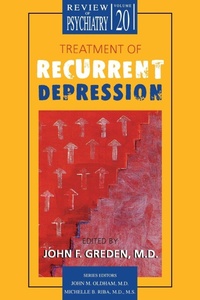
Treatment of Recurrent Depression
Published on 30. June 2001
Book
Paperback/Softback
214 pages
978-1-58562-025-8 (ISBN)
Description
Based on powerful epidemiological data such as numbers
afflicted, mortality rates from suicide, personal and familial consequences,
and skyrocketing fiscal costs, major depressive disorder (MDD) has the sad
and ignominious distinction of being a leader among disabling disorders
worldwide.
With lifetime prevalence risks of 13% for men and 21% for
women, the magnitude of this crisis cannot be understated. This hard-hitting
volume focuses on recurrences-perhaps most important among the many factors
(others include extreme underdiagnosis and undertreatment, genetic
vulnerability, frequent recurrences, severe stigma and poor adherence with
maintenance treatment, and brain tissue degenerative changes associated with
recurrences and chronic depression) that contribute to MDD's high
morbidity.
Following an introduction by the editor detailing the
overwhelming personal and societal burden created by MDD, the distinguished
authors of this volume emphasize five critical topics:
* The lifetime impact of gender on recurrent MDD in women,
emphasizing the clinical features, treatment, and prevention strategies of
the illness during three key periods of hormone transition (adolescence,
childbearing years, and middle life) and including recommendations on where
future research should focus.
* Treatment strategies for chronic and
recurrent depression to help prevent acute episodes from developing
into long-term depression, specifically addressing the continuing question
of whether pharmacotherapy and psychotherapy combinations are superior to
either alone.
* Prevention of recurrences in bipolar patients,
updating the demonstrated benefits of several new anticonvulsant mood
stabilizers and integrative treatment approaches and suggesting that
treatment success depends on a multifaceted approach that combines old and
new pharmacotherapy.
* Potential applications of new somatic
treatment strategies involving minimally invasive brain stimulation
that have greatly reduced the stigma but done little to advance the
diagnosis and treatment of neuropsychiatric illnesses, with exciting data
suggesting the efficacy of vagal nerve stimulation (VNS) and repetitive
transcranial magnetic stimulation (TMS).
* A "call to arms" with
updated recommendations on how to ensure demonstrable, lasting progress
in preventing recurrences of depression, which-along with other
chronic diseases such as diabetes, heart disease, and
schizophrenia-progresses throughout life unless actively treated.
This highly informative volume, clearly written and exceptionally
well referenced, is a "must-read" for every clinician, including specialists
in depression and clinical neurosciences, primary care physicians and mental
health clinicians interested in learning more about how to successfully
treat what remains one of our most recalcitrant, debilitating illnesses.
afflicted, mortality rates from suicide, personal and familial consequences,
and skyrocketing fiscal costs, major depressive disorder (MDD) has the sad
and ignominious distinction of being a leader among disabling disorders
worldwide.
With lifetime prevalence risks of 13% for men and 21% for
women, the magnitude of this crisis cannot be understated. This hard-hitting
volume focuses on recurrences-perhaps most important among the many factors
(others include extreme underdiagnosis and undertreatment, genetic
vulnerability, frequent recurrences, severe stigma and poor adherence with
maintenance treatment, and brain tissue degenerative changes associated with
recurrences and chronic depression) that contribute to MDD's high
morbidity.
Following an introduction by the editor detailing the
overwhelming personal and societal burden created by MDD, the distinguished
authors of this volume emphasize five critical topics:
* The lifetime impact of gender on recurrent MDD in women,
emphasizing the clinical features, treatment, and prevention strategies of
the illness during three key periods of hormone transition (adolescence,
childbearing years, and middle life) and including recommendations on where
future research should focus.
* Treatment strategies for chronic and
recurrent depression to help prevent acute episodes from developing
into long-term depression, specifically addressing the continuing question
of whether pharmacotherapy and psychotherapy combinations are superior to
either alone.
* Prevention of recurrences in bipolar patients,
updating the demonstrated benefits of several new anticonvulsant mood
stabilizers and integrative treatment approaches and suggesting that
treatment success depends on a multifaceted approach that combines old and
new pharmacotherapy.
* Potential applications of new somatic
treatment strategies involving minimally invasive brain stimulation
that have greatly reduced the stigma but done little to advance the
diagnosis and treatment of neuropsychiatric illnesses, with exciting data
suggesting the efficacy of vagal nerve stimulation (VNS) and repetitive
transcranial magnetic stimulation (TMS).
* A "call to arms" with
updated recommendations on how to ensure demonstrable, lasting progress
in preventing recurrences of depression, which-along with other
chronic diseases such as diabetes, heart disease, and
schizophrenia-progresses throughout life unless actively treated.
This highly informative volume, clearly written and exceptionally
well referenced, is a "must-read" for every clinician, including specialists
in depression and clinical neurosciences, primary care physicians and mental
health clinicians interested in learning more about how to successfully
treat what remains one of our most recalcitrant, debilitating illnesses.
Reviews / Votes
This concise and clear presentation provides easy tounderstand statistical information about prevalence and types of treatment
of recurrent depression. * Doody Health Science Review * This is the most complete and organized presentation I have
ever seen for identification and acute and maintenance treatment of
recurrent major depression. -- Barbara Gambill Sanders, M.S., M.S.W. * Psychiatric Services *
More details
Language
English
Place of publication
VA
United States
Target group
College/higher education
Professional and scholarly
US School Grade: College Graduate Student and over
Product notice
Paperback (trade)
Illustrations
Not illustrated
Dimensions
Height: 229 mm
Width: 152 mm
Thickness: 11 mm
Weight
286 gr
ISBN-13
978-1-58562-025-8 (9781585620258)
Copyright in bibliographic data and cover images is held by Nielsen Book Services Limited or by the publishers or by their respective licensors: all rights reserved.
Schweitzer Classification
Other editions
Additional editions
John F. Greden
Treatment of Recurrent Depression
E-Book
08/2008
1st Edition
American Psychiatric Publishing
€101.49
Available for download
Persons
John F. Greden, M.D., is Rachel Upjohn Professor of
Psychiatry and Clinical Neurosciences, Chair of the Department of
Psychiatry, Senior Research Scientist at the Mental Health Research
Institute, and Director of The University of Michigan Depression Center at
The University of Michigan in Ann Arbor, Michigan.
Psychiatry and Clinical Neurosciences, Chair of the Department of
Psychiatry, Senior Research Scientist at the Mental Health Research
Institute, and Director of The University of Michigan Depression Center at
The University of Michigan in Ann Arbor, Michigan.
Content
Contributors
Introduction to the Review of Psychiatry
Series
Chapter 1. Recurrent depression and its overwhelming
burden
Chapter 2. Recurrent depression in women throughout the life
span
Chapter 3. Chronic and recurrent depression: Pharmacotherapy and
psychotherapy combinations
Chapter 4. Prevention of recurrences in
patients with bipolar disorder: The best of the old and the new
Chapter
5. New depression treatment strategies: What does the future hold for
therapeutic uses of minimally invasive brain stimulation?
Chapter 6.
Clinical prevention of recurrent depression: The need for paradigm
shifts
Index
Introduction to the Review of Psychiatry
Series
Chapter 1. Recurrent depression and its overwhelming
burden
Chapter 2. Recurrent depression in women throughout the life
span
Chapter 3. Chronic and recurrent depression: Pharmacotherapy and
psychotherapy combinations
Chapter 4. Prevention of recurrences in
patients with bipolar disorder: The best of the old and the new
Chapter
5. New depression treatment strategies: What does the future hold for
therapeutic uses of minimally invasive brain stimulation?
Chapter 6.
Clinical prevention of recurrent depression: The need for paradigm
shifts
Index