

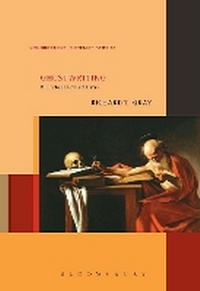
Ghostwriting
W. G. Sebald's Poetics of History
Published on 30. May 2019
Book
Paperback/Softback
464 pages
978-1-5013-5261-4 (ISBN)
Description
Ghostwriting provides the first comprehensive analysis of the fictional prose narratives of one of contemporary Germany's most recognized authors, the emigre writer W. G. Sebald. Examining Sebald's well-known published texts in the context of largely unknown unpublished works, and informed by documents and information from Sebald's literary estate, this book offers a detailed portrait of his characteristic literary techniques and how they emerged and matured out of the practices and attitudes he represented in his profession as a literary scholar.
The title "Ghostwriting" signals the convergence in Sebald's works of a set of diverse historical questions, philosophical views, and literary practices. Many historical ghosts haunt Sebald's narratives on the level of story. Moreover, Sebald's narrator plays the role of a ghostwriter in the profound sense that his stories fictionally re-enact the histories of obscure, but once-living individuals whose lives they revitalize, and whose fates are tied up with the most virulent historical conjunctures of the modern world. This study thus seeks to comprehend the constitutive elements of Sebald's "poetics of history," his implementation of literary tools for effective historical memorializing.
The title "Ghostwriting" signals the convergence in Sebald's works of a set of diverse historical questions, philosophical views, and literary practices. Many historical ghosts haunt Sebald's narratives on the level of story. Moreover, Sebald's narrator plays the role of a ghostwriter in the profound sense that his stories fictionally re-enact the histories of obscure, but once-living individuals whose lives they revitalize, and whose fates are tied up with the most virulent historical conjunctures of the modern world. This study thus seeks to comprehend the constitutive elements of Sebald's "poetics of history," his implementation of literary tools for effective historical memorializing.
Reviews / Votes
A truly magisterial scholarly work on a writer who continues to inspire a small industry of academic labor... In his new 464-page book Gray has produced what may very well be the definitive text on Sebald for both languages and readerships. * Gegenwartsliteratur: Ein germanistisches Jahrbuch (A German Studies Yearbook) * Richard T. Gray is a remarkable reader of W. G. Sebald. Meticulous in his attention to detail as well as learned in understanding of the broader contexts, he teaches us new ways to think about this enigmatic writer. * Carol Jacobs, Birgit Baldwin Professor of Comparative Literature and Professor of German, Yale University, USA * Ghostwriting is well-written, informative, and wonderfully insightful. With a lucid and evocative style, Richard T. Gray presents exciting revelations about new archival materials: Sebald's marginalia from his library and his partially unpublished manuscript about pending ecological disaster in Corsica (and the world). This book poses the question that all Sebald readers have asked at some point: In what direction might Sebald's writing have gone if he had not died at age fifty-seven? Gray investigates whether Sebald might have returned to the eco-psychological style of the Corsica piece, as a ghostwriter for nature. Especially welcome is the wide-ranging learnedness, which Gray wears lightly, that makes Ghostwriting not just about Sebald but about modern Western literature and thought. This is an excellent, strong, authoritative book-the first to treat Sebald with the care that such a great writer deserves. * John Zilcosky, Professor of German and Comparative Literature, University of Toronto, Canada *More details
Series
Language
English
Place of publication
New York
United States
Publishing group
Bloomsbury Publishing Plc
Target group
College/higher education
Illustrations
36 b/w illustrations
Dimensions
Height: 216 mm
Width: 140 mm
Weight
535 gr
ISBN-13
978-1-5013-5261-4 (9781501352614)
Copyright in bibliographic data and cover images is held by Nielsen Book Services Limited or by the publishers or by their respective licensors: all rights reserved.
Schweitzer Classification
Other editions
Additional editions
E-Book
11/2017
1st Edition
Bloomsbury Academic USA
€39.49
Available for download
E-Book
11/2017
1st Edition
Bloomsbury Academic USA
€39.49
Available for download
Person
Richard T. Gray is the Byron W. and Alice L. Lockwood Professor in the Humanities and Professor of German and European Studies at the University of Washington, USA. He is the author of five books, including Money Matters: Economics and the German Cultural Imagination, 1770-1850 (2008), A Franz Kafka Encyclopedia (with Ruth V. Gross, Rolf Goebel, and Clayton Koelb; 2005), About Face: German Physiognomic Thought from Lavater to Auschwitz (2004), and Stations of the Divided Subject: Contestation and Ideological Legitimation in German Bourgeois Literature, 1770-1912 (1995). He is the editor and/or translator of 11 books, including Volumes 2 and 11 of The Complete Works of Friedrich Nietzsche in 20 Volumes and Approaches to Teaching Kafka's Short Fiction (1995). He is Editor-at-large of Journal of the Kafka Society of America and General Editor of book series Literary Conjugations.
Content
List of Abbreviations
List of Illustrations
Acknowledgments
Introduction: Sebald's Literary Seance
1. Wittgenstein's Ghost: Toward Understanding Sebald's Literary Turn
2. The Birth of the Prose Fictionalizer from the Spirit of Biographical Criticism: Schwindel. Gefuehle
3. Sebald's Literary Refinement: "Dr. Henry Selwyn" and Its Textual Predecessor
4. Neither Here Nor There: Exile as Dis-Placement in "Dr. Henry Selwyn"
5. Sebald's Ectopia: Homelessness and Alienated Heritage in "Max Aurach"/"Max Ferber"
6. Fabulation and Metahistory: W. G. Sebald and the Problematic of Contemporary (German) Holocaust Fiction
7. Sebald's Segues: Performing Narrative Contingency in Die Ringe des Saturn
8. Writing at the Roche Limit: Order and Entropy in Die Ringe des Saturn
9. Narrating Environmental Catastrophe: Ecopsychology and Ecological Apocalypse in Sebald's Corsica Project
Bibliography
Index
List of Illustrations
Acknowledgments
Introduction: Sebald's Literary Seance
1. Wittgenstein's Ghost: Toward Understanding Sebald's Literary Turn
2. The Birth of the Prose Fictionalizer from the Spirit of Biographical Criticism: Schwindel. Gefuehle
3. Sebald's Literary Refinement: "Dr. Henry Selwyn" and Its Textual Predecessor
4. Neither Here Nor There: Exile as Dis-Placement in "Dr. Henry Selwyn"
5. Sebald's Ectopia: Homelessness and Alienated Heritage in "Max Aurach"/"Max Ferber"
6. Fabulation and Metahistory: W. G. Sebald and the Problematic of Contemporary (German) Holocaust Fiction
7. Sebald's Segues: Performing Narrative Contingency in Die Ringe des Saturn
8. Writing at the Roche Limit: Order and Entropy in Die Ringe des Saturn
9. Narrating Environmental Catastrophe: Ecopsychology and Ecological Apocalypse in Sebald's Corsica Project
Bibliography
Index