

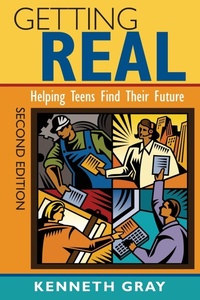
Getting Real
Helping Teens Find Their Future
2nd Edition
Published on 23. October 2008
Book
Paperback/Softback
216 pages
978-1-4129-6365-7 (ISBN)
Description
"Gray provides a systematic method for working with students to look at opportunities after high school in a realistic way."
-Mary Reeve, Director
Services for Exceptional Students
Help teens achieve success after high school through meaningful career development!
Without a realistic postsecondary strategy, more than half of students fail to graduate college or land rewarding jobs. Educators and parents can improve students' odds by encouraging them to develop the long-term initiative and commitment of a solid career plan.
This updated edition of Getting Real examines real-world occupational trends and projections to help teens gain "career maturity" and a sense of direction. The second edition has been expanded to address students with special needs and those at risk of dropping out, and includes a new chapter on understanding today's teens and parents. Offering a systematic, six-step plan for helping adolescents integrate youthful aspirations with economic realities, the author examines:
The fundamentals of the labor market
Myths and misconceptions that can limit students' choices
Alternative options to a four-year degree
Career exploration strategies and activities, such as job shadowing and work-study
Develop confident, clear-thinking teens who can make well-informed academic and career decisions about their future!
-Mary Reeve, Director
Services for Exceptional Students
Help teens achieve success after high school through meaningful career development!
Without a realistic postsecondary strategy, more than half of students fail to graduate college or land rewarding jobs. Educators and parents can improve students' odds by encouraging them to develop the long-term initiative and commitment of a solid career plan.
This updated edition of Getting Real examines real-world occupational trends and projections to help teens gain "career maturity" and a sense of direction. The second edition has been expanded to address students with special needs and those at risk of dropping out, and includes a new chapter on understanding today's teens and parents. Offering a systematic, six-step plan for helping adolescents integrate youthful aspirations with economic realities, the author examines:
The fundamentals of the labor market
Myths and misconceptions that can limit students' choices
Alternative options to a four-year degree
Career exploration strategies and activities, such as job shadowing and work-study
Develop confident, clear-thinking teens who can make well-informed academic and career decisions about their future!
Reviews / Votes
"I applaud the author's efforts in promoting a shift from the 'one way to win' stance toward that of helping students face reality and develop career goals that will help them be successful." -- Shawn Grime, School Counselor "Stresses the need for career maturity. This is one of the few books that addresses this topic so well." -- Diane Smith, School Counselor "This book is a must-read for those involved in developing futures planning for students in ninth grade through their exit from high school into adult life." -- Kelli S. Kercher, Transition Specialist "Gray provides a systematic method for working with students to look at opportunities after high school in a realistic way." -- Mary Reeve, DirectorMore details
Edition
2nd Revised edition
Language
English
Place of publication
Thousand Oaks
United States
Publishing group
SAGE Publications Inc
Target group
Professional and scholarly
Edition type
Revised edition
Dimensions
Height: 229 mm
Width: 152 mm
Thickness: 12 mm
Weight
323 gr
ISBN-13
978-1-4129-6365-7 (9781412963657)
Copyright in bibliographic data and cover images is held by Nielsen Book Services Limited or by the publishers or by their respective licensors: all rights reserved.
Schweitzer Classification
Other editions
Additional editions
Book
09/2008
2nd Edition
Corwin Press Inc
€96.75
Article exhausted; check different version
Previous edition

Book
09/1999
1st Edition
Corwin Press Inc
€37.32
Article exhausted; check for reprint
Person
Kenneth C. Gray is a professor in the Workforce Education and Development Program at Pennsylvania State University. Prior to joining the faculty at Penn State, he was superintendent of the Vocational Technical High School System in Connecticut and has been a high school English teacher, guidance counselor, and administrator. He has published widely and is frequently quoted in the national press. He is coauthor with Edwin Herr of Workforce Education: The Basic. His latest book, Getting Real: Helping Teens Find Their Future, addresses the importance of helping teenagers develop career direction as a prerequisite to postsecondary success. He holds a BA in economics from Colby College, an MA in counseling psychology from Syracuse University, and a doctorate in technical education from Virginia Tech.
Content
Preface to the Second Edition
Acknowledgments
About the Author
1. Getting Real: New Realities for Postsecondary Success
A New Goal: Postsecondary Success
Career Direction and the "Fourth" R
Career Maturity and Career Direction
Career Exploration Activities and Career Maturity
Career Development Programs: Are They Effective?
Society's Ambivalence About Career Choice
The Role of Public Schools
Making the Case for Career Development Programs
Promoting Success
Part I. Understanding Those We Try to Help "Get Real"
2. Today's Teens and Their Parents
Today's Teens
Today's Parents
Promoting Success
3. Dropouts, Teens With Disabilities, and Graduates Seeking Full Time Employment
Getting Real and High School Dropouts
Getting Real and Special Populations
High School Graduates Who Seek Full Time Employment
Promoting Success
4. Creating Opportunities by Countering Stereotypes
Occupational Stereotypes
Gender Stereotypes and Earnings: Education or Occupation?
Occupational Stereotyping: Minorities and the Economically Disadvantaged
Promoting Success
Part II. Understanding Labor Market Fundamentals
5. Labor Market Misunderstandings and Bad Advice
Misunderstanding 1: A University Degree Guarantees Access to High Wages
Misunderstanding 2: A University Degree Guarantees Access to Professional Careers
Misunderstanding 3: High Tech Careers Require a University Degree
Misunderstanding 4: Career Planning Is Worthless Because People Change Jobs All the Time Anyway
Misunderstanding 5: University Graduates Will Take All the Good Jobs
Labor Market Advantage: The Secret to Getting High-Skill / High-Wage Employment
Bad Advice Given to Teens
Will Tentative Career Decisions Close the Door to Future Opportunity?
Promoting Success
6. Occupational Projections, Technical and Middle Skill Employment
I: Using Labor Market Information
II: Occupational Projections
III: The Other Way to Win: Technical and Middle-Skill Occupations
A Selective List of Technical and Middle Skilled Occupations: This Is Rocket Science
Promoting Success
Part III. Strategies to Promote Career Direction
7. Career Success, Decision Making, and Teens
The Path to Career Success?
Characteristics of a Career Mature Teenager
Career Decision Making Anxiety of Teens
Reducing Teen Anxiety Over Making Career Decisions
Promoting Success
8. Strategies to Promote Adolescent Career Maturity and Direction
Student Outcome Goals for Career Development Program
Outcome Goal 1: Promoting a Tentative Career Direction While in the 10th Grade
Outcome Goal 2: Verifying Tentative Career Directions
Outcome Goal 3: Develop a Postsecondary Plan
Providing Career Counseling
Promoting Success
9. Considering "All" the Alternatives
Traditional Formal Education Alternatives
Alternatives to College
The "Bridge" or "Prep" Year
Promoting Success
10. Six-Step Plan for Postsecondary Success
Talking to Parents
Parents and Career Choice
Six-Step Plan for Postsecondary Success
Helping Parents With Difficult Choices
Promoting Success
11. Getting Real and the Role of the Business Community
Community Organizations
Promoting Success
12. How Are Teenagers Best Served, Nutritional Lies or Reality?
Nutritional Lies
Creating Opportunity
Five Premises for Success
Well-Intended but Bad Advice Given to Teens
Understanding Our Role
Fighting the Good Fight
References
Index
Acknowledgments
About the Author
1. Getting Real: New Realities for Postsecondary Success
A New Goal: Postsecondary Success
Career Direction and the "Fourth" R
Career Maturity and Career Direction
Career Exploration Activities and Career Maturity
Career Development Programs: Are They Effective?
Society's Ambivalence About Career Choice
The Role of Public Schools
Making the Case for Career Development Programs
Promoting Success
Part I. Understanding Those We Try to Help "Get Real"
2. Today's Teens and Their Parents
Today's Teens
Today's Parents
Promoting Success
3. Dropouts, Teens With Disabilities, and Graduates Seeking Full Time Employment
Getting Real and High School Dropouts
Getting Real and Special Populations
High School Graduates Who Seek Full Time Employment
Promoting Success
4. Creating Opportunities by Countering Stereotypes
Occupational Stereotypes
Gender Stereotypes and Earnings: Education or Occupation?
Occupational Stereotyping: Minorities and the Economically Disadvantaged
Promoting Success
Part II. Understanding Labor Market Fundamentals
5. Labor Market Misunderstandings and Bad Advice
Misunderstanding 1: A University Degree Guarantees Access to High Wages
Misunderstanding 2: A University Degree Guarantees Access to Professional Careers
Misunderstanding 3: High Tech Careers Require a University Degree
Misunderstanding 4: Career Planning Is Worthless Because People Change Jobs All the Time Anyway
Misunderstanding 5: University Graduates Will Take All the Good Jobs
Labor Market Advantage: The Secret to Getting High-Skill / High-Wage Employment
Bad Advice Given to Teens
Will Tentative Career Decisions Close the Door to Future Opportunity?
Promoting Success
6. Occupational Projections, Technical and Middle Skill Employment
I: Using Labor Market Information
II: Occupational Projections
III: The Other Way to Win: Technical and Middle-Skill Occupations
A Selective List of Technical and Middle Skilled Occupations: This Is Rocket Science
Promoting Success
Part III. Strategies to Promote Career Direction
7. Career Success, Decision Making, and Teens
The Path to Career Success?
Characteristics of a Career Mature Teenager
Career Decision Making Anxiety of Teens
Reducing Teen Anxiety Over Making Career Decisions
Promoting Success
8. Strategies to Promote Adolescent Career Maturity and Direction
Student Outcome Goals for Career Development Program
Outcome Goal 1: Promoting a Tentative Career Direction While in the 10th Grade
Outcome Goal 2: Verifying Tentative Career Directions
Outcome Goal 3: Develop a Postsecondary Plan
Providing Career Counseling
Promoting Success
9. Considering "All" the Alternatives
Traditional Formal Education Alternatives
Alternatives to College
The "Bridge" or "Prep" Year
Promoting Success
10. Six-Step Plan for Postsecondary Success
Talking to Parents
Parents and Career Choice
Six-Step Plan for Postsecondary Success
Helping Parents With Difficult Choices
Promoting Success
11. Getting Real and the Role of the Business Community
Community Organizations
Promoting Success
12. How Are Teenagers Best Served, Nutritional Lies or Reality?
Nutritional Lies
Creating Opportunity
Five Premises for Success
Well-Intended but Bad Advice Given to Teens
Understanding Our Role
Fighting the Good Fight
References
Index