

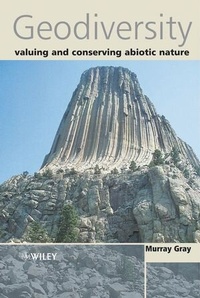
Geodiversity
Valuing and Conserving Abiotic Nature
1st Edition
Published on 30. October 2003
Book
Hardback
448 pages
978-0-470-84895-1 (ISBN)
Description
A counterpoint to biodiversity, geodiversity describes the rocks, sediments, soils, fossils, landforms, and the physical processes that underlie our environment. The first book to focus exclusively on the subject, Geodiversity describes the interrelationships between geodiversity and biodiversity, the value of geodiversity to society, as well as current threats to its existence. Illustrated with global case studies throughout, the book examines traditional approaches to protecting biodiversity and the new management agenda which is starting to be used instead.
Reviews / Votes
"...thought-provoking and timely volume." (Progress in Physical Geography, Vol.29, No.1, 2005)More details
Edition
1., Auflage
Language
English
Place of publication
Chichester
United Kingdom
Publishing group
John Wiley and Sons Ltd
Target group
Professional and scholarly
Illustrations
Illustrations, maps
Dimensions
Height: 25 cm
Width: 18.1 cm
Thickness: 30 mm
Weight
988 gr
ISBN-13
978-0-470-84895-1 (9780470848951)
Schweitzer Classification
Other editions
New editions
Book
10/2013
2nd Edition
Wiley
€153.50
Article exhausted; check different version
Additional editions
Book
10/2003
1st Edition
Wiley
€61.90
Article exhausted; check for reprint
Content
Preface.
Chapter 1. Defining Geodiversity.
1.1 A diverse world.
1.2 Biodiversity.
1.3 Geodiversity.
1.4 Geodiversity as a Resource.
1.5 Aims and Structure of the Book.
Chapter 2. Describing Geodiversity.
2.1 Introduction.
2.2 Origin of the Earth.
2.3 Early history of the Earth.
2.4 Plate Tectonics.
2.5 Landscapes of Plate Interiors.
2.6 Earth Materials.
2.7 Processes and Landforms.
2.8 Conclusions.
Chapter 3. Valuing Geodiversity.
3.1 Introduction.
3.2 Intrinsic or Existence Value.
3.3 Cultural Value.
3.4 Aesthetic Value.
3.5 Economic Value.
3.6 Functional Value.
3.7 Research and Educational Value.
3.8 Conclusions.
Chapter 4. Threats to Geodiversity.
4.1 Introduction.
4.2 Mineral Extraction.
4.3 Landfill and Quarry Restoration.
4.4 Land Development and Urban Expansion.
4.5 Coastal Erosion and Protection.
4. 6 River Management, Hydrology and Engineering.
4.7 Forestry, Vegetation Growth and Removal.
4.8 Agriculture.
4.9 Other Land Management Changes.
4.10 Recreation/Tourism Pressures.
4.11 Removal of Geological Specimens.
4.12 Climate and Sea-level Change.
4.13 Fire.
4.14 Military Activity.
4.15 Lack of Information/Education.
4.16 Cumulative Impacts and Sensitivity to Change.
4.17 Conclusions.
Chapter 5. Conserving Geodiversity: The Protected Area and Legislative Approaches.
5.1 Introduction.
5.2 Beginning of the Conservation Movement in North America.
5.3 Early British Experience.
5.4 The Protected Area and Legislative Approaches.
5.5 International Conservation.
5.6 The European Dimension.
5.7 National Conservation Systems.
5.8 USA.
5.9 Canada.
5.10 UK.
5.11 Ireland.
5.12 Northern Europe.
5.13 Eastern Europe.
5.14 West-Central Europe.
5.15 Southern Europe.
5.16 Australia.
5.17 New Zealand.
5.18 The Rest of the World.
5.19 International Geoconservation Revisited.
5.20 Conclusions.
Chapter 6. Managing Geodiversity: New Approaches for the Wider Landscape.
6.1 Sustainable Management of the Georesource.
6.2 Assessing the Wider Geodiversity Resource.
6.3 Georestoration.
6.4 Landform Design.
6.5 Geomaterials.
6.6 Land-use Planning Systems.
6.7 Environmental Impact Assessment.
6.8 Policies, Strategies, Audits and Charters.
6.9 Communication, Interpretation and Education.
6.10 Conclusions.
Chapter 7. Integrating Geodiversity and Biodiversity.
7.1 Introduction.
7.2 Criticisms of "Geodiversity".
7.3 Measuring Geodiversity.
7.4 Integrating Geodiversity and Biodiversity.
7.5 Integrated Land Management.
7.6 Potential Geodiversity/Biodiversity Conflicts.
7.7 Conclusions.
Chapter 8. Towards a Vision for Geodiversity Conservation.
8.1 Valuing and Conserving Geodiversity.
8.2 A Vision for Geodiversity Conservation.
References.
Index.
Chapter 1. Defining Geodiversity.
1.1 A diverse world.
1.2 Biodiversity.
1.3 Geodiversity.
1.4 Geodiversity as a Resource.
1.5 Aims and Structure of the Book.
Chapter 2. Describing Geodiversity.
2.1 Introduction.
2.2 Origin of the Earth.
2.3 Early history of the Earth.
2.4 Plate Tectonics.
2.5 Landscapes of Plate Interiors.
2.6 Earth Materials.
2.7 Processes and Landforms.
2.8 Conclusions.
Chapter 3. Valuing Geodiversity.
3.1 Introduction.
3.2 Intrinsic or Existence Value.
3.3 Cultural Value.
3.4 Aesthetic Value.
3.5 Economic Value.
3.6 Functional Value.
3.7 Research and Educational Value.
3.8 Conclusions.
Chapter 4. Threats to Geodiversity.
4.1 Introduction.
4.2 Mineral Extraction.
4.3 Landfill and Quarry Restoration.
4.4 Land Development and Urban Expansion.
4.5 Coastal Erosion and Protection.
4. 6 River Management, Hydrology and Engineering.
4.7 Forestry, Vegetation Growth and Removal.
4.8 Agriculture.
4.9 Other Land Management Changes.
4.10 Recreation/Tourism Pressures.
4.11 Removal of Geological Specimens.
4.12 Climate and Sea-level Change.
4.13 Fire.
4.14 Military Activity.
4.15 Lack of Information/Education.
4.16 Cumulative Impacts and Sensitivity to Change.
4.17 Conclusions.
Chapter 5. Conserving Geodiversity: The Protected Area and Legislative Approaches.
5.1 Introduction.
5.2 Beginning of the Conservation Movement in North America.
5.3 Early British Experience.
5.4 The Protected Area and Legislative Approaches.
5.5 International Conservation.
5.6 The European Dimension.
5.7 National Conservation Systems.
5.8 USA.
5.9 Canada.
5.10 UK.
5.11 Ireland.
5.12 Northern Europe.
5.13 Eastern Europe.
5.14 West-Central Europe.
5.15 Southern Europe.
5.16 Australia.
5.17 New Zealand.
5.18 The Rest of the World.
5.19 International Geoconservation Revisited.
5.20 Conclusions.
Chapter 6. Managing Geodiversity: New Approaches for the Wider Landscape.
6.1 Sustainable Management of the Georesource.
6.2 Assessing the Wider Geodiversity Resource.
6.3 Georestoration.
6.4 Landform Design.
6.5 Geomaterials.
6.6 Land-use Planning Systems.
6.7 Environmental Impact Assessment.
6.8 Policies, Strategies, Audits and Charters.
6.9 Communication, Interpretation and Education.
6.10 Conclusions.
Chapter 7. Integrating Geodiversity and Biodiversity.
7.1 Introduction.
7.2 Criticisms of "Geodiversity".
7.3 Measuring Geodiversity.
7.4 Integrating Geodiversity and Biodiversity.
7.5 Integrated Land Management.
7.6 Potential Geodiversity/Biodiversity Conflicts.
7.7 Conclusions.
Chapter 8. Towards a Vision for Geodiversity Conservation.
8.1 Valuing and Conserving Geodiversity.
8.2 A Vision for Geodiversity Conservation.
References.
Index.