

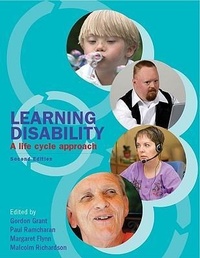
Learning Disability
A life cycle approach
2nd Edition
Published on 16. May 2010
Book
Paperback/Softback
536 pages
978-0-335-23843-9 (ISBN)
Description
With its spread of chapters covering key issues across the life cycle this text has established itself as the foundational primer for those studying the lived experiences of people with learning disabilities and their families, and outcomes achieved through services and support systems.
Recognising learning disability as a lifelong disability, this accessible book is structured around the life cycle. The second edition is refreshed and expanded to include seven new chapters, covering:
Aetiology
Breaking news (about disability) and early intervention
Transition to adulthood
The sexual lives of women
Employment
Personalisation
People with hidden identities
With contributions from respected figures from a range of disciplines, the book draws heavily upon multidisciplinary perspectives and is based on the latest research and evidence for practice. The text is informed by medical, social and legal models of learning disability, exploring how "learning disability" is produced, reproduced and understood.
Extensive use is made of real-life case studies, designed to bring theory, values, policy and practice to life. Narrative chapters describe, in the words of people with learning disabilities themselves, their lives and aspirations. They helpfully show readers the kinds of roles played by families, advocates and services in supporting people with learning disabilities. New exercises and questions have been added to encourage discussion and reflection on practice.
Learning Disability is core reading for students entering health and social care professions to work with people with learning disabilities. It is a compelling reference text for practitioners as it squarely addresses the challenges facing people with learning disability, their loved ones and the people supporting them.
Contributors Dawn Adams, Kathryn Almack, Dorothy Atkinson, Nigel Beail, Christine Bigby, Alison Brammer, Jacqui Brewster, Hilary Brown, Jennifer Clegg, Lesley Cogher, Helen Combes, Clare Connors, Bronach Crawley, Eric Emerson, Margaret Flynn, Linda Gething, Dan Goodley, Peter Goward, Gordon Grant, Chris Hatton, Sheila Hollins, Jane Hubert, Kelley Johnson, Gwynnyth Llewellyn, Heather McAlister, Michelle McCarthy, Alex McClimens, Roy McConkey, David McConnell, Keith McKinstrie, Fiona Mackenzie, Ghazala Mir, Ada Montgomery, Lesley Montisci, Elizabeth Murphy, Chris Oliver, Richard Parrott, Paul Ramcharan, Malcolm Richardson, Bronwyn Roberts, Philippa Russell, Kirsten Stalker, Martin Stevens, John Taylor, Irene Tuffrey-Wijne, Sally Twist, Jan Walmsley, Kate Woodcock
"The editors and contributors are to be congratulated on the production of a relevant and contemporary text that I have no hesitation in both endorsing and recommending to all involved in supporting and or caring for people with learning disabilities."
Professor Bob Gates, Project Leader - Learning Disabilities Workforce Development, NHS Education South Central, UK
"This is a seminal text for students and practitioners, researchers and policy makers."
Associate Professor Keith R. McVilly, Deakin University, Australia
"If I were to personally recommend any book for budding or current learning disability professionals then this would be it."
James Grainger, Student Nurse/Social Worker, Sheffield Hallam University, UK
"The book gives a true wealth of good practice scenarios that can only help practitioners be good at what they do and aspire to be."
Lee Marshall, Student Nurse, Sheffield Hallam University, UK
Recognising learning disability as a lifelong disability, this accessible book is structured around the life cycle. The second edition is refreshed and expanded to include seven new chapters, covering:
Aetiology
Breaking news (about disability) and early intervention
Transition to adulthood
The sexual lives of women
Employment
Personalisation
People with hidden identities
With contributions from respected figures from a range of disciplines, the book draws heavily upon multidisciplinary perspectives and is based on the latest research and evidence for practice. The text is informed by medical, social and legal models of learning disability, exploring how "learning disability" is produced, reproduced and understood.
Extensive use is made of real-life case studies, designed to bring theory, values, policy and practice to life. Narrative chapters describe, in the words of people with learning disabilities themselves, their lives and aspirations. They helpfully show readers the kinds of roles played by families, advocates and services in supporting people with learning disabilities. New exercises and questions have been added to encourage discussion and reflection on practice.
Learning Disability is core reading for students entering health and social care professions to work with people with learning disabilities. It is a compelling reference text for practitioners as it squarely addresses the challenges facing people with learning disability, their loved ones and the people supporting them.
Contributors Dawn Adams, Kathryn Almack, Dorothy Atkinson, Nigel Beail, Christine Bigby, Alison Brammer, Jacqui Brewster, Hilary Brown, Jennifer Clegg, Lesley Cogher, Helen Combes, Clare Connors, Bronach Crawley, Eric Emerson, Margaret Flynn, Linda Gething, Dan Goodley, Peter Goward, Gordon Grant, Chris Hatton, Sheila Hollins, Jane Hubert, Kelley Johnson, Gwynnyth Llewellyn, Heather McAlister, Michelle McCarthy, Alex McClimens, Roy McConkey, David McConnell, Keith McKinstrie, Fiona Mackenzie, Ghazala Mir, Ada Montgomery, Lesley Montisci, Elizabeth Murphy, Chris Oliver, Richard Parrott, Paul Ramcharan, Malcolm Richardson, Bronwyn Roberts, Philippa Russell, Kirsten Stalker, Martin Stevens, John Taylor, Irene Tuffrey-Wijne, Sally Twist, Jan Walmsley, Kate Woodcock
"The editors and contributors are to be congratulated on the production of a relevant and contemporary text that I have no hesitation in both endorsing and recommending to all involved in supporting and or caring for people with learning disabilities."
Professor Bob Gates, Project Leader - Learning Disabilities Workforce Development, NHS Education South Central, UK
"This is a seminal text for students and practitioners, researchers and policy makers."
Associate Professor Keith R. McVilly, Deakin University, Australia
"If I were to personally recommend any book for budding or current learning disability professionals then this would be it."
James Grainger, Student Nurse/Social Worker, Sheffield Hallam University, UK
"The book gives a true wealth of good practice scenarios that can only help practitioners be good at what they do and aspire to be."
Lee Marshall, Student Nurse, Sheffield Hallam University, UK
More details
Other editions
Additional editions
Gordon Grant
Learning Disability
E-Book
05/2010
1st Edition
McGraw-Hill Education
€91.69
Available for download
Previous edition
Peter Goward | Gordon Grant | Paul Ramcharan
Learning Disability
Book
06/2005
Open University Press
€57.13
Article exhausted; check for reprint
Persons
Margaret Flynn is Principal Researcher at the Centre for Health and Social Care Research at Sheffield Hallam University. She is also Chair of the Stephen Hoskin serious case review and Chair of Lancashire County Council's Safeguarding Board, and works as an independent consultant.
Content
Introduction - why the life cycle?Part 1 - The construction of learning disability
Narratives and people with learning disabilities
Social constructions and social models: Disability explained?
The roots of biomedical diagnosis
Learning disability and the law
Models of service delivery
Maintaining a commitment to quality
Advocacy, campaigning and people with learning difficulties
Part 2 - Childhood and early parenting
Children with learning disabilities talking about their everyday lives
Communication with children and young people
The importance of aetiology of intellectual disability
Breaking the news and early intervention
Addressing the physical and sensory needs of children with profound and multiple learning disabilities
Family care: Experiences and expectations
Part 3 - Adolescence and transitions to adulthood
Adolescents and younger adults: Narrative accounts
Transition: A moment of change
Safeguarding adults with learning disabilities against abuse
Promoting healthy lifestyles: Challenging behaviour
(Almost) everything you ever wanted to know about sexuality and learning disability but were always too afraid to ask
The sexual lives of women with learning disabilities
Supporting people with learning disabilities within the criminal justice system
Independence, reciprocity and resilience
Personalizing learning disability services
Part 4 - Adult identities and community inclusion
You have to prove yourself all the time: People with learning disabilities as parents
Promoting friendships and developing social networks
Enabling and supporting person-centred planning
Culture and ethnicity: Developing accessible and appropriate services for health and social care
Work, supported employment and leisure
Promoting healthy lifestyles: Mental health
Retrieving lost identities: Men with severe intellectual disabilities and mental health problems in long-term care
Engaging communities of interest
Part 5 - Experiences of ageing and end-of-life issues
A late picking: Narratives of older people with learning disabilities
Growing old: Adapting to change and realizing a sense of belonging, continuity and purpose
End-of-life issues
Healthy and successful ageing
Research and emancipation: Prospects and problems
Narratives and people with learning disabilities
Social constructions and social models: Disability explained?
The roots of biomedical diagnosis
Learning disability and the law
Models of service delivery
Maintaining a commitment to quality
Advocacy, campaigning and people with learning difficulties
Part 2 - Childhood and early parenting
Children with learning disabilities talking about their everyday lives
Communication with children and young people
The importance of aetiology of intellectual disability
Breaking the news and early intervention
Addressing the physical and sensory needs of children with profound and multiple learning disabilities
Family care: Experiences and expectations
Part 3 - Adolescence and transitions to adulthood
Adolescents and younger adults: Narrative accounts
Transition: A moment of change
Safeguarding adults with learning disabilities against abuse
Promoting healthy lifestyles: Challenging behaviour
(Almost) everything you ever wanted to know about sexuality and learning disability but were always too afraid to ask
The sexual lives of women with learning disabilities
Supporting people with learning disabilities within the criminal justice system
Independence, reciprocity and resilience
Personalizing learning disability services
Part 4 - Adult identities and community inclusion
You have to prove yourself all the time: People with learning disabilities as parents
Promoting friendships and developing social networks
Enabling and supporting person-centred planning
Culture and ethnicity: Developing accessible and appropriate services for health and social care
Work, supported employment and leisure
Promoting healthy lifestyles: Mental health
Retrieving lost identities: Men with severe intellectual disabilities and mental health problems in long-term care
Engaging communities of interest
Part 5 - Experiences of ageing and end-of-life issues
A late picking: Narratives of older people with learning disabilities
Growing old: Adapting to change and realizing a sense of belonging, continuity and purpose
End-of-life issues
Healthy and successful ageing
Research and emancipation: Prospects and problems