

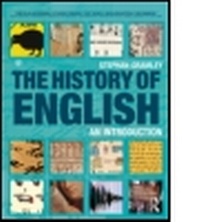
The History of English
An Introduction
1st Edition
Published on 14. December 2011
Book
Paperback/Softback
438 pages
978-0-415-56640-7 (ISBN)
Description
The History of English: An Introduction provides a chronological analysis of the linguistic, social, and cultural development of the English language from before its establishment in Britain around the year 450 to the present. Each chapter represents a new stage in the development of the language from Old English through Middle English to Modern Global English, all illustrated with a rich and diverse selection of primary texts showing changes in language resulting from contact, conquest and domination, and the expansion of English around the world.
The History of English goes beyond the usual focus on English in the UK and the USA to include the wider global course of the language during and following the Early Modern English period. This perspective therefore also includes a historical review of English in its pidgin and creole varieties and as a native and/or second language in the Caribbean, Africa, Asia, and Australasia.
Designed to be user-friendly, The History of English contains:
chapter introductions and conclusions to assist study
over 80 textual examples demonstrating linguistic change, accompanied by translations and/or glosses where appropriate
study questions on the social, cultural and linguistic background of the chapter topics
further reading from key texts to extend or deepen the focus
nearly 100 supporting figures, tables, and maps to illuminate the text
16-pages of colour plates depicting exemplary texts, relevant artefacts, and examples of language usage, including Germanic runes, the opening page of Beowulf, the New England Primer, and the Treaty of Waitangi.
The companion website at www.routledge.com/cw/gramley supports the textbook and features:
an extended view of major aspects of language development as well as synopses of material dealt with in a range of chapters in the book
further sample texts, including examples from Chaucer, numerous Early Modern English texts from a wide variety of fields, and twenty-first-century novels
additional exercises to help users expand their insights and apply background knowledge
an interactive timeline of important historical events and developments with linked encyclopaedic entries
audio clips providing examples of a wide range of accents
The History of English is essential reading for any student of the English language.
The History of English goes beyond the usual focus on English in the UK and the USA to include the wider global course of the language during and following the Early Modern English period. This perspective therefore also includes a historical review of English in its pidgin and creole varieties and as a native and/or second language in the Caribbean, Africa, Asia, and Australasia.
Designed to be user-friendly, The History of English contains:
chapter introductions and conclusions to assist study
over 80 textual examples demonstrating linguistic change, accompanied by translations and/or glosses where appropriate
study questions on the social, cultural and linguistic background of the chapter topics
further reading from key texts to extend or deepen the focus
nearly 100 supporting figures, tables, and maps to illuminate the text
16-pages of colour plates depicting exemplary texts, relevant artefacts, and examples of language usage, including Germanic runes, the opening page of Beowulf, the New England Primer, and the Treaty of Waitangi.
The companion website at www.routledge.com/cw/gramley supports the textbook and features:
an extended view of major aspects of language development as well as synopses of material dealt with in a range of chapters in the book
further sample texts, including examples from Chaucer, numerous Early Modern English texts from a wide variety of fields, and twenty-first-century novels
additional exercises to help users expand their insights and apply background knowledge
an interactive timeline of important historical events and developments with linked encyclopaedic entries
audio clips providing examples of a wide range of accents
The History of English is essential reading for any student of the English language.
Reviews / Votes
"This book is not only an invaluable textbook for the student of the history of English, but also a source of inspiring questions prone to motivate individuals to pursue their own research in the field." LINGUIST"An essential introduction for students and an invaluable resource for teachers of this subject. It is written in an accessible style, includes many detailed examples and study questions and is well supported by extensive resources on its website." - Sebastian Rasinger, Anglia Ruskin University, UK
"An extremely useful resource ... It is up-to-date, both in content and the technology it employs ... the narrative is clear and straightforward, difficult concepts are suitably elucidated and glossed, the selection of illustrative texts is excellent and the accompanying apparatus works very well." - Lister Matheson, Michigan State University, USA
"An indispensable resource for undergraduate students of the history of English." - Peter K.W. Tan, National University of Singapore, Singapore
"The history of English continues to be a fascinating area of study within Linguistics, especially Historical linguistics and Sociolinguistics. The field has undergone further renewal in the age of globalisation. Here is a textbook that does full justice to the early history of what were a group of Germanic dialects crossing over into what would become England. The language that gelled into English was to undergo enormous domestic changes over the centuries and to undertake many subsequent crossings. Stephan Gramley covers this complex history with an admirable blend of breadth and depth, striking a balance between structural aspects of language and sociolinguistic developments. This is an accessible student-friendly text which I wholeheartedly recommend." Rajend Mesthrie, University of Cape Town, South Africa
"So much more than a textbook par excellence for students enrolled in university courses on the history of English, this multi-layered history of one of the world's richest and most widely spoken languages "does not treat English as a monolithic entity, but the product of use by diverse speakers through the ages, in differing levels of society, and over a wide geographic spread".
In other words, the focus isn't just on the UK and US- there are also substantial sections on pidgin and creole varieties, as well as on English as a native and/or second language in the Caribbean, Africa, Asia and Australasia.
As we move from 450 to the present, from Beowulf to Bollywood, the changes wrought on English by migration and social, political and cultural innovation and upheaval are explained in clear, concise language.
There are copious examples from real texts, as well as maps, diagrams, colour plates and even free access to a supporting website featuring an interactive time line and audio clips. How did we get from "A Frere ther was, a wantown and a merye, a limitour, a ful solempne man" (Canterbury Tales, 1385) to "I think ibo gurls is sexy, kedu ka odi? All my fine ibo thoroughbreds" (Nigerian blog Igbo Girls Like Money a Lot, 2006)? Work your way through this brilliant history and you'll not only know the answer - you'll have enriched your understanding of, and ability to use, the English language beyond measure." The West Australian.
'[The History of English will]... have enriched your understanding of, and ability to use, the English Language beyond measure.' - The West Australian
More details
Language
English
Place of publication
London
United Kingdom
Publishing group
Taylor & Francis Ltd
Target group
College/higher education
Illustrations
22 s/w Zeichnungen, 73 s/w Abbildungen, 20 s/w Tabellen
22 Line drawings, black and white; 57 Tables, black and white; 73 Illustrations, black and white
Dimensions
Height: 248 mm
Width: 189 mm
Weight
966 gr
ISBN-13
978-0-415-56640-7 (9780415566407)
Copyright in bibliographic data and cover images is held by Nielsen Book Services Limited or by the publishers or by their respective licensors: all rights reserved.
Schweitzer Classification
Other editions
New editions
Book
05/2024
3rd Edition
Routledge
€97.00
Shipment within 10-20 days
Book
11/2018
2nd Edition
Routledge
€64.63
Article exhausted; check for reprint
Additional editions
Book
12/2011
1st Edition
Routledge
€156.24
Article exhausted; check for reprint
Person
Stephan Gramley is Studiendirektor at Bielefeld University, Germany, in the Department of Linguistics and Literary Studies.
Content
List of illustrations
List of texts
Preface
Acknowledgments
Chapter 1: The origins of English (before 450)
Chapter overview
1.1. The origins of human language
1.2. Language change
1.3. Changes in Germanic before the invasions of Britain
1.4. The world of the Germanic peoples
1.5. The Germanic migrations
1.6. Summary.
Study questions.
Further reading
Chapter 2: Old English: early Germanic Britain (450-700)
Chapter overview
2.1. The first peoples
2.2. The Germanic incursions
2.3. Introduction to Old English
2.4. The Christianization of England
2.5. Literature in the early Old English period
2.6. Summary
Study questions
Further reading
Chapter 3: Old English: the Viking invasions and their consequences (700-1066/1100)
Chapter overview
3.1. The Viking invasions
3.2. Linguistic influence of Old Norse
3.3. Creolization
3.4. Alfred's reforms and the West Saxon standard
3.5. Monastic reform, linguistic developments, and literary genres
3.6. Summary
Study questions
Further reading
Chapter 4: Middle English: The non-standard period (1066/1100-1350)
Chapter overview
4.1. Dynastic conflict and the Norman Conquest
4.2. Linguistic features of Middle English in the non-standard period
4.3. French influence on Middle English and the question of creolization
4.4. English literature
4.5. Dialectal diversity in ME
4.6. Summary.
Study questions
Further reading
Chapter 5: Middle English: the emergence of Standard English (1350-1500)
Chapter overview
5.1. Political and social turmoil and demographic developments
5.2. The expansion of domains
5.3. Chancery English (Chancery Standard)
5.4. Literature
5.5. Variation
5.6 Summary
Study questions
Further reading
Chapter 6: The Early Modern English Period (1500-1700)
Chapter overview
6.1. The Early Modern English Period
6.2. Early Modern English
6.3. Regulation and codification
6.4. Religious and scientific prose and belles lettres
6.5. Variation: South and North
6.6. Summary
Study questions
Further reading
Chapter 7: The spread of English (since the late sixteenth century)
Chapter overview
7.1. Social-historical background
7.2. Language policy
7.3. The emergence of General English (GenE)
7.4. Transplantation
7.5. Linguistic correlates of European expansionism
7.6. Summary
Study questions
Further reading
Chapter 8: English in Great Britain and Ireland (since 1700)
Chapter overview
8.1. Social and historical developments in Britain and Ireland
8.2. England and Wales
8.3. Scotland
8.4. Ireland
8.5. Urban varieties
8.6. Summary
Study questions
Further reading
Chapter 9: English pidgins, English creoles, and English (since the early seventeenth century)
Chapter overview
9.1. European expansion and the slave trade
9.2. Language contact
9.3. Pidgins
9.4. Creoles
9.5. Theories of origins
9.6 Summary
Study questions
Further reading
Chapter 10: English in North America (since the early seventeenth century)
Chapter overview
10.1. The beginnings of English in North America
10.2. Colonial English
10.3 Development of North American English after American independence
10.4. Ethnic variety within AmE
10.5. Summary
Study questions
Further reading
Chapter 11: English in the ENL communities of the Southern Hemisphere (since 1788)
Chapter overview
11.1. Social-historical background
11.2. Southern Hemisphere English: grammar
11.3. Southern Hemisphere English: pronunciation
11.4. Southern Hemisphere English: vocabulary and pragmatics
11.5. Regional and ethnic variation
11.6. Summary
Study questions
Further reading
Chapter 12: English in the ESL countries of Africa and Asia (since 1795)
Chapter overview
12.1. English A Second Language
12.2. Language planning and policy
12.3. Linguistic features of ESL
12.4. Substrate influence
12.5. Identitarian function of language
12.6. Summary
Study questions
Further reading
Chapter 13: Global English (since 1945)
Chapter overview
13.1. The beginnings of Global English
13.2. Media dominance
13.3. Features of medialized language
13.4. ENL, ESL, and ELF/EFL
13.5. The identitarian role of the multiplicity of Englishes
13.6. Summary
Study questions
Further reading
The International Phonetic Alphabet
Glossary
Bibliography
Index
List of texts
Preface
Acknowledgments
Chapter 1: The origins of English (before 450)
Chapter overview
1.1. The origins of human language
1.2. Language change
1.3. Changes in Germanic before the invasions of Britain
1.4. The world of the Germanic peoples
1.5. The Germanic migrations
1.6. Summary.
Study questions.
Further reading
Chapter 2: Old English: early Germanic Britain (450-700)
Chapter overview
2.1. The first peoples
2.2. The Germanic incursions
2.3. Introduction to Old English
2.4. The Christianization of England
2.5. Literature in the early Old English period
2.6. Summary
Study questions
Further reading
Chapter 3: Old English: the Viking invasions and their consequences (700-1066/1100)
Chapter overview
3.1. The Viking invasions
3.2. Linguistic influence of Old Norse
3.3. Creolization
3.4. Alfred's reforms and the West Saxon standard
3.5. Monastic reform, linguistic developments, and literary genres
3.6. Summary
Study questions
Further reading
Chapter 4: Middle English: The non-standard period (1066/1100-1350)
Chapter overview
4.1. Dynastic conflict and the Norman Conquest
4.2. Linguistic features of Middle English in the non-standard period
4.3. French influence on Middle English and the question of creolization
4.4. English literature
4.5. Dialectal diversity in ME
4.6. Summary.
Study questions
Further reading
Chapter 5: Middle English: the emergence of Standard English (1350-1500)
Chapter overview
5.1. Political and social turmoil and demographic developments
5.2. The expansion of domains
5.3. Chancery English (Chancery Standard)
5.4. Literature
5.5. Variation
5.6 Summary
Study questions
Further reading
Chapter 6: The Early Modern English Period (1500-1700)
Chapter overview
6.1. The Early Modern English Period
6.2. Early Modern English
6.3. Regulation and codification
6.4. Religious and scientific prose and belles lettres
6.5. Variation: South and North
6.6. Summary
Study questions
Further reading
Chapter 7: The spread of English (since the late sixteenth century)
Chapter overview
7.1. Social-historical background
7.2. Language policy
7.3. The emergence of General English (GenE)
7.4. Transplantation
7.5. Linguistic correlates of European expansionism
7.6. Summary
Study questions
Further reading
Chapter 8: English in Great Britain and Ireland (since 1700)
Chapter overview
8.1. Social and historical developments in Britain and Ireland
8.2. England and Wales
8.3. Scotland
8.4. Ireland
8.5. Urban varieties
8.6. Summary
Study questions
Further reading
Chapter 9: English pidgins, English creoles, and English (since the early seventeenth century)
Chapter overview
9.1. European expansion and the slave trade
9.2. Language contact
9.3. Pidgins
9.4. Creoles
9.5. Theories of origins
9.6 Summary
Study questions
Further reading
Chapter 10: English in North America (since the early seventeenth century)
Chapter overview
10.1. The beginnings of English in North America
10.2. Colonial English
10.3 Development of North American English after American independence
10.4. Ethnic variety within AmE
10.5. Summary
Study questions
Further reading
Chapter 11: English in the ENL communities of the Southern Hemisphere (since 1788)
Chapter overview
11.1. Social-historical background
11.2. Southern Hemisphere English: grammar
11.3. Southern Hemisphere English: pronunciation
11.4. Southern Hemisphere English: vocabulary and pragmatics
11.5. Regional and ethnic variation
11.6. Summary
Study questions
Further reading
Chapter 12: English in the ESL countries of Africa and Asia (since 1795)
Chapter overview
12.1. English A Second Language
12.2. Language planning and policy
12.3. Linguistic features of ESL
12.4. Substrate influence
12.5. Identitarian function of language
12.6. Summary
Study questions
Further reading
Chapter 13: Global English (since 1945)
Chapter overview
13.1. The beginnings of Global English
13.2. Media dominance
13.3. Features of medialized language
13.4. ENL, ESL, and ELF/EFL
13.5. The identitarian role of the multiplicity of Englishes
13.6. Summary
Study questions
Further reading
The International Phonetic Alphabet
Glossary
Bibliography
Index