

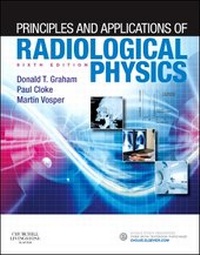
Principles and Applications of Radiological Physics
6th Edition
Published on 6. July 2012
Book
Paperback/Softback
388 pages
978-0-7020-5215-6 (ISBN)
Description
Principles and Application of Radiological Physics 6E provides comprehensive and easy-to-follow coverage of the principles and application of physics for both diagnostic and therapeutic radiography students. Regardless of changes in technology and clinical grading, the most important role of the radiographer remains unchanged - ensuring the production of high quality images and optimal treatment. These should be performed with the minimum of radiation hazard to patients, staff and others. An understanding of physics and the basics of radiographic technology is essential to do this effectively. The book covers all the physics and mathematics required by undergraduate diagnostic and therapeutic radiography students, catering for those who do not have a mathematics qualification as well as for those who do.
NEW TO THIS EDITION:
A focus upon application of physics to reflect current teaching approaches
Completely revised structure, leading from science principles to applications
New chapters on CT, MRI, ultrasound, PET, RNI, mammography and digital imaging
Electronic learning resources for students, hosted on EVOLVE
Strong links between theory and practice throughout this clear and concise text
Focus on application of physics, as well as principles
New, updated 2-colour design
New Sections - Equipment for X-ray production, The Radiographic Image and Diagnostic Imaging Technologies
Electronic learning resources for students support the text
Focus on application of physics, as well as principles
New, updated 2-colour design
New Sections - Equipment for X-ray production, The Radiographic Image and Diagnostic Imaging Technologies
Electronic learning resources for students support the text
NEW TO THIS EDITION:
A focus upon application of physics to reflect current teaching approaches
Completely revised structure, leading from science principles to applications
New chapters on CT, MRI, ultrasound, PET, RNI, mammography and digital imaging
Electronic learning resources for students, hosted on EVOLVE
Strong links between theory and practice throughout this clear and concise text
Focus on application of physics, as well as principles
New, updated 2-colour design
New Sections - Equipment for X-ray production, The Radiographic Image and Diagnostic Imaging Technologies
Electronic learning resources for students support the text
Focus on application of physics, as well as principles
New, updated 2-colour design
New Sections - Equipment for X-ray production, The Radiographic Image and Diagnostic Imaging Technologies
Electronic learning resources for students support the text
More details
Edition
6th edition
Language
English
Place of publication
London
United Kingdom
Publishing group
Elsevier Health Sciences
Target group
College/higher education
Illustrations
Approx. 282 illustrations (272 in full color); Illustrations
Dimensions
Height: 246 mm
Width: 189 mm
ISBN-13
978-0-7020-5215-6 (9780702052156)
Copyright in bibliographic data and cover images is held by Nielsen Book Services Limited or by the publishers or by their respective licensors: all rights reserved.
Schweitzer Classification
Other editions
New editions
Martin Vosper | Andrew England | Vicki Major
Graham's Principles and Applications of Radiological Physics
Book
12/2020
7th Edition
Elsevier
€69.50
Shipment within 10-20 days
Additional editions
Tdcr Graham | Tdcr Cloke MSc | Hdcr Vosper MSc
Principles and Applications of Radiological Physics E-Book
Principles and Applications of Radiological Physics E-Book
E-Book
05/2011
6th Edition
Churchill Livingstone
€49.99
Available for download
Previous edition
Donald Graham | Paul Cloke | Martin Vosper
Principles and Applications of Radiological Physics
With Pageburst Online Access
Book
05/2011
6th Edition
Churchill Livingstone
€86.28
Article exhausted; check for reprint
Persons
Author
Former Director, Radiography, School of Health Sciences, Robert Gordon University, Aberdeen, UK
Former Lecturer in Diagnostic Imaging, Centre for Radiographic and Medical Studies, Department of Materials and Medical Science, Cranfield University, Shrivenham Campus, Swindon, Wiltshire, UK
Senior Lecturer, Department of Radiography, University of Hertfordshire, Hatfield, UK
Content
Part 1 Principles
Section 1 Introduction to Radiography
1. Principles of radiography
2. The inverse square law
3. The exponential law
Section 2 Basic physics
4. Laws of classical physics
5. Units of measurement
6. Experimental error and statistics
7 Heat
8 Electrostatics
9 Electricity
10 Magnetism
11 Electromagnetism
12 Electromagnetic induction
13 Alternating current flow
14 The motor principle
15 Capacitators
16 The AC transformer
17 Semiconductor materials
Section 3 Atomic physics
18 Laws of modern physics
19 Electromagnetic radiation
20 Elementary structure of the atom
21 Radioactivity
Section 4 X-rays and matter
22 The production of X-rays
23 Factors affecting beam quality and quantity
24 Interactions of X-rays with matter
25 Luminescence and photostimulation
26 The radiographic image
Section 5 Dosimetry
27 Principles of radiation dosimetry
Part 2 Application
Section 6 Equipment for X-ray production
28 Requirements for X-ray production
29 Rectification
30 Exposure and timing circuits
31 The diagnostic X-ray tube
32 Monitoring and protection of X-ray tubes
33 Orthovoltage generators and Linear Accelerators
34 Radiotherapy simulators
Section 7 The radiographic image
35 Production of the digital radiographic image
36 The fluoroscopic image
37 Consequences of digital image technology
Section 8 Diagnostic imaging technologies
38. Scintillation counters
39. Radionucleotide imaging
40 CT scanning
41 Magnetic Resonance Imaging
42 PET & SPET
43 Hybrid scanners
44 Ultrasound imaging
45 Mammography
Section 9 Radiation Protection
46 Practical radiation protection
Appendices and Tables
Appendix A Mathematics for radiography
Appendix B Modulation transfer function
Appendix C SI base units
Table A Powers of 10
Table B Physical Constants
Table C Important Conversion Factors
Table D Greek Symbols and their common usage
Table E Periodic Table of Elements
Table F Electron Configuration of Elements
Section 1 Introduction to Radiography
1. Principles of radiography
2. The inverse square law
3. The exponential law
Section 2 Basic physics
4. Laws of classical physics
5. Units of measurement
6. Experimental error and statistics
7 Heat
8 Electrostatics
9 Electricity
10 Magnetism
11 Electromagnetism
12 Electromagnetic induction
13 Alternating current flow
14 The motor principle
15 Capacitators
16 The AC transformer
17 Semiconductor materials
Section 3 Atomic physics
18 Laws of modern physics
19 Electromagnetic radiation
20 Elementary structure of the atom
21 Radioactivity
Section 4 X-rays and matter
22 The production of X-rays
23 Factors affecting beam quality and quantity
24 Interactions of X-rays with matter
25 Luminescence and photostimulation
26 The radiographic image
Section 5 Dosimetry
27 Principles of radiation dosimetry
Part 2 Application
Section 6 Equipment for X-ray production
28 Requirements for X-ray production
29 Rectification
30 Exposure and timing circuits
31 The diagnostic X-ray tube
32 Monitoring and protection of X-ray tubes
33 Orthovoltage generators and Linear Accelerators
34 Radiotherapy simulators
Section 7 The radiographic image
35 Production of the digital radiographic image
36 The fluoroscopic image
37 Consequences of digital image technology
Section 8 Diagnostic imaging technologies
38. Scintillation counters
39. Radionucleotide imaging
40 CT scanning
41 Magnetic Resonance Imaging
42 PET & SPET
43 Hybrid scanners
44 Ultrasound imaging
45 Mammography
Section 9 Radiation Protection
46 Practical radiation protection
Appendices and Tables
Appendix A Mathematics for radiography
Appendix B Modulation transfer function
Appendix C SI base units
Table A Powers of 10
Table B Physical Constants
Table C Important Conversion Factors
Table D Greek Symbols and their common usage
Table E Periodic Table of Elements
Table F Electron Configuration of Elements