

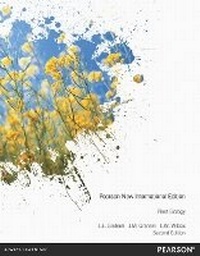
Plant Biology
Pearson New International Edition
2nd Edition
Published on 8. November 2013
Book
Paperback/Softback
680 pages
978-1-292-04249-7 (ISBN)
Description
For non-majors and mixed-majors introductory botany (plant biology) courses.
Plant Biology focuses students on the function of plants and the role they play in our world. With evolved content and a new organisation, the authors emphasise the scientific method to help students develop the critical thinking skills they need to make sound decisions throughout life. Together, the emphasis on how plants work and the development of critical-thinking skills support the authors' goal of fostering scientific literacy.
Plant Biology focuses students on the function of plants and the role they play in our world. With evolved content and a new organisation, the authors emphasise the scientific method to help students develop the critical thinking skills they need to make sound decisions throughout life. Together, the emphasis on how plants work and the development of critical-thinking skills support the authors' goal of fostering scientific literacy.
More details
Edition
2nd edition
Language
English
Place of publication
Harlow
United Kingdom
Target group
Professional and scholarly
College/higher education
Dimensions
Height: 272 mm
Width: 214 mm
Thickness: 30 mm
Weight
1340 gr
ISBN-13
978-1-292-04249-7 (9781292042497)
Copyright in bibliographic data and cover images is held by Nielsen Book Services Limited or by the publishers or by their respective licensors: all rights reserved.
Schweitzer Classification
Other editions
Additional editions
Linda E. Graham | Jim M. Graham | Lee W. Wilcox
Plant Biology: Pearson New International Edition
Pearson New International Edition
E-Book
10/2013
1st Edition
Pearson Education Limited
€49.22
Available for download
Content
I. Introduction
1. Introduction to Plant Biology
2. Plants and People
II. Plant Structure and Function
3. Molecules and Plants
4. Cells
5. Photosynthesis and Respiration
6. DNA, RNA, and Protein Synthesis
7. Cell Division: Mitosis and Cytokinesis
8. Plant Structure, Growth, and Development
9. Stems
10. Roots
11. Leaves
12. Plant Behavior
III. Plant Reproduction, Genetics, and Evolution
13. Reproduction, Meiosis, and Life Cycles
14. Genetics and the Laws of Inheritance
15. Genetic Engineering
16. Biological Evolution
IV. Diversity
17. Naming and Organizing Microbes, Viruses, and Plants
18. Prokaryotes and the Origin of Life
19. Protists and the Origin of Eukaryotic Cells
20. Fungi and Lichens
21. Seedless Plants: Bryophytes, Lycophytes, and Pteridophytes
22. Gymnosperms and the Origin of Seeds
23. Angiosperm Reproduction: Flowers, Fruits, and Seeds
24. Flowering Plant and Animal Coevolution: Pollination and Seed Dispersal
V. Ecology and Plant Adaptations to the Environment
25. Principles of Ecology and the Biosphere
26. Arid Terrestrial Ecosystems
27. Moist Terrestrial Ecosystems
28. Aquatic Ecosystems
29. Human Impacts and Sustainability
1. Introduction to Plant Biology
2. Plants and People
II. Plant Structure and Function
3. Molecules and Plants
4. Cells
5. Photosynthesis and Respiration
6. DNA, RNA, and Protein Synthesis
7. Cell Division: Mitosis and Cytokinesis
8. Plant Structure, Growth, and Development
9. Stems
10. Roots
11. Leaves
12. Plant Behavior
III. Plant Reproduction, Genetics, and Evolution
13. Reproduction, Meiosis, and Life Cycles
14. Genetics and the Laws of Inheritance
15. Genetic Engineering
16. Biological Evolution
IV. Diversity
17. Naming and Organizing Microbes, Viruses, and Plants
18. Prokaryotes and the Origin of Life
19. Protists and the Origin of Eukaryotic Cells
20. Fungi and Lichens
21. Seedless Plants: Bryophytes, Lycophytes, and Pteridophytes
22. Gymnosperms and the Origin of Seeds
23. Angiosperm Reproduction: Flowers, Fruits, and Seeds
24. Flowering Plant and Animal Coevolution: Pollination and Seed Dispersal
V. Ecology and Plant Adaptations to the Environment
25. Principles of Ecology and the Biosphere
26. Arid Terrestrial Ecosystems
27. Moist Terrestrial Ecosystems
28. Aquatic Ecosystems
29. Human Impacts and Sustainability