

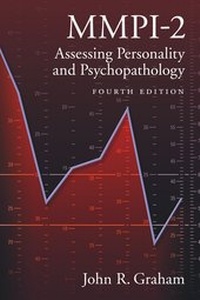
Mmpi-2
Assessing Personality and Psychopathology
4th Edition
Published in September 2005
Book
Hardback
592 pages
978-0-19-516806-8 (ISBN)
Description
Classic, most widely used reference on the MMPI-2 in the field, by one of the world's best experts on the test
- Incorporates information from a large number of recent empirical research studies
- Features expanded appendices with a wealth of technical material
- Discusses the latest developments in supplementary scales
- Offers a section concerning the use of MMPI-2 with special populations such as older adults, ethnic minorities, medical patients, and prisoners
The MMPI-2 is the most widely used personality test in the United States and around the world. It is employed in mental health settings, medical centers, and correctional programs, and is frequently admitted as evidence in legal proceedings. In addition, use of the MMPI-2 in the process of screening applicants for jobs that involve public trust and safety is spreading rapidly. The fourth edition of MMPI-2: Assessing Personality and Psychopathology describes effective uses of the MMPI-2 and explains how to accurately interpret test results. Current and comprehensive, it presents detailed instructions for administering, scoring, and coding the MMPI-2. It also discusses the most recent interpretations of the test's validity, clinical content, and supplementary scales; illustrating points with case studies and examples. In addition, the book covers two new sets of scales: the Restructured Clinical (RC) scales, which help focus the interpretation of the original clinical scales; and the Personality Psychopathology 5 (PSY-5) scales, which assess major dimensions of normal and abnormal personality. MMPI-2: Assessing Personality and Psychopathology, Fourth Edition, is ideal for graduate courses in psychological assessment and an indispensable guide for researchers and clinicians working in personality assessment.
Contents
- Foreword
- Preface
- Acknowledgments
- 1 Development of the MMPI And MMPI-2
- 2 Administration and Scoring
- 3 The Validity Scales
- 4 The Clinical Scales
- 5 Code Types
- 6 Content Interpretation
- 7 Restructured Clinical (RC) and Personality Psychopathology Five (Psy-5) Scales
- 8 Supplementary Scales
- 9 Psychometric Considerations
- 10 Use With Special Groups
- 11 An Interpretive Strategy
- 12 Computerized Administration, Scoring, and Interpretation
- 13 Forensic Applications Of The MMPI-2
- Appendixes
- A. Composition of Standard Validity and Clincal Scales
- B. T-Score Conversions for Standard Validity and Clinical Scales
- C. Composition of Harris-Lingoes Subscales
- D. Linear T-Score Conversions for Harris-Lingoes Subscales
- E. Composition of SI Subscales
- F. Linear T-Score Conversions for SI Subscales
- G. Composition of Content Scales
- H. Uniform T-Score Conversions for Content Scales
- I. Composition of Content Component Scales
- J. Uniform T-Score Conversions for Content Component Scales
- K. Koss-Butcher Critical Item Numbers
- L. Composition of Restructured Clinical (RC) Scales
- M. Uniform T-Score Conversions for Restructured Clinical (RC) Scales
- N. Composition of Personality Psychopathology Five (Psy-5) Scales
- O. Uniform T-Score Conversions for Personality Psychopathology Five (Psy-5) Scales
- P. Composiiton of Supplementary Scales
- Q. Linear T-Score Conversions for Supplementary Scales
- R. Intercorrelations of MMPI-2 Scales for Normative Sample
- S. Percentile Equivalents for Uniform T Scores
- T. Four Practice Cases: Background Information and Extended Score Reports
- Author Index
- Subject Index
- Incorporates information from a large number of recent empirical research studies
- Features expanded appendices with a wealth of technical material
- Discusses the latest developments in supplementary scales
- Offers a section concerning the use of MMPI-2 with special populations such as older adults, ethnic minorities, medical patients, and prisoners
The MMPI-2 is the most widely used personality test in the United States and around the world. It is employed in mental health settings, medical centers, and correctional programs, and is frequently admitted as evidence in legal proceedings. In addition, use of the MMPI-2 in the process of screening applicants for jobs that involve public trust and safety is spreading rapidly. The fourth edition of MMPI-2: Assessing Personality and Psychopathology describes effective uses of the MMPI-2 and explains how to accurately interpret test results. Current and comprehensive, it presents detailed instructions for administering, scoring, and coding the MMPI-2. It also discusses the most recent interpretations of the test's validity, clinical content, and supplementary scales; illustrating points with case studies and examples. In addition, the book covers two new sets of scales: the Restructured Clinical (RC) scales, which help focus the interpretation of the original clinical scales; and the Personality Psychopathology 5 (PSY-5) scales, which assess major dimensions of normal and abnormal personality. MMPI-2: Assessing Personality and Psychopathology, Fourth Edition, is ideal for graduate courses in psychological assessment and an indispensable guide for researchers and clinicians working in personality assessment.
Contents
- Foreword
- Preface
- Acknowledgments
- 1 Development of the MMPI And MMPI-2
- 2 Administration and Scoring
- 3 The Validity Scales
- 4 The Clinical Scales
- 5 Code Types
- 6 Content Interpretation
- 7 Restructured Clinical (RC) and Personality Psychopathology Five (Psy-5) Scales
- 8 Supplementary Scales
- 9 Psychometric Considerations
- 10 Use With Special Groups
- 11 An Interpretive Strategy
- 12 Computerized Administration, Scoring, and Interpretation
- 13 Forensic Applications Of The MMPI-2
- Appendixes
- A. Composition of Standard Validity and Clincal Scales
- B. T-Score Conversions for Standard Validity and Clinical Scales
- C. Composition of Harris-Lingoes Subscales
- D. Linear T-Score Conversions for Harris-Lingoes Subscales
- E. Composition of SI Subscales
- F. Linear T-Score Conversions for SI Subscales
- G. Composition of Content Scales
- H. Uniform T-Score Conversions for Content Scales
- I. Composition of Content Component Scales
- J. Uniform T-Score Conversions for Content Component Scales
- K. Koss-Butcher Critical Item Numbers
- L. Composition of Restructured Clinical (RC) Scales
- M. Uniform T-Score Conversions for Restructured Clinical (RC) Scales
- N. Composition of Personality Psychopathology Five (Psy-5) Scales
- O. Uniform T-Score Conversions for Personality Psychopathology Five (Psy-5) Scales
- P. Composiiton of Supplementary Scales
- Q. Linear T-Score Conversions for Supplementary Scales
- R. Intercorrelations of MMPI-2 Scales for Normative Sample
- S. Percentile Equivalents for Uniform T Scores
- T. Four Practice Cases: Background Information and Extended Score Reports
- Author Index
- Subject Index
More details
Edition
4th Revised edition
Language
English
Place of publication
Oxford
United Kingdom
Publishing group
Oxford University Press
Target group
Professional and scholarly
Graduate courses in psychological assessment and researchers and clinicians working in personality assessment
Edition type
Revised edition
Illustrations
graphs, num. tab.
numerous tables and graphs
Dimensions
Height: 233 mm
Width: 153 mm
Thickness: 31 mm
Weight
968 gr
ISBN-13
978-0-19-516806-8 (9780195168068)
Copyright in bibliographic data and cover images is held by Nielsen Book Services Limited or by the publishers or by their respective licensors: all rights reserved.
Schweitzer Classification
Other editions
Previous edition
John R. Graham
MMPI-2
Book
11/1999
3rd Edition
Oxford University Press Inc
€60.66
Article exhausted; check for reprint
Person
John R. Graham, Professor of Psychology, Kent State University, USA
JOHN R. GRAHAM is Professor of Psychology at Kent State University. He began his work with the MMPI during his graduate training at the University of North Carolina in the 1960s. He is the author of several books about the MMPI and its applications as well as numerous empirical articles. He played a major role in the development of the MMPI-2 and MMPI-A and has taught workshops on the test throughout the world.
JOHN R. GRAHAM is Professor of Psychology at Kent State University. He began his work with the MMPI during his graduate training at the University of North Carolina in the 1960s. He is the author of several books about the MMPI and its applications as well as numerous empirical articles. He played a major role in the development of the MMPI-2 and MMPI-A and has taught workshops on the test throughout the world.