

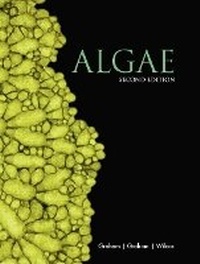
Algae
2nd Edition
Published on 1. December 2008
Book
Hardback
720 pages
978-0-321-55965-4 (ISBN)
Description
The foremost textbook and reference for studying Phycology, Algae, Second Edition, features hundreds of new illustrations, a new chapter on terrestrial algae, and thorough updates that reflect new classification structures. With an emphasis on algae ecology and molecular biology, the authors focus on what students really want to know about algae-why they are so diverse; how they are related; how to distinguish the major types; their roles in food webs; global biogeochemical cycling; the formation of harmful algae blooms; and how we utilize them. The text also provides a broad coverage of freshwater, marine, and terrestrial algae.
More details
Edition
2nd edition
Language
English
Place of publication
United States
Publishing group
Pearson Education (US)
Target group
College/higher education
Dimensions
Height: 262 mm
Width: 209 mm
Thickness: 30 mm
Weight
1510 gr
ISBN-13
978-0-321-55965-4 (9780321559654)
Copyright in bibliographic data and cover images is held by Nielsen Book Services Limited or by the publishers or by their respective licensors: all rights reserved.
Schweitzer Classification
Other editions
Previous edition
Persons
Linda E. Graham is Professor of Botany at the University of Wisconsin-Madison. She teaches a field and laboratory course on algal biology and serves as a consultant to governmental agencies and industry on issues related to algae in the environment or as a source of useful products and processes. Her research lab focuses on algal phylogeny and evolutionary links between green algae and land plants, aspects of algal physiology and ecological associations in freshwaters, and biotechnological applications of algae. Dr. Graham earned a bachelor's degree from Washington University in St. Louis, a master's degree from the University of Texas, and a Ph.D. from the University of Michigan. As a Ph.D. student, she also trained in marine algae at the Friday Harbor Labs operated by the University of Washington. Dr. Graham is a Fellow of the AAAS.
Lee W. Wilcox received his Ph.D. in Botany from the University of Wisconsin-Madison. His research interests include symbiosis, evolution, and cell biology of dinoflagellates, green algae, and plants. Dr. Wilcox designed the art programs for Algae and Plant Biology and has provided many original photographs for both texts. He has also contributed photographs and illustrations to a variety of scientific articles, book chapters, and textbooks.
Lee W. Wilcox received his Ph.D. in Botany from the University of Wisconsin-Madison. His research interests include symbiosis, evolution, and cell biology of dinoflagellates, green algae, and plants. Dr. Wilcox designed the art programs for Algae and Plant Biology and has provided many original photographs for both texts. He has also contributed photographs and illustrations to a variety of scientific articles, book chapters, and textbooks.
Content
1. Introduction to the Algae
2. The Roles of Algae in Biogeochemistry
3. Algae in Biotic Associations
4. Technological Applications of Algae
5. Algal Diversity And Relationships
6. Cyanobacteria (Chloroxybacteria)
7. Endosymbiosis and the Diversification of Eukaryotic Algae With a Focus on Glaucophytes and Chlorarachniophytes
8. Euglenoids
9. Cryptomonads
10. Haptophytes
11. Dinoflagellates
12. Photosynthetic Stramenopiles I Introduction and Diatoms
13. Photosynthetic Stramenopiles II Chrysophyceans, Synurophyceans, Eustigmatophyceans, Raphidophyceans, Pelagophyceans, Dictyochophyceans
14. Photosynthetic Stramenopiles III Xanthophyceans, Phaeophyceans, and their Close Relatives
15. Red Algae
16. Green Algae I Introduction and Prasinophyceans
17. Green Algae II Ulvophyceans
18. Green Algae III Trebouxiophyceans
19. Green Algae IV Chlorophyceans
20. Green Algae V Charophyceans
21. Phytoplankton Ecology
22. Macroalgal and Periphyton Ecology
23. Terrestrial Algal Ecology
2. The Roles of Algae in Biogeochemistry
3. Algae in Biotic Associations
4. Technological Applications of Algae
5. Algal Diversity And Relationships
6. Cyanobacteria (Chloroxybacteria)
7. Endosymbiosis and the Diversification of Eukaryotic Algae With a Focus on Glaucophytes and Chlorarachniophytes
8. Euglenoids
9. Cryptomonads
10. Haptophytes
11. Dinoflagellates
12. Photosynthetic Stramenopiles I Introduction and Diatoms
13. Photosynthetic Stramenopiles II Chrysophyceans, Synurophyceans, Eustigmatophyceans, Raphidophyceans, Pelagophyceans, Dictyochophyceans
14. Photosynthetic Stramenopiles III Xanthophyceans, Phaeophyceans, and their Close Relatives
15. Red Algae
16. Green Algae I Introduction and Prasinophyceans
17. Green Algae II Ulvophyceans
18. Green Algae III Trebouxiophyceans
19. Green Algae IV Chlorophyceans
20. Green Algae V Charophyceans
21. Phytoplankton Ecology
22. Macroalgal and Periphyton Ecology
23. Terrestrial Algal Ecology