

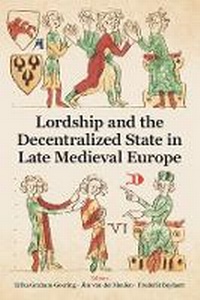
Lordship and the Decentralized State in Late Medieval Europe
Published on 23. January 2025
Book
Hardback
316 pages
978-0-19-726784-4 (ISBN)
Description
The origins of modern European states are often traced back to the expansion of royal and princely authority in the late Middle Ages, transforming scattered power structures into centralized governments.
Lordship and the Decentralized State in Late Medieval Europe rethinks state formation as a process of decentralization, exploring how these governments willingly left power to lesser political players. It challenges the assumption that the rise of states made lordship obsolete, showing instead how distributing authority among local lords reinforced the development of new political systems.
The contributors tackle this fresh perspective on lordship and state formation from two complementary angles. Detailed snapshots of lordship in France and the Low Countries assess the political significance of different aspects of lordly power. Historiographical essays discuss frameworks for understanding relationships between lordship and the state in contexts across Europe. These comparative perspectives establish an innovative approach to a key question in political history.
Lordship and the Decentralized State in Late Medieval Europe rethinks state formation as a process of decentralization, exploring how these governments willingly left power to lesser political players. It challenges the assumption that the rise of states made lordship obsolete, showing instead how distributing authority among local lords reinforced the development of new political systems.
The contributors tackle this fresh perspective on lordship and state formation from two complementary angles. Detailed snapshots of lordship in France and the Low Countries assess the political significance of different aspects of lordly power. Historiographical essays discuss frameworks for understanding relationships between lordship and the state in contexts across Europe. These comparative perspectives establish an innovative approach to a key question in political history.
More details
Series
Language
English
Place of publication
Oxford
United Kingdom
Target group
Professional and scholarly
Illustrations
8 figures, 5 maps
Dimensions
Height: 241 mm
Width: 162 mm
Thickness: 22 mm
Weight
632 gr
ISBN-13
978-0-19-726784-4 (9780197267844)
Copyright in bibliographic data and cover images is held by Nielsen Book Services Limited or by the publishers or by their respective licensors: all rights reserved.
Schweitzer Classification
Persons
Erika Graham-Goering is Associate Professor in the Department of Archaeology, Conservation, and History at the University of Oslo.
Jim van der Meulen is a social historian at Ghent University with a broad specialisation in the Low Countries between 1300 and 1700, combining expertise in political, socio-economic, cultural, and environmental history.
Frederik Buylaert, Professor of History at Ghent University, is a social historian of the Low Countries with a side interest in comparative history and the history of historiography.
Jim van der Meulen is a social historian at Ghent University with a broad specialisation in the Low Countries between 1300 and 1700, combining expertise in political, socio-economic, cultural, and environmental history.
Frederik Buylaert, Professor of History at Ghent University, is a social historian of the Low Countries with a side interest in comparative history and the history of historiography.
Content
List of Figures and Maps
List of Tables
Notes on Contributors
Acknowledgements
Foreword
Introduction: Lordship and the Decentralized State in Late Medieval Europe
1: John Watts: Lordship and the State: Alloy or Emulsion?
Part I Case Studies of Lordship in France and the Low Countries
2: Erika Graham-Goering: Integrative Approaches to (Co-)Lordship in Late Medieval Languedoc
3: Ysaline Bourgine de Meder: Rehabilitating Norman Lordship: The Fief of Hauberk and its Judicial Rights in the 15th and 16th Centuries
4: Georg Jostkleigrewe: (De)Centralizing Governance in Late Medieval France: Actors and Mechanisms
5: Frederik Buylaert: Seigneurial Lordship and the State in the County of Flanders (c. 1350-1550)
6: Wim Blockmans: Pursuit of Nobility and the Priorities of Political Representatives in Early 15th-Century Flanders
7: Rombert Stapel and Arie van Steensel: Lordship in Medieval Holland and Zeeland
8: Janna Everaert and Sieben Feys: Urban Political Elites and Seigneurial Lordship: Antwerp and its Hinterland (c. 1400-1550)
9: Mario Damen and Jim van der Meulen: The Seigneurial Landscapes of Riverine Brabant and Guelders (15th-16th Centuries)
Conclusions to Part I: Lordship, Commonwealth, Variegated Polities, and the State
Part II European Historiographies of Lordship
10: Chris Given-Wilson: Lordship and State Formation in Late Medieval England
11: Alice Taylor: Lordship and State Formation in Scotland, 1300-1500
12: Hillay Zmora: Lordship and State Formation in the Holy Roman Empire, 1300-1550
13: Francesco Bozzi: A Land of Lords: Lordship and State Formation in the Italian Peninsula
14: Jose Antonio Jara Fuente: Jurisdiction: The Crooked Leg of Lordship? State Formation in Castile in the 15th Century
15: Hans Jacob Orning: Lordship and State in Scandinavia, c. 1300-1500
Conclusions to Part II: State and Lordship: Concluding Remarks
Index
List of Tables
Notes on Contributors
Acknowledgements
Foreword
Introduction: Lordship and the Decentralized State in Late Medieval Europe
1: John Watts: Lordship and the State: Alloy or Emulsion?
Part I Case Studies of Lordship in France and the Low Countries
2: Erika Graham-Goering: Integrative Approaches to (Co-)Lordship in Late Medieval Languedoc
3: Ysaline Bourgine de Meder: Rehabilitating Norman Lordship: The Fief of Hauberk and its Judicial Rights in the 15th and 16th Centuries
4: Georg Jostkleigrewe: (De)Centralizing Governance in Late Medieval France: Actors and Mechanisms
5: Frederik Buylaert: Seigneurial Lordship and the State in the County of Flanders (c. 1350-1550)
6: Wim Blockmans: Pursuit of Nobility and the Priorities of Political Representatives in Early 15th-Century Flanders
7: Rombert Stapel and Arie van Steensel: Lordship in Medieval Holland and Zeeland
8: Janna Everaert and Sieben Feys: Urban Political Elites and Seigneurial Lordship: Antwerp and its Hinterland (c. 1400-1550)
9: Mario Damen and Jim van der Meulen: The Seigneurial Landscapes of Riverine Brabant and Guelders (15th-16th Centuries)
Conclusions to Part I: Lordship, Commonwealth, Variegated Polities, and the State
Part II European Historiographies of Lordship
10: Chris Given-Wilson: Lordship and State Formation in Late Medieval England
11: Alice Taylor: Lordship and State Formation in Scotland, 1300-1500
12: Hillay Zmora: Lordship and State Formation in the Holy Roman Empire, 1300-1550
13: Francesco Bozzi: A Land of Lords: Lordship and State Formation in the Italian Peninsula
14: Jose Antonio Jara Fuente: Jurisdiction: The Crooked Leg of Lordship? State Formation in Castile in the 15th Century
15: Hans Jacob Orning: Lordship and State in Scandinavia, c. 1300-1500
Conclusions to Part II: State and Lordship: Concluding Remarks
Index