

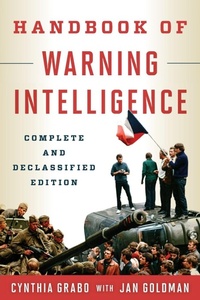
Handbook of Warning Intelligence
Published on 9. September 2015
Book
Paperback/Softback
454 pages
978-1-4422-4813-7 (ISBN)
Description
This new and final edition is a follow-up to the author's first book, Anticipating Surprise (University Press of America, 2002) and the Handbook of Warning Intelligence (Scarecrow Press, 2010). The first book was an abridged version of Grabo's 1972 manuscript, of which only 200 pages were allowed to be published by the government. The second book was published after it was agreed that the last 10 chapters would remain classified. These final 10 chapters have recently been released by the government and complete the manuscript as it was originally intended to be published by the author in 1972.
The Handbook of Warning Intelligence was written during the cold war and was classified for 40 years. Originally written as a manual for training intelligence analysts, it explains the fundamentals of intelligence analysis and forecasting, discusses military analysis, as well as the difficulties in understanding political, civil, and economic analysis and assessing what it means for analysts to have "warning judgment."
Much of what Grabo wrote in her book seems to appear in many of the numerous commission reports that emerged after the 9/11 attacks. However, her book was written in response to the "surprise attack" of the Soviet Union's invasion of Czechoslovakia in 1968. According to the author, that event was no surprise. And while analysts have to take some of the blame for their failure to strenuously present their case that the threat was real and imminent, what occurred was a failure by policymakers to listen to the warning intelligence reports that were written at the time.
In these last chapters, Grabo discusses scenarios where the United States will need to take action, especially describing Soviet indicators of such action. She also talks on how to influence policymakers to take, or not take, action based on intelligence. After the Soviet Union fell, the government was hesitant to release this information-especially considering what's going on with Putin today.
The Handbook of Warning Intelligence was written during the cold war and was classified for 40 years. Originally written as a manual for training intelligence analysts, it explains the fundamentals of intelligence analysis and forecasting, discusses military analysis, as well as the difficulties in understanding political, civil, and economic analysis and assessing what it means for analysts to have "warning judgment."
Much of what Grabo wrote in her book seems to appear in many of the numerous commission reports that emerged after the 9/11 attacks. However, her book was written in response to the "surprise attack" of the Soviet Union's invasion of Czechoslovakia in 1968. According to the author, that event was no surprise. And while analysts have to take some of the blame for their failure to strenuously present their case that the threat was real and imminent, what occurred was a failure by policymakers to listen to the warning intelligence reports that were written at the time.
In these last chapters, Grabo discusses scenarios where the United States will need to take action, especially describing Soviet indicators of such action. She also talks on how to influence policymakers to take, or not take, action based on intelligence. After the Soviet Union fell, the government was hesitant to release this information-especially considering what's going on with Putin today.
Reviews / Votes
Cynthia Grabo's original Handbook of Warning Intelligence, written in the aftermath of the Soviet/Warsaw Pact invasion of Czechoslovakia has, at long last, been fully declassified. The hitherto secret Part III of her study is now accessible for a public readership in this definitive volume. Professionals, scholars of Intelligence and Security Studies, students of International Affairs, and readers sharing an interest in Conflict and Crisis Management generally will all gain valuable historical and analytical insights from this most valuable-and greatly valued-manual.The focal points on the hitherto classified Part III are on intelligence analysis relating to particular types of warfare, and the provision of relevant, actionable warning intelligence to policy makers. Although the original time frame of the Handbook preceded the contemporary threat of Militant Jihadism, Cynthia Grabo's risk assessments should provide important insights into current, all the more complex intelligence challenges facing analysts and policy makers. The issues addressed in the concluding chapters dealing with the making of analytical judgments regarding imminent threats, and with conveying these threat warnings upwards to managers and policy maker, are all the more telling and pertinent in today's very volatile global security environment. This is a "need to know" Handbook of Warning Intelligence, a Complete and Declassified Work of Cynthina Grabo. -- Martin Rudner, Distinguished Research Professor Emeritus, Carleton University
More details
Series
Edition
Unabridged edition
Language
English
Place of publication
United States
Publishing group
Bloomsbury Publishing Plc
Target group
Professional and scholarly
Edition type
Unabridged edition
Illustrations
1 b/w illustration; 2 tables
Dimensions
Height: 229 mm
Width: 152 mm
Thickness: 27 mm
Weight
732 gr
ISBN-13
978-1-4422-4813-7 (9781442248137)
Copyright in bibliographic data and cover images is held by Nielsen Book Services Limited or by the publishers or by their respective licensors: all rights reserved.
Schweitzer Classification
Other editions
Additional editions
Cynthia Grabo | Jan Goldman
Handbook of Warning Intelligence
E-Book
09/2015
Rowman & Littlefield Publishers
€65.99
Available for download
Persons
Cynthia Grabo received her bachelor's and master's degrees from the University of Chicago. In 1942, she was recruited by Army Intelligence as an analyst on Latin America. In 1949, she transferred to the Soviet branch and was assigned to analysis of Communist military threats. From 1950 to 1975, she was a researcher and writer for the U.S. Watch Committee, the inter-agency intelligence committee responsible for warning of threats to the U.S. and its allies. She subsequently served on the Intelligence Community's Strategic Warning Staff. Ms. Grabo was a recognized authority in the field of strategic warning. Her awards included the Defense Intelligence Agency's Exceptional Civilian Service Medal, the Sherman Kent award for outstanding contribution to the literature of intelligence, and the National Intelligence Medal of Achievement.
Jan Goldman is Professor of Intelligence and National Security Studies at Tiffin University. He has been an analyst and educator in the intelligence and academic communities for over 30 years. He is the founding editor of a series of textbooks for the intelligence profession, Security Professionals Intelligence Education Series-SPIES (Rowman and Littlefield Publishers), and an academic journal focusing on ethics and intelligence. His most recent publications include War on Terror Encyclopedia: From the Rise of Al Qaeda to 9/11 and Beyond, and The Central Intelligence Agency: An Encyclopedia of Covert Operations, Intelligence Gathering, and Spies. He received his doctorate from George Washington University.
Jan Goldman is Professor of Intelligence and National Security Studies at Tiffin University. He has been an analyst and educator in the intelligence and academic communities for over 30 years. He is the founding editor of a series of textbooks for the intelligence profession, Security Professionals Intelligence Education Series-SPIES (Rowman and Littlefield Publishers), and an academic journal focusing on ethics and intelligence. His most recent publications include War on Terror Encyclopedia: From the Rise of Al Qaeda to 9/11 and Beyond, and The Central Intelligence Agency: An Encyclopedia of Covert Operations, Intelligence Gathering, and Spies. He received his doctorate from George Washington University.
Content
Foreword to the new edition
Foreword to the previous edition
Author's note to the original edition
Part I: Why Warning Intelligence And What Is It? Some Fundamentals
Chapter 1: General Nature of the Problem
Chapter 2: Definitions of Terms and Their Usage
Chapter 3: What Warning Is and Is Not
Chapter 4: Warning and Collection
Chapter 5: Intentions versus Capabilities
Part II: Organization and Tools of the Trade
Chapter 6: Problems of Organization and Management
Chapter 7: Indicator lists
Chapter 8: The Compiling of Indications
Chapter 9: Can Computers 'Hel p?
Part III: Introduction to the Analytical Method
Chapter 10: Some Fundamentals of Indications Analysis
Chapter 11: Some Specifics of the Analytical Method.
Chapter 12: What Makes a Good Warning Analyst?
Part IV: Specific Problems of Military Analysis
Chapter 13: Importance of Military Indications
Chapter 14: Order of Bottle Analysis in Crisis Situations
Chapter 15: Analysis of Mobilization
Chapter 16: Logistics is the Queen of Battles
Chapter 17: Other Factors in Combat Preparations
Chapter 18: Coping with Extraordinary Military Developments
Part V: Specific Problems of Political, Civil and Economic Analysis
Chapter 19: Importance of Political Factors for Warning
Chapter 20: Basic Political Warning -- A Problem of Perception
Chapter 21: Some Specific Factors in Political Warning
Chapter 22: Economic Indicators
Chapter 23: Civil Defense
Chapter 24: Security, Counter-Intelligence and Agent Preparations
Part VI: Some Major Analytical Problems
Chapter 25: Warning from the Totality of Evidence
Chapter 26: The Impact on Warning of Circumstances Leading to War
Chapter 27: Reconstructing the Enemy's Decision Making Process
Chapter 28: Assessing the Timing of Attack Chapter 29: Deception: Can We Cope With It?
The following chapters are new to this edition.
Part VII: Problems of Particular Types Of Warfare
Chapter 30: Analysis with Hostilities Already in Progress
Chapter 31: Problems Peculiar to Guerrilla Warfare and "Wars of Liberation"
Chapter 32: Hypothetical Problems of the Coming of World War III
Part VIII: Reaching And Reporting The Warning Judgment
Chapter 33: Vital Importance of the Judgment
Chapter 34: What Does the Policy Maker Need, and Want to Know?
Chapter 35: How to Write Indications or Warning Items
Chapter 36: Assessing Probabilities
Chapter 37: Some Major Factors Influencing Judgments and Reporting
Chapter 38: Most Frequent Errors in the Judgment and Reporting Process
Part IX: Conclusions
Chapter 39: A Summing Up, With Some Do's and Don'ts for Analysts and Supervisors
About the Authors
Foreword to the previous edition
Author's note to the original edition
Part I: Why Warning Intelligence And What Is It? Some Fundamentals
Chapter 1: General Nature of the Problem
Chapter 2: Definitions of Terms and Their Usage
Chapter 3: What Warning Is and Is Not
Chapter 4: Warning and Collection
Chapter 5: Intentions versus Capabilities
Part II: Organization and Tools of the Trade
Chapter 6: Problems of Organization and Management
Chapter 7: Indicator lists
Chapter 8: The Compiling of Indications
Chapter 9: Can Computers 'Hel p?
Part III: Introduction to the Analytical Method
Chapter 10: Some Fundamentals of Indications Analysis
Chapter 11: Some Specifics of the Analytical Method.
Chapter 12: What Makes a Good Warning Analyst?
Part IV: Specific Problems of Military Analysis
Chapter 13: Importance of Military Indications
Chapter 14: Order of Bottle Analysis in Crisis Situations
Chapter 15: Analysis of Mobilization
Chapter 16: Logistics is the Queen of Battles
Chapter 17: Other Factors in Combat Preparations
Chapter 18: Coping with Extraordinary Military Developments
Part V: Specific Problems of Political, Civil and Economic Analysis
Chapter 19: Importance of Political Factors for Warning
Chapter 20: Basic Political Warning -- A Problem of Perception
Chapter 21: Some Specific Factors in Political Warning
Chapter 22: Economic Indicators
Chapter 23: Civil Defense
Chapter 24: Security, Counter-Intelligence and Agent Preparations
Part VI: Some Major Analytical Problems
Chapter 25: Warning from the Totality of Evidence
Chapter 26: The Impact on Warning of Circumstances Leading to War
Chapter 27: Reconstructing the Enemy's Decision Making Process
Chapter 28: Assessing the Timing of Attack Chapter 29: Deception: Can We Cope With It?
The following chapters are new to this edition.
Part VII: Problems of Particular Types Of Warfare
Chapter 30: Analysis with Hostilities Already in Progress
Chapter 31: Problems Peculiar to Guerrilla Warfare and "Wars of Liberation"
Chapter 32: Hypothetical Problems of the Coming of World War III
Part VIII: Reaching And Reporting The Warning Judgment
Chapter 33: Vital Importance of the Judgment
Chapter 34: What Does the Policy Maker Need, and Want to Know?
Chapter 35: How to Write Indications or Warning Items
Chapter 36: Assessing Probabilities
Chapter 37: Some Major Factors Influencing Judgments and Reporting
Chapter 38: Most Frequent Errors in the Judgment and Reporting Process
Part IX: Conclusions
Chapter 39: A Summing Up, With Some Do's and Don'ts for Analysts and Supervisors
About the Authors