

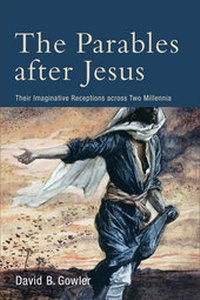
The Parables after Jesus
Their Imaginative Receptions across Two Millennia
Published on 31. January 2017
Book
Paperback/Softback
320 pages
978-0-8010-4999-6 (ISBN)
Description
Jesus's enigmatic and compelling parables have fascinated their hearers since he first uttered them, and during the intervening centuries these parables have produced a multitude of interpretations. This accessibly written book explores the varying interpretations of Jesus's parables across two millennia to demonstrate how powerfully they continue to challenge people's hearts, minds, and imaginations. It covers more than fifty imaginative receptions from different eras, perspectives, and media, showing how the use of Jesus's parables affects society and culture and offering a richer appreciation for Jesus's most striking teachings.
More details
Language
English
Place of publication
Ada, MI
United States
Publishing group
Baker Publishing Group
Target group
College/higher education
Dimensions
Height: 229 mm
Width: 152 mm
Weight
515 gr
ISBN-13
978-0-8010-4999-6 (9780801049996)
Copyright in bibliographic data and cover images is held by Nielsen Book Services Limited or by the publishers or by their respective licensors: all rights reserved.
Schweitzer Classification
Other editions
Additional editions

E-Book
01/2017
Baker Publishing Group
€20.99
Available for download
Person
David B. Gowler, PhD, is the Dr. Lovick Pierce and Bishop George F. Pierce Chair of Religion at Emory University, where he also directs the Pierce Institute for Leadership and Community Engagement and is senior faculty fellow for the Center for Ethics. He has authored numerous books, including What Are They Saying about the Parables? and James through the Centuries.
Content
Contents
Introduction
1. The Afterlives of Jesus's Parables in Antiquity (to ca. 550 CE)
Irenaeus
The Gospel of Philip
Clement of Alexandria
Tertullian
Origen
John Chrysostom
Augustine
Macrina the Younger
Ephrem the Syrian
The Good Shepherd in Early Christian Art
Oil Lamp
Roman Catacombs
Dura-Europos House Church
Illuminations from the Rossano Gospels
Byzantine Mosaics, Christ Separating Sheep from Goats, Sant'Apollinare Nuovo (Ravenna, Italy)
Romanos the Melodist
2. The Afterlives of Jesus's Parables in the Middle Ages (ca. 550-1500 CE)
Gregory the Great
Sahih al-Bukhari
Wazo of Liege
The Golden Gospels of Echternach
The Laborers in the Vineyard
The Wicked Tenants
The Great Dinner
The Rich Man and Lazarus
Theophylact
Hildegard of Bingen
Chartres Cathedral
Bonaventure
Thomas Aquinas
John Gower
Antonia Pulci
Albrecht Duerer
3. The Afterlives of Jesus's Parables in the Sixteenth and Seventeenth Centuries
Martin Luther
Anna Jansz of Rotterdam
John Calvin
John Maldonatus
William Shakespeare
Domenico Fetti
George Herbert
Roger Williams
Rembrandt Harmenszoon van Rijn
John Bunyan
4. The Afterlives of Jesus's Parables in the Eighteenth and Nineteenth Centuries
William Blake
Soren Kierkegaard
Frederick Douglass
Fanny Crosby
Leo Tolstoy
John Everett Millais
Emily Dickinson
Charles Haddon Spurgeon
Adolf Juelicher
5. The Afterlives of Jesus's Parables in the Twentieth and Twenty-First Centuries
Thomas Hart Benton
Parables and the Blues: Rev. Robert Wilkins
Flannery O'Connor
Martin Luther King Jr.
Godspell
Latin American Receptions
The Peasants of Solentiname
Elsa Tamez
David Flusser
Octavia Butler
Thich Nhat Hanh
Conclusion: What Do Parables Want?
Appendix: Descriptions of the Parables Cited in the Interpretations
Indexes
Introduction
1. The Afterlives of Jesus's Parables in Antiquity (to ca. 550 CE)
Irenaeus
The Gospel of Philip
Clement of Alexandria
Tertullian
Origen
John Chrysostom
Augustine
Macrina the Younger
Ephrem the Syrian
The Good Shepherd in Early Christian Art
Oil Lamp
Roman Catacombs
Dura-Europos House Church
Illuminations from the Rossano Gospels
Byzantine Mosaics, Christ Separating Sheep from Goats, Sant'Apollinare Nuovo (Ravenna, Italy)
Romanos the Melodist
2. The Afterlives of Jesus's Parables in the Middle Ages (ca. 550-1500 CE)
Gregory the Great
Sahih al-Bukhari
Wazo of Liege
The Golden Gospels of Echternach
The Laborers in the Vineyard
The Wicked Tenants
The Great Dinner
The Rich Man and Lazarus
Theophylact
Hildegard of Bingen
Chartres Cathedral
Bonaventure
Thomas Aquinas
John Gower
Antonia Pulci
Albrecht Duerer
3. The Afterlives of Jesus's Parables in the Sixteenth and Seventeenth Centuries
Martin Luther
Anna Jansz of Rotterdam
John Calvin
John Maldonatus
William Shakespeare
Domenico Fetti
George Herbert
Roger Williams
Rembrandt Harmenszoon van Rijn
John Bunyan
4. The Afterlives of Jesus's Parables in the Eighteenth and Nineteenth Centuries
William Blake
Soren Kierkegaard
Frederick Douglass
Fanny Crosby
Leo Tolstoy
John Everett Millais
Emily Dickinson
Charles Haddon Spurgeon
Adolf Juelicher
5. The Afterlives of Jesus's Parables in the Twentieth and Twenty-First Centuries
Thomas Hart Benton
Parables and the Blues: Rev. Robert Wilkins
Flannery O'Connor
Martin Luther King Jr.
Godspell
Latin American Receptions
The Peasants of Solentiname
Elsa Tamez
David Flusser
Octavia Butler
Thich Nhat Hanh
Conclusion: What Do Parables Want?
Appendix: Descriptions of the Parables Cited in the Interpretations
Indexes