


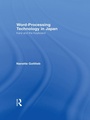
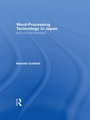
Word-Processing Technology in Japan
Kanji and the Keyboard
1st Edition
Published on 22. June 2000
Book
Hardback
236 pages
978-0-7007-1222-9 (ISBN)
Description
This book deals with a topical issue relating to the use of script in Japan, one which has the potential to reshape future script policy through the mediation of both orthographic practices and social relations. It tells the story of the impact of one of the most significant technological breakthroughs in Japan in the latter part of this century: the invention and rapid adoption of word-processing technology capable of handling Japanese script in a society where the nature of that script had previously mandated handwriting as the norm. The ramifications of this technology in both the business and personal spheres have been wide-ranging, extending from changes to business practices, work profiles, orthography and social attitudes to writing through to Japan's ability to construct a substantial presence on the Internet in recent years.
Reviews / Votes
'This book provides illuminating insights into the far-reaching effects of the technology we use every day.' - The Japan SocietyMore details
Language
English
Place of publication
London
United Kingdom
Publishing group
Taylor & Francis Ltd
Target group
College/higher education
Dimensions
Height: 240 mm
Width: 161 mm
Thickness: 17 mm
Weight
523 gr
ISBN-13
978-0-7007-1222-9 (9780700712229)
Copyright in bibliographic data and cover images is held by Nielsen Book Services Limited or by the publishers or by their respective licensors: all rights reserved.
Schweitzer Classification
Other editions
Additional editions
E-Book
09/2013
Routledge
€60.49
Available for download
E-Book
09/2013
1st Edition
Routledge
€60.49
Available for download
Person
Nanette Gottlieb
Content
Part 1: patterns of growths; why the script delayed the technology; the typewriter age; the Kana typewriter; office automation; romanisation - a serious alternative? implications of the technology - a local reading. Part 2: some early case studies; early reactions; outside the office; a continuing trajectory. Part 3: increase in number of printed documents; standardisation; Kanji overload; revival of complex Kanji; Kanji mistakes; Ategi and Muimigo; forgetting Kanji; the changing view of Kanji; the role of the national language council; the long-term outlook. Part 4: the personal letter; the handwriting complex; the written word - written how? same lifestyle consequences for the user; consumerism; changes in the work force. Part 5: essentialism and internationalisation; language nationalism; the script factor; Kanji on the Internet.