

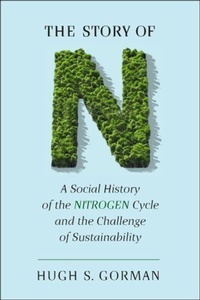
The Story of N
A Social History of the Nitrogen Cycle and the Challenge of Sustainability
Will be published approx. on 24. January 2013
Book
Hardback
260 pages
978-0-8135-5438-9 (ISBN)
Description
In The Story of N, Hugh S. Gorman analyzes the notion of sustainability from a fresh perspective-the integration of human activities with the biogeochemical cycling of nitrogen-and provides a supportive alternative to studying sustainability through the lens of climate change and the cycling of carbon. It is the first book to examine the social processes by which industrial societies learned to bypass a fundamental ecological limit and, later, began addressing the resulting concerns by establishing limits of their own
The book is organized into three parts. Part I, "The Knowledge of Nature," explores the emergence of the nitrogen cycle before humans arrived on the scene and the changes that occurred as stationary agricultural societies took root. Part II, "Learning to Bypass an Ecological Limit," examines the role of science and market capitalism in accelerating the pace of innovation, eventually allowing humans to bypass the activity of nitrogen-fixing bacteria. Part III, "Learning to Establish Human-Defined Limits," covers the twentieth-century response to the nitrogen-related concerns that emerged as more nitrogenous compounds flowed into the environment. A concluding chapter, "The Challenge of Sustainability," places the entire story in the context of constructing an ecological economy in which innovations that contribute to sustainable practices are rewarded.
The book is organized into three parts. Part I, "The Knowledge of Nature," explores the emergence of the nitrogen cycle before humans arrived on the scene and the changes that occurred as stationary agricultural societies took root. Part II, "Learning to Bypass an Ecological Limit," examines the role of science and market capitalism in accelerating the pace of innovation, eventually allowing humans to bypass the activity of nitrogen-fixing bacteria. Part III, "Learning to Establish Human-Defined Limits," covers the twentieth-century response to the nitrogen-related concerns that emerged as more nitrogenous compounds flowed into the environment. A concluding chapter, "The Challenge of Sustainability," places the entire story in the context of constructing an ecological economy in which innovations that contribute to sustainable practices are rewarded.
Reviews / Votes
"This is a profound book about humans, the biogeochemical cycles of the planet, science and technology, market capitalism, ecological limits, and government regulatory processes, all illustrated through the history of our relationship with nitrogen and the nitrogen cycle. This is an important book."(Wildlife Activist) "Gorman has written an extremely readable natural and human history and a compelling account of the foundations of science that continue to reshape our view of what is possible in the natural future of our planet." - Chris Young (author of The Environment and Science: Social Impact and Interaction) "Hugh Gorman has written a wonderfully accessible study that uses the history of the nitrogen cycle to explore the concept of sustainability and to make recommendations for the integration of ecological limits into market decisions."
- Joel Tarr (Carnegie Mellon University) "The Story of N provides a narrative framework on which to hang the disparate histories of modern environmental thought. Gorman combines scientificsummary with historical context, using both to inform contemporary policy discussion ... This is a book that does real work." (Technology and Culture) "For those who struggle to find works that explain and utilize science effectively when discussing social themes, this book will be an excellent resource." (Journal of World History)
More details
Series
Edition
None edition
Language
English
Place of publication
New Brunswick NJ
United States
Target group
College/higher education
Product notice
Unsewn / adhesive bound
Paper over boards
With dust jacket
Illustrations
2 figures
Dimensions
Height: 236 mm
Width: 159 mm
Thickness: 25 mm
Weight
507 gr
ISBN-13
978-0-8135-5438-9 (9780813554389)
Copyright in bibliographic data and cover images is held by Nielsen Book Services Limited or by the publishers or by their respective licensors: all rights reserved.
Schweitzer Classification
Other editions
Additional editions
E-Book
01/2013
1st Edition
Rutgers University Press
€160.99
Available for download
Person
HUGH S. GORMAN teaches in the energy and environmental policy graduate program at Michigan Technological University. He is the author of Redefining Efficiency: Pollution Concerns, Regulatory Mechanisms, and Technological Change in the U.S. Petroleum Industry.
Content
The emergence of a biogeochemical cycle
From adaption to innovation
Innovation within an ecological limit
N and the emergence of market capitalism
N and the rise of science
Bypassing an ecological limit
Industrializing a biogeomical cycle
N in the well
N in the air
N in the law
N and the seeds of an ecological economy
Conclusion: the challenge of sustainability
From adaption to innovation
Innovation within an ecological limit
N and the emergence of market capitalism
N and the rise of science
Bypassing an ecological limit
Industrializing a biogeomical cycle
N in the well
N in the air
N in the law
N and the seeds of an ecological economy
Conclusion: the challenge of sustainability