

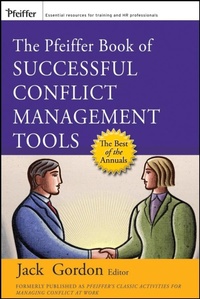
The Pfeiffer Book of Successful Conflict Management Tools
1st Edition
Will be published approx. on 13. November 2007
Book
Paperback/Softback
452 pages
978-0-470-19344-0 (ISBN)
Description
The Pfeiffer Book of Successful Managing Conflict Tools is organized into three sections: Presentations and Discussions (articles); Experiential Learning Activities; and Inventories, Questionnaires, and Surveys. These selections represent the all-time best the Pfeiffer Annuals and Handbooks have to offer on the topic. The Pfeiffer Book of Successful Managing Conflict Tools
Provides articles that offer timeless advice for dealing and classifying organizational conflict
Contains complete, ready-made training exercises designed to meet a variety of needs for different audiences
Offers inventories that include questionnaires and instruments that help participants recognize the destructive effects of hidden agendas and how to deal with them and surveys that encourage honest talk about controversial issues in the organization
Provides articles that offer timeless advice for dealing and classifying organizational conflict
Contains complete, ready-made training exercises designed to meet a variety of needs for different audiences
Offers inventories that include questionnaires and instruments that help participants recognize the destructive effects of hidden agendas and how to deal with them and surveys that encourage honest talk about controversial issues in the organization
More details
Language
English
Place of publication
United States
Publishing group
John Wiley & Sons Inc
Target group
Professional and scholarly
Product notice
Paperback (trade)
Unsewn / adhesive bound
Dimensions
Height: 221 mm
Width: 152 mm
Thickness: 33 mm
Weight
522 gr
ISBN-13
978-0-470-19344-0 (9780470193440)
Copyright in bibliographic data and cover images is held by Nielsen Book Services Limited or by the publishers or by their respective licensors: all rights reserved.
Schweitzer Classification
Person
Jack Gordon is a former chief editor of Training Magazine and an award-winning writer. He is the editor of numerous books, including The Pfeiffer Book of Successful Communication Skill-Building Tools and The Pfeiffer Book of Successful Leadership Development Tools.
Content
How to Use This Resource. About the Editor.
Introduction.
PART 1: PRESENTATION AND DISCUSSION RESOURCES.
1. The Art of Creative Fighting (H.B. Karp).
2. Conflict-Resolution Strategies (Joan A. Stepsis).
3. Win/Lose Situations (Gerry E. Wiley).
4. A Taxonomy of Intergroup Conflict-Resolution Strategies (Daniel C. Feldman).
5. Developing Collaboration in Organizations (Udai Pareek).
6. Constructive Conflict in Discussions: Learning to Manage Disagreements Effectively (Julia T. Wood).
7. Dealing with Disruptive People in Meetings (John E. Jones).
8. Confrontational Communication (Merna L. Skinner).
9. A Positive Approach to Resistance (H.B. Karp).
10. Breaking Down Boundaries: Breaking Through Resistance (Ron Ashkenas).
PART 2: EXPERIENTIAL LEARNING ACTIVITIES.
Experiential Learning Activities: Conflict and the Team .
1. What to Look for in Groups: An Observation Guide (Philip G. Hanson).
2. Conflict Styles: Organizational Decision Making (Donald T. Simpson).
3. Win As Much As You Can: An Intergroup Competition (W. Gellerman).
4. Power Poker: What's in It for Me? (Linda Raudenbush and Steve Sugar).
5. Trouble in Manufacturing: Managing Interpersonal Conflict (John E. Oliver).
6. Dynasell: Hidden Agendas and Trust (William W. Kibler).
7. Current Status: A Feedback Activity on Trust (Robert N. Glenn).
Experiential Learning Activities: Conflict and the Individual.
8. Retaliatory Cycle: Introducing the Elements of Conflict (Daniel Dana).
9. Alter Ego: Saying What You Mean (Duane C. Tway).
10. Conflict Role Play: Resolving Differences (Robert P. Belforti, Lauren A. Hagan, Ben Markens, Cheryl A. Monyak, Gary N. Powell, Karen Sykas Sighinolfi).
11. Resistance: A Role Play (H.B. Karp).
12. Neutral Corner: Deciding on an Issue (Linda Raudenbush and Steve Sugar).
13. Communication Games: Eliminating Unproductive (Don Morrison).
14. The Company Task Force: Dealing with Disruptive Behavior (Suzanne W. Whitcomb).
Experiential Learning Activities: Conflict and the Organization.
15. Budget Cutting: Conflict and Consensus Seeking (Terry L. Maris).
16. Winterset High School: An Intergroup-Conflict Simulation (Charles E. List).
17. Crime-Fighting Task Force: Understanding Political Tactics in Groups (R. Bruce McAfee and Robert A. Herring III).
18. Piccadilly Manor: Improving Decision Making in a Political Milieu (A. Carol Rusaw).
19. Merger Mania: Understanding Intercultural Negotiation (John Chesser).
20. Lindell-Billings Corporation: A Confrontational Role Play (Thomas H. Patten, Jr).
PART 3: INVENTORIES, QUESTIONNAIRES, AND SURVEYS.
1. Conflict Management Climate Index (Bob Crosby and John J. Scherer).
2. Cornerstones: A Measure of Trust in Work Relationships (Amy M. Birtel, Valerie C. Nellen, and Susan B. Wilkes).
3. The Team Effectiveness Critique (Mark Alexander).
4. Trust-Orientation Profile (Myron R. Chartier).
5. Conflict-Management Style Survey (Marc Robert).
6. Communication Audit: A Pairs Analysis (Scott B. Parry).
7. Inventory of Anger Communication (IAC) (Millard J. Bienvenu, Sr.).
8. The Defensiveness Inventory (Beverly Byrum-Robinson and B.J. Hennig).
Introduction.
PART 1: PRESENTATION AND DISCUSSION RESOURCES.
1. The Art of Creative Fighting (H.B. Karp).
2. Conflict-Resolution Strategies (Joan A. Stepsis).
3. Win/Lose Situations (Gerry E. Wiley).
4. A Taxonomy of Intergroup Conflict-Resolution Strategies (Daniel C. Feldman).
5. Developing Collaboration in Organizations (Udai Pareek).
6. Constructive Conflict in Discussions: Learning to Manage Disagreements Effectively (Julia T. Wood).
7. Dealing with Disruptive People in Meetings (John E. Jones).
8. Confrontational Communication (Merna L. Skinner).
9. A Positive Approach to Resistance (H.B. Karp).
10. Breaking Down Boundaries: Breaking Through Resistance (Ron Ashkenas).
PART 2: EXPERIENTIAL LEARNING ACTIVITIES.
Experiential Learning Activities: Conflict and the Team .
1. What to Look for in Groups: An Observation Guide (Philip G. Hanson).
2. Conflict Styles: Organizational Decision Making (Donald T. Simpson).
3. Win As Much As You Can: An Intergroup Competition (W. Gellerman).
4. Power Poker: What's in It for Me? (Linda Raudenbush and Steve Sugar).
5. Trouble in Manufacturing: Managing Interpersonal Conflict (John E. Oliver).
6. Dynasell: Hidden Agendas and Trust (William W. Kibler).
7. Current Status: A Feedback Activity on Trust (Robert N. Glenn).
Experiential Learning Activities: Conflict and the Individual.
8. Retaliatory Cycle: Introducing the Elements of Conflict (Daniel Dana).
9. Alter Ego: Saying What You Mean (Duane C. Tway).
10. Conflict Role Play: Resolving Differences (Robert P. Belforti, Lauren A. Hagan, Ben Markens, Cheryl A. Monyak, Gary N. Powell, Karen Sykas Sighinolfi).
11. Resistance: A Role Play (H.B. Karp).
12. Neutral Corner: Deciding on an Issue (Linda Raudenbush and Steve Sugar).
13. Communication Games: Eliminating Unproductive (Don Morrison).
14. The Company Task Force: Dealing with Disruptive Behavior (Suzanne W. Whitcomb).
Experiential Learning Activities: Conflict and the Organization.
15. Budget Cutting: Conflict and Consensus Seeking (Terry L. Maris).
16. Winterset High School: An Intergroup-Conflict Simulation (Charles E. List).
17. Crime-Fighting Task Force: Understanding Political Tactics in Groups (R. Bruce McAfee and Robert A. Herring III).
18. Piccadilly Manor: Improving Decision Making in a Political Milieu (A. Carol Rusaw).
19. Merger Mania: Understanding Intercultural Negotiation (John Chesser).
20. Lindell-Billings Corporation: A Confrontational Role Play (Thomas H. Patten, Jr).
PART 3: INVENTORIES, QUESTIONNAIRES, AND SURVEYS.
1. Conflict Management Climate Index (Bob Crosby and John J. Scherer).
2. Cornerstones: A Measure of Trust in Work Relationships (Amy M. Birtel, Valerie C. Nellen, and Susan B. Wilkes).
3. The Team Effectiveness Critique (Mark Alexander).
4. Trust-Orientation Profile (Myron R. Chartier).
5. Conflict-Management Style Survey (Marc Robert).
6. Communication Audit: A Pairs Analysis (Scott B. Parry).
7. Inventory of Anger Communication (IAC) (Millard J. Bienvenu, Sr.).
8. The Defensiveness Inventory (Beverly Byrum-Robinson and B.J. Hennig).