

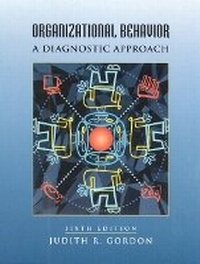
Organizational Behavior
A Diagnostic Approach: International Edition
6th Edition
Published on 3. February 1999
Book
Paperback/Softback
592 pages
978-0-13-096196-9 (ISBN)
Description
This is not a cut-and-dry approach to OB: Gordon's underlying viewpoint assumes that more than one perspective in OB can be right. She prepares students to analyze organizational situations in a variety of ways, rather than just one. To this end, she presents her acclaimed diagnostic approach, integrating diagnosis-describing, understanding and explaining behavior-and action-controlling, managing or influencing behavior-to bridge the gap between comprehension and understanding. The Sixth Edition also continues to integrate theory, research and applications, with numerous current real-world examples throughout.
More details
Edition
6th edition
Language
English
Place of publication
United States
Publishing group
Pearson Education (US)
Target group
Professional and scholarly
Dimensions
Height: 254 mm
Width: 205 mm
Thickness: 22 mm
Weight
1025 gr
ISBN-13
978-0-13-096196-9 (9780130961969)
Copyright in bibliographic data and cover images is held by Nielsen Book Services Limited or by the publishers or by their respective licensors: all rights reserved.
Schweitzer Classification
Other editions
New editions
Book
07/2001
7th Edition
Pearson
€120.27
Article exhausted; check for reprint
Content
(NOTE: Chapters begin with A Manager's Preview and end with Summary, A Manager's Diagnostic Review, Take It to the Net, Endnotes, and Recommended Readings.)
1. Setting the Stage.
2. Perception, Attribution, and Learning.
3. Individual Characteristics of Managers and Workers.
4. Motivating and Rewarding Employees.
5. Making Timely, High Quality, Accepted Decisions.
6. Creating High Performing Work Groups and Teams.
7. Diagnosing Breakdowns and Improving Communication.
8. Leading Effectively.
9. Diagnosing Power and Managing Conflict and Stress.
10. Managing Intergroup Behavior and Negotiating Effectively.
11. Building an Organizational Culture.
12. Structuring High Performance Organizations.
13. Influences on Organizational Structure.
14. Using Business Process Design and Total Quality Management.
15. Changing Organizations.
1. Setting the Stage.
2. Perception, Attribution, and Learning.
3. Individual Characteristics of Managers and Workers.
4. Motivating and Rewarding Employees.
5. Making Timely, High Quality, Accepted Decisions.
6. Creating High Performing Work Groups and Teams.
7. Diagnosing Breakdowns and Improving Communication.
8. Leading Effectively.
9. Diagnosing Power and Managing Conflict and Stress.
10. Managing Intergroup Behavior and Negotiating Effectively.
11. Building an Organizational Culture.
12. Structuring High Performance Organizations.
13. Influences on Organizational Structure.
14. Using Business Process Design and Total Quality Management.
15. Changing Organizations.