

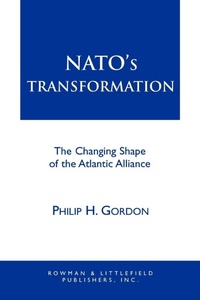
NATO's Transformation
The Changing Shape of the Atlantic Alliance
Published on 26. December 1996
Book
Paperback/Softback
306 pages
978-0-8476-8385-7 (ISBN)
Description
This timely volume assesses NATO's current accomplishments, continuing challenges, and potential pitfalls. Leading international scholars and policymakers explore three key themes influencing NATO's future: transatlantic relations, the debate over enlargement, and the organization's new functions. Weighing the fate of an alliance poised for renewal or decline, the contributors offer informed analysis and discussion of an organization that has changed profoundly over the past five years and continues to evolve in the face of an uncertain global environment.
Reviews / Votes
Relevant and important contributions to the debate. * International Affairs * These cutting-edge articles, by authoritative authors, are so superior as to have become in themselves part of the trans-Atlantic debate . . . by far the best analysis available of this issue of prime importance. -- Andrew J. Pierre, Carnegie Endowment for International Peace This collection of articles is a distinguished contribution to the debate -- Rodric Braithwaite, British ambassador to Moscow, 1988-1992 This volume provides cutting-edge thinking on the transformations that are molding NATO's future and that will determine the nature of European security in the early 21st century. -- Hans Binnendijk, director of the Institute for National Strategic Studies A fine collection of articles that provides a complete picture of the difficult issues and choices NATO faces today. -- Stanley HoffmannMore details
Language
English
Place of publication
United States
Publishing group
Bloomsbury Publishing Plc
Dimensions
Height: 229 mm
Width: 152 mm
Thickness: 18 mm
Weight
490 gr
ISBN-13
978-0-8476-8385-7 (9780847683857)
Copyright in bibliographic data and cover images is held by Nielsen Book Services Limited or by the publishers or by their respective licensors: all rights reserved.
Schweitzer Classification
Persons
Philip H. Gordon is senior fellow for foreign policy studies and director, Center on the United States and Europe, the Brookings Institution.
Content
Chapter 1 Introduction
Part 2 Transatlantic Relations After the Cold War
Chapter 3 Recasting the Atlantic Alliance
Chapter 4 Common European Defence and Transatlantic Relations
Chapter 5 France's New Relationship with NATO
Chapter 6 The Masque of Institutions
Part 7 NATO Enlargement
Chapter 8 NATO Enlargement: A Framework for Analysis
Chapter 9 The Flawed Logic of NATO Enlargement
Chapter 10 Can Containment Work Again?
Chapter 11 NATO Enlargement and the Baltic States
Chapter 12 The Costs of NATO Enlargement
Part 13 New Functions
Chapter 14 Combined Joint Task Forces in Theory and Practice
Chapter 15 Partnership for Peace: Permanent Fixture or Declining Asset?
Chapter 16 NATO's Role in Counter-Proliferation
Chapter 17 The Western European Union and NATO's 'Europeanisation'
Part 2 Transatlantic Relations After the Cold War
Chapter 3 Recasting the Atlantic Alliance
Chapter 4 Common European Defence and Transatlantic Relations
Chapter 5 France's New Relationship with NATO
Chapter 6 The Masque of Institutions
Part 7 NATO Enlargement
Chapter 8 NATO Enlargement: A Framework for Analysis
Chapter 9 The Flawed Logic of NATO Enlargement
Chapter 10 Can Containment Work Again?
Chapter 11 NATO Enlargement and the Baltic States
Chapter 12 The Costs of NATO Enlargement
Part 13 New Functions
Chapter 14 Combined Joint Task Forces in Theory and Practice
Chapter 15 Partnership for Peace: Permanent Fixture or Declining Asset?
Chapter 16 NATO's Role in Counter-Proliferation
Chapter 17 The Western European Union and NATO's 'Europeanisation'