

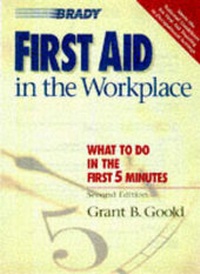
First Aid in the Workplace
2nd Edition
Published on 29. August 1997
Book
Paperback/Softback
144 pages
978-0-8359-5109-8 (ISBN)
Description
This text is designed for the 6- to 8-hour first aid course for people who have little or no background in first aid and CPR, this training package provides coverage of every essential element required by OSHA's current guidelines.
Using universal symbols to represent commonly used first aid treatment methods, the author eliminates most of the confusing written explanations students have come to dislike and instead concentrates on using actual photos to demonstrate specific skills being discussed. In his trademark simple and straightforward style, he offers clear and concise information on how to properly and competently provide basic first aid on a limited number of injuries and illnesses until professional help arrives.
Using universal symbols to represent commonly used first aid treatment methods, the author eliminates most of the confusing written explanations students have come to dislike and instead concentrates on using actual photos to demonstrate specific skills being discussed. In his trademark simple and straightforward style, he offers clear and concise information on how to properly and competently provide basic first aid on a limited number of injuries and illnesses until professional help arrives.
More details
Edition
2nd edition
Language
English
Place of publication
Upper Saddle River
United States
Publishing group
Pearson Education (US)
Target group
Professional and scholarly
Dimensions
Height: 211 mm
Width: 276 mm
Thickness: 12 mm
Weight
399 gr
ISBN-13
978-0-8359-5109-8 (9780835951098)
Schweitzer Classification
Other editions
Previous edition

Book
05/1994
Prentice-Hall
€33.56
Article exhausted; check different version
Content
Introduction: Roles and Responsibilities of First Aid Responders.
PART 1: UNIVERSAL SYMBOLS TRAINING.
1. Scene Safety.
2. Body Substance Isolation.
3. Activation of the Emergency Medical Services System.
4. Initial Assessment.
5. Ongoing Assessment.
6. Airway Management: Basic Life Support and Artificial Ventilations.
7. Circulation and CPR.
8. Shock.
9. Soft-Tissue Injuries and Bleeding .
10. Muscle and Bone Injuries.
11. Spinal Precautions.
12. Oxygen Application.
Part 2: ILLNESS AND INJURY TREATMENT.
13. Eye Injuries.
14. Heat-Related Emergencies.
15. Cold-Related Emergencies.
16. Burns.
17. Breathing Emergencies.
18. Cardiac Emergencies: Chest Pain and Heart Attacks.
19. Chest and Head Injuries.
20. Abdominal Emergencies.
21. Stroke.
22. Diabetic Emergencies.
23. Poisoning and Overdose.
24. Seizures, Convulsions, and Altered Mental Status.
25. Allergic Reactions.
Glossary.
Index.
PART 1: UNIVERSAL SYMBOLS TRAINING.
1. Scene Safety.
2. Body Substance Isolation.
3. Activation of the Emergency Medical Services System.
4. Initial Assessment.
5. Ongoing Assessment.
6. Airway Management: Basic Life Support and Artificial Ventilations.
7. Circulation and CPR.
8. Shock.
9. Soft-Tissue Injuries and Bleeding .
10. Muscle and Bone Injuries.
11. Spinal Precautions.
12. Oxygen Application.
Part 2: ILLNESS AND INJURY TREATMENT.
13. Eye Injuries.
14. Heat-Related Emergencies.
15. Cold-Related Emergencies.
16. Burns.
17. Breathing Emergencies.
18. Cardiac Emergencies: Chest Pain and Heart Attacks.
19. Chest and Head Injuries.
20. Abdominal Emergencies.
21. Stroke.
22. Diabetic Emergencies.
23. Poisoning and Overdose.
24. Seizures, Convulsions, and Altered Mental Status.
25. Allergic Reactions.
Glossary.
Index.