

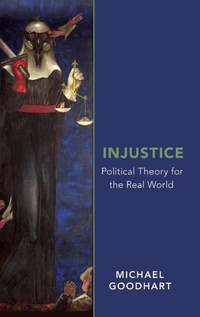
Injustice
Political Theory for the Real World
Published on 7. June 2018
Book
Hardback
298 pages
978-0-19-069242-1 (ISBN)
Description
This book challenges the dominant approach to problems of justice in global normative theory and offers a radical alternative designed to transform our thinking about what kind of problem injustice is, and how political theorists might do better in understanding and addressing it. Michael Goodhart argues that the dominant paradigm, ideal moral theory (IMT), takes a fundamentally wrong-headed approach to the problem of justice. IMT seeks to work out what an ideally just society would look like, and only then outlines our moral obligations in realizing that ideal. In other words, it ignores the realities of everyday politics.
As Michael Goodhart asserts, IMT postpones engagement with actually existing injustices and distorts our understanding of them, and it normalizes many problematic features of our world. On the other hand, the leading alternatives to IMT struggle to make sense of the role values play in politics. This book sees justice as an ideology and develops an innovative bifocal theoretical framework for making sense of it. This framework provides two complementary perspectives on justice: a theoretical perspective that situates competing ideological claims about justice in a broader political context and a partisan perspective that evaluates the structure and coherence of particular conceptions of justice. As opposed to IMT, it focuses on barriers to justice and advocates an activist political theory that takes sides in political struggles against injustice. Goodhart argues that theorists can help to generate the countervailing power necessary for social transformation through the work of articulation, translation, and mapping, work which contributes to a more comprehensive social science of injustice. Ultimately, this book describes the work that political theory and political theorists can do to combat injustice and illustrates it through a novel reconceptualization of responsibility for injustice.
As Michael Goodhart asserts, IMT postpones engagement with actually existing injustices and distorts our understanding of them, and it normalizes many problematic features of our world. On the other hand, the leading alternatives to IMT struggle to make sense of the role values play in politics. This book sees justice as an ideology and develops an innovative bifocal theoretical framework for making sense of it. This framework provides two complementary perspectives on justice: a theoretical perspective that situates competing ideological claims about justice in a broader political context and a partisan perspective that evaluates the structure and coherence of particular conceptions of justice. As opposed to IMT, it focuses on barriers to justice and advocates an activist political theory that takes sides in political struggles against injustice. Goodhart argues that theorists can help to generate the countervailing power necessary for social transformation through the work of articulation, translation, and mapping, work which contributes to a more comprehensive social science of injustice. Ultimately, this book describes the work that political theory and political theorists can do to combat injustice and illustrates it through a novel reconceptualization of responsibility for injustice.
Reviews / Votes
Any reflection about practice calls for its translation in another practice, not rarely challenging the practice reflected upon. This book will, therefore, appeal to more than just global normative theorists, but inspire all those who have a dynamic interest in the ethos of today's world. * Wilfried Vanhoutte, Philosophia: International Journal of Philosophy * ...Goodhart is clearly right on target in Injustice: Political Theory for the Real World when he argues in favor of a radical egalitarian practical agenda * James P. Sterba, University of Notre Dame, The Review of Politics *More details
Language
English
Place of publication
New York
United States
Target group
Professional and scholarly
Dimensions
Height: 240 mm
Width: 161 mm
Thickness: 21 mm
Weight
611 gr
ISBN-13
978-0-19-069242-1 (9780190692421)
Copyright in bibliographic data and cover images is held by Nielsen Book Services Limited or by the publishers or by their respective licensors: all rights reserved.
Schweitzer Classification
Other editions
Additional editions
Book
06/2018
Oxford University Press Inc
€50.20
Shipment within 15-20 days
E-Book
05/2018
1st Edition
OUP eBook
€21.99
Available for download
E-Book
05/2018
1st Edition
OUP eBook
€16.49
Available for download
Person
Michael Goodhart is Associate Professor of Political Science at the University of Pittsburgh, where he holds secondary appointments in Philosophy and in Gender, Sexuality, and Women's Studies. Goodhart's research focuses on problems of global injustice, on the theory and practice of democracy and human rights in the context of globalization, and on related puzzles concerning international and transnational democratic governance and accountability. He is also interested in epistemology and in methodology in political theory.
Content
Table of Contents
Acknowledgments
Introduction
Part I: Un-thinking Ideal Moral Theory
Chapter 1: The Trouble with Justice
Chapter 2: Barking up the Wrong Trees
Part II: Re-conceptualizing the Problem
Chapter 3: Getting Real?
Chapter 4: The Bifocal Approach
Chapter 5: A Democratic Account of Injustice
Part III: Political Theory for the Real World
Chapter 6: Political Theory and the Politics of Injustice
Chapter 7: Taking Responsibility for Injustice
Notes
Bibliography
Index
Acknowledgments
Introduction
Part I: Un-thinking Ideal Moral Theory
Chapter 1: The Trouble with Justice
Chapter 2: Barking up the Wrong Trees
Part II: Re-conceptualizing the Problem
Chapter 3: Getting Real?
Chapter 4: The Bifocal Approach
Chapter 5: A Democratic Account of Injustice
Part III: Political Theory for the Real World
Chapter 6: Political Theory and the Politics of Injustice
Chapter 7: Taking Responsibility for Injustice
Notes
Bibliography
Index