

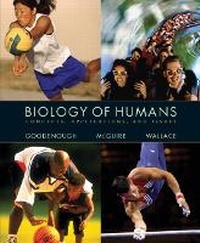
Biology of Humans
Concepts, Applications, and Issues
Published on 20. October 2004
Book
Paperback/Softback
656 pages
978-0-13-046020-2 (ISBN)
Description
For courses in Human Biology taken by non-science majors.
Biology of Humans personalizes the study of human biology with a friendly writing style, great art, abundant applications and tools to help students develop critical thinking skills.
Biology of Humans personalizes the study of human biology with a friendly writing style, great art, abundant applications and tools to help students develop critical thinking skills.
More details
Language
English
Place of publication
United States
Publishing group
Pearson Education (US)
Target group
Professional and scholarly
Dimensions
Height: 279 mm
Width: 276 mm
Thickness: 19 mm
Weight
1434 gr
ISBN-13
978-0-13-046020-2 (9780130460202)
Copyright in bibliographic data and cover images is held by Nielsen Book Services Limited or by the publishers or by their respective licensors: all rights reserved.
Schweitzer Classification
Other editions
New editions
Judith Goodenough | Betty A. McGuire | Robert A. Wallace
Biology of Humans
Concepts, Applications and Issues
Book
04/2007
2nd Edition
Benjamin Cummings
Unfortunately, price unknown
Article is exhausted; no reprint
Judith Goodenough | Betty A. McGuire | Robert A. Wallace
Biology of Humans
Concepts, Applications and Issues (text component): International Edition
Book
01/2007
2nd Edition
Pearson
€58.17
Article exhausted; check for reprint
Persons
Judith Goodenough. Judith received her B.S. from Wagner College (Staten Island, NY) and her doctorate from New York University. She has 30 years of teaching experience at the University of Massachusetts, Amherst, specializing in introductory level courses. The insights into student concerns and problems gained from 25 years of teaching Human Biology and 18 years of team-teaching The Biology of Social Issues have helped shape this book. In 1986, Judith was honored with a "Distinguished Teaching Award." In addition to teaching, she coordinates the introductory biology laboratories at UMass. Judith has written articles in peer-reviewed journals, contributed chapters to several introductory biology texts, and written numerous laboratory manuals. With the author team of McGuire and Wallace, she wrote Perspectives on Animal Behavior.
Betty McGuire. Betty received her B.S. in Biology from Pennsylvania State University, where she also played varsity basketball. She went on to receive an M.S. and Ph.D. in Zoology from the University of Massachusetts at Amherst, and then spent two happy years as a postdoctoral researcher at the University of Illinois, Champaign-Urbana. Her field and laboratory research emphasize the social behavior and reproduction of small mammals. She has published numerous research papers, co-authored the text Perspectives on Animal Behavior, and is an Associate Editor for Mammalian Species, a publication of the American Society of Mammalogists. Betty has taught Human Biology, Introductory Biology, Vertebrate Biology, and Animal Behavior at Smith College.
Robert A. Wallace. The late Robert Wallace received a B.A. in Fine Art and Biology from Harding University, an M.A. in Muscle Histochemistry from Vanderbilt University, and a Ph.D. in Behavioral Ecology from the University of Texas at Austin. He subsequently taught at a number of colleges and universities in the United States and Europe, including the Richard Bland College of William and Mary, the University of Maryland-Overseas Division, Duke University, and the University of Florida. He is the author of seven previously published biology textbooks, including Biology: The World of Life, and two mass-market science books, The Genesis Factor and How They Do It, as well as numerous scientific articles on a variety of subjects. Robert was also a Fellow of the Explorers Club of New York and the Royal Geographical Society of London. He received the Orellana Medal from the government of Ecuador in recognition of his work with the medicinal plants of vanishing tribes in that country.
Betty McGuire. Betty received her B.S. in Biology from Pennsylvania State University, where she also played varsity basketball. She went on to receive an M.S. and Ph.D. in Zoology from the University of Massachusetts at Amherst, and then spent two happy years as a postdoctoral researcher at the University of Illinois, Champaign-Urbana. Her field and laboratory research emphasize the social behavior and reproduction of small mammals. She has published numerous research papers, co-authored the text Perspectives on Animal Behavior, and is an Associate Editor for Mammalian Species, a publication of the American Society of Mammalogists. Betty has taught Human Biology, Introductory Biology, Vertebrate Biology, and Animal Behavior at Smith College.
Robert A. Wallace. The late Robert Wallace received a B.A. in Fine Art and Biology from Harding University, an M.A. in Muscle Histochemistry from Vanderbilt University, and a Ph.D. in Behavioral Ecology from the University of Texas at Austin. He subsequently taught at a number of colleges and universities in the United States and Europe, including the Richard Bland College of William and Mary, the University of Maryland-Overseas Division, Duke University, and the University of Florida. He is the author of seven previously published biology textbooks, including Biology: The World of Life, and two mass-market science books, The Genesis Factor and How They Do It, as well as numerous scientific articles on a variety of subjects. Robert was also a Fellow of the Explorers Club of New York and the Royal Geographical Society of London. He received the Orellana Medal from the government of Ecuador in recognition of his work with the medicinal plants of vanishing tribes in that country.
Content
I. THE ORGANIZATION OF THE BODY.
1. Science and Society.
2. The Chemistry of Life.
3. The Cell.
4. Body Organization and Homeostasis.
II. CONTROL AND COORDINATION OF THE BODY.
5. The Skeletal System.
6. The Muscular System.
7. Neurons: The Matter of the Mind.
8. The Nervous System.
8A. Special Topic: Drugs and the Mind.
9. Sensory Systems.
10. The Endocrine System.
III. MAINTENANCE OF THE BODY.
11. Blood.
12. The Circulatory System.
13. Body Defense Mechanisms.
13A. Special Topic: Infectious Disease.
14. The Respiratory System.
14A. Special Topic: Smoking and Disease.
15. The Digestive System.
15A. Special Topic: Nutrition and Weight Control.
16. The Urinary System.
IV. REPRODUCTION.
17. Reproductive Systems.
17A. Special Topic: Sexually Transmitted Diseases and AIDS.
18. Development and Aging.
HEALTH ISSUE Making Babies, But Not the Old-Fashioned Way.
V. GENETICS AND DEVELOPMENT.
19. Chromosomes and Cell Division.
20. The Principles of Inheritance.
21. DNA and Biotechnology.
21A. Special Topic: Cancer.
VI. EVOLUTION AND ECOLOGY.
22. Evolution: Basic Principles and Our Heritage.
23. Ecology, The Environment, And Us.
24. Human Population Dynamics.
1. Science and Society.
2. The Chemistry of Life.
3. The Cell.
4. Body Organization and Homeostasis.
II. CONTROL AND COORDINATION OF THE BODY.
5. The Skeletal System.
6. The Muscular System.
7. Neurons: The Matter of the Mind.
8. The Nervous System.
8A. Special Topic: Drugs and the Mind.
9. Sensory Systems.
10. The Endocrine System.
III. MAINTENANCE OF THE BODY.
11. Blood.
12. The Circulatory System.
13. Body Defense Mechanisms.
13A. Special Topic: Infectious Disease.
14. The Respiratory System.
14A. Special Topic: Smoking and Disease.
15. The Digestive System.
15A. Special Topic: Nutrition and Weight Control.
16. The Urinary System.
IV. REPRODUCTION.
17. Reproductive Systems.
17A. Special Topic: Sexually Transmitted Diseases and AIDS.
18. Development and Aging.
HEALTH ISSUE Making Babies, But Not the Old-Fashioned Way.
V. GENETICS AND DEVELOPMENT.
19. Chromosomes and Cell Division.
20. The Principles of Inheritance.
21. DNA and Biotechnology.
21A. Special Topic: Cancer.
VI. EVOLUTION AND ECOLOGY.
22. Evolution: Basic Principles and Our Heritage.
23. Ecology, The Environment, And Us.
24. Human Population Dynamics.