

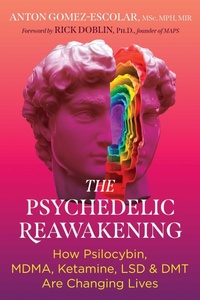
The Psychedelic Reawakening
How Psilocybin, MDMA, Ketamine, LSD, and DMT Are Changing Lives
2nd Edition
Published on 24. April 2025
Book
Paperback/Softback
320 pages
979-8-88850-002-6 (ISBN)
Description
Explores the benefits, risks, and growing acceptance of modern psychedelic therapy
* Examines the contemporary psychedelic phenomenon, including the history of criminalization and legalization, psychedelics' effects on the brain, recent clinical research, and new therapeutic potentials
* Explores substances like psilocybin, LSD, DMT, ayahuasca, ketamine, and MDMA, including scientific evidence for psychedelics' potential to treat addiction, depression, anxiety, trauma, and neurodegenerative diseases
* Includes extensive practical information on safety, risk, and harm reduction for both laypeople and mental health practitioners
Presenting a comprehensive guide to the exciting new landscape around psychedelics, psychopharmacologist Anton Gomez-Escolar examines the long history of criminalizing and (slowly) legalizing these substances and their increasingly demonstrable positive effects on body, mind, and spirit.
Exploring psilocybin, LSD, DMT, ayahuasca, ketamine, MDMA, and other substances, Gomez-Escolar looks at the multitude of scientific studies providing critical evidence for psychedelics' ability to treat addiction, depression, anxiety, and trauma as well as their potential to treat neurodegenerative diseases such as Alzheimer's. He provides key information for therapists and other health practitioners as well as explores the potential benefits and limitations of microdosing and how psychedelics could help with various neurological and mental health issues, including those related to the COVID-19 pandemic. Breaking down substances by type, the author looks at the main risks of each psychedelic and its benefits, best harm-reduction strategies, and the neural pathways each affects. Gomez-Escolar also includes a large selection of resources for people seeking to engage personally with psychedelics for healing.
* Examines the contemporary psychedelic phenomenon, including the history of criminalization and legalization, psychedelics' effects on the brain, recent clinical research, and new therapeutic potentials
* Explores substances like psilocybin, LSD, DMT, ayahuasca, ketamine, and MDMA, including scientific evidence for psychedelics' potential to treat addiction, depression, anxiety, trauma, and neurodegenerative diseases
* Includes extensive practical information on safety, risk, and harm reduction for both laypeople and mental health practitioners
Presenting a comprehensive guide to the exciting new landscape around psychedelics, psychopharmacologist Anton Gomez-Escolar examines the long history of criminalizing and (slowly) legalizing these substances and their increasingly demonstrable positive effects on body, mind, and spirit.
Exploring psilocybin, LSD, DMT, ayahuasca, ketamine, MDMA, and other substances, Gomez-Escolar looks at the multitude of scientific studies providing critical evidence for psychedelics' ability to treat addiction, depression, anxiety, and trauma as well as their potential to treat neurodegenerative diseases such as Alzheimer's. He provides key information for therapists and other health practitioners as well as explores the potential benefits and limitations of microdosing and how psychedelics could help with various neurological and mental health issues, including those related to the COVID-19 pandemic. Breaking down substances by type, the author looks at the main risks of each psychedelic and its benefits, best harm-reduction strategies, and the neural pathways each affects. Gomez-Escolar also includes a large selection of resources for people seeking to engage personally with psychedelics for healing.
Reviews / Votes
"A well-researched, up-to-date summary of what's on the cutting edge of the psychedelic renaissance, covering the latest neuroscience, clinical trials, and therapeutic potential of psychedelic medicines. The Psychedelic Reawakening is a crash course in psychoactive drugs, a wonderful overview of some of the most promising and powerful tools for treating mental health, and a valuable guide to learning harm reduction strategies. After so many years of psychedelics being criminalized, demonized, ridiculed, or ignored, Anton Gomez-Escolar's The Psychedelic Reawakening is a breath of fresh air!" * David Jay Brown, author of The Illustrated Field Guide to DMT Entities and The New Science of Psyche * "Gomez-Escolar expands our view of the vast potential of psychedelics for therapeutic use. He emphasizes that the use of such substances requires purposeful intention through set and setting to maximize benefits and promote safe use. The Psychedelic Reawakening is an excellent resource for therapists and other health professionals and their clients, policy makers, recreational users, psychonauts, and the general public." * Wade Richardson, author of The Psychedelic Mindmeld * "The Psychedelic Reawakening is relevant and necessary at a time when psychedelic drugs are already available for use in psychiatry, as is the case with ketamine, and as the available arsenal will grow over time: psilocybin, MDMA, DMT, and more. This book fills a necessary gap in this new medical and social panorama. In addition, Anton Gomez-Escolar is one of the best specialists in this field in Spain. The Psychedelic Reawakening will also serve to provide the media with objective and accessible information on a subject that, although still unknown, will be the future of mental health treatment, at a time when it is more necessary than ever." * Jose Carlos Bouso, Ph.D., scientific director of the International Center for Ethnobotanical Ed * "The Psychedelic Reawakening explores the resurgence of psychedelics and their potential in therapeutic settings. Written for both lay readers and mental health professionals, the book covers key psychedelics and provides an in-depth look at how these substances can address issues such as depression, anxiety, trauma, and neurodegenerative diseases. Gomez-Escolar also offers insights into the history of psychedelics' criminalization and recent steps toward legalization. In addition, the book includes practical advice on harm reduction, safety, and microdosing, making it a comprehensive guide for those interested in the modern psychedelic renaissance and its impact on mental health and well-being." * Dr. Richard Louis Miller, M.A., Ph.D., author of Psychedelic Medicine at the End of Life *More details
Edition
2nd Edition, New Edition of Essential Guide to the Psychedelic Renaissance
Language
English
Place of publication
Rochester
United States
Publishing group
Inner Traditions Bear and Company
Product notice
Paperback (trade)
Illustrations
Includes 16-page color insert and 93 b&w illustrations
Dimensions
Height: 226 mm
Width: 149 mm
Thickness: 20 mm
Weight
522 gr
ISBN-13
979-8-88850-002-6 (9798888500026)
Copyright in bibliographic data and cover images is held by Nielsen Book Services Limited or by the publishers or by their respective licensors: all rights reserved.
Schweitzer Classification
Other editions
Additional editions
Anton Gomez-Escolar
The Psychedelic Reawakening
How Psilocybin, MDMA, Ketamine, LSD, and DMT Are Changing Lives
E-Book
03/2025
2nd Edition
Park Street Press
€16.80
Available for download
Persons
Anton Gomez-Escolar, MSc, MPH, MIR, is a psychopharmacologist who works on psychedelic research, drug education, and harm reduction. He is the founder of Drogopedia, has worked at organizations like Energy Control and the European Union Drugs Agency (EUDA), and has presented on psychedelics at several international forums, including the European Parliament and the United Nations. He is a member of the UNAD Global Drug Policy Commission, and cofounder and board member of the Spanish Society of Psychedelic Medicine (SEMPsi), the INAWE Foundation (for psychedelic science), and the Psychedelic Society of Madrid. He lives in Madrid.
Content
FOREWORD
by Rick Doblin, Ph.D.
Preface
1 Basic Concepts of Neuroscience and
Neuropharmacology
The Brain and Central Nervous System
Neurons, Synapses, Neurotransmitters, and
Neuroreceptors
Neuropharmacology
2 Introduction to Psychoactive Substances
Talking about Psychoactive Substances
Types of Psychoactive Substances
Stimulants
Depressants
Opioids
Cannabinoids
Empathogens/Entactogens
Dissociatives
Psychedelics
3 A History of Psychedelics in the West
Pre-LSD
Post-LSD
MDMA
After the Ban
4 The Psychedelic Renaissance
Ongoing Psychedelics Research
Social and Cultural Contexts
The Rise of a New Industry
5 How Psychedelics Work
Mechanisms at the Neuroreceptor Level
Mechanisms at the Brain Level
How Does the Brain Work? Hierarchical Predictive Coding
How Do Psychedelics Affect Our Brain Function?
What Happens at the Psychological Level?
Why Do We Have 5-HT2a Receptors and
Psychedelic Experiences?
How Can Psychedelics Help with Mental Health
Disorders or Other Maladaptive Conditions?
6 The Present and Future of Clinical Research
with Psychedelic Drugs
Psychedelic-Assisted Psychotherapy
Post-Traumatic Stress Disorder (PTSD)
Depression and Anxiety
Addictions
Neurodegenerative Diseases, Long COVID,
and Neurorehabiliation
Behavior Change
Couples Therapy and Conflict Resolution
Microdosing
Other Lines of Research for Possible Future Applications
7 The Applications, Effects, Dosages, and
Risks of Different Psychedelic Substances
Psilocybin ("Magic Mushrooms")
LSD ("Acid")
DMT/Ayahuasca
5-MeO-DMT ("Toad")
Mescaline ("Cactus")
Ibogaine
MDMA ("Ecstasy")
Ketamine
8 Psychedelic Risks and Harm Reduction Strategies
Risks Related to Substance (Drug)
Dosage, Frequency of Consumption, and Tolerance
Purity and Adulteration
Routes of Administration
Mixtures and Combinations
Risks Related to Person and Context (Set and Setting)
Minimizing Risks Related to the Set
Minimizing Risks Related to the Setting
Managing "Bad Trips" and other Psychedelic Emergencies
9 Conclusions: Looking to the Future
APPENDIX I
Psychedelic Resources
APPENDIX II
The Legal Status of Psychedelic Drugs
around the World
APPENDIX III
Glossary
Index
by Rick Doblin, Ph.D.
Preface
1 Basic Concepts of Neuroscience and
Neuropharmacology
The Brain and Central Nervous System
Neurons, Synapses, Neurotransmitters, and
Neuroreceptors
Neuropharmacology
2 Introduction to Psychoactive Substances
Talking about Psychoactive Substances
Types of Psychoactive Substances
Stimulants
Depressants
Opioids
Cannabinoids
Empathogens/Entactogens
Dissociatives
Psychedelics
3 A History of Psychedelics in the West
Pre-LSD
Post-LSD
MDMA
After the Ban
4 The Psychedelic Renaissance
Ongoing Psychedelics Research
Social and Cultural Contexts
The Rise of a New Industry
5 How Psychedelics Work
Mechanisms at the Neuroreceptor Level
Mechanisms at the Brain Level
How Does the Brain Work? Hierarchical Predictive Coding
How Do Psychedelics Affect Our Brain Function?
What Happens at the Psychological Level?
Why Do We Have 5-HT2a Receptors and
Psychedelic Experiences?
How Can Psychedelics Help with Mental Health
Disorders or Other Maladaptive Conditions?
6 The Present and Future of Clinical Research
with Psychedelic Drugs
Psychedelic-Assisted Psychotherapy
Post-Traumatic Stress Disorder (PTSD)
Depression and Anxiety
Addictions
Neurodegenerative Diseases, Long COVID,
and Neurorehabiliation
Behavior Change
Couples Therapy and Conflict Resolution
Microdosing
Other Lines of Research for Possible Future Applications
7 The Applications, Effects, Dosages, and
Risks of Different Psychedelic Substances
Psilocybin ("Magic Mushrooms")
LSD ("Acid")
DMT/Ayahuasca
5-MeO-DMT ("Toad")
Mescaline ("Cactus")
Ibogaine
MDMA ("Ecstasy")
Ketamine
8 Psychedelic Risks and Harm Reduction Strategies
Risks Related to Substance (Drug)
Dosage, Frequency of Consumption, and Tolerance
Purity and Adulteration
Routes of Administration
Mixtures and Combinations
Risks Related to Person and Context (Set and Setting)
Minimizing Risks Related to the Set
Minimizing Risks Related to the Setting
Managing "Bad Trips" and other Psychedelic Emergencies
9 Conclusions: Looking to the Future
APPENDIX I
Psychedelic Resources
APPENDIX II
The Legal Status of Psychedelic Drugs
around the World
APPENDIX III
Glossary
Index