


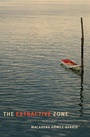
The Extractive Zone
Social Ecologies and Decolonial Perspectives
Published on 3. November 2017
Book
Paperback/Softback
208 pages
978-0-8223-6897-7 (ISBN)
Description
In The Extractive Zone Macarena GOmez-Barris traces the political, aesthetic, and performative practices that emerge in opposition to the ruinous effects of extractive capital. The work of Indigenous activists, intellectuals, and artists in spaces GOmez-Barris labels extractive zones-majority indigenous regions in South America noted for their biodiversity and long history of exploitative natural resource extraction-resist and refuse the terms of racial capital and the continued legacies of colonialism. Extending decolonial theory with race, sexuality, and critical Indigenous studies, GOmez-Barris develops new vocabularies for alternative forms of social and political life. She shows how from Colombia to southern Chile artists like filmmaker Huichaqueo Perez and visual artist Carolina Caycedo formulate decolonial aesthetics. She also examines the decolonizing politics of a Bolivian anarcho-feminist collective and a coalition in eastern Ecuador that protects the region from oil drilling. In so doing, GOmez-Barris reveals the continued presence of colonial logics and locates emergent modes of living beyond the boundaries of destructive extractive capital.
Reviews / Votes
"The Extractive Zone offers a glimpse into what kind of world may be possible through the everyday practices and knowledges of submerged perspectives." - Megan Spencer (The New Inquiry) "A timely study. . . . The result of substantive situated fieldwork. . . . There may be no greater testament to the value and urgency of decolonial approaches to embodied vernacular knowledge today." - Kimberly Richards (TDR: The Drama Review) "GOmez-Barris's compelling text grapples with the destruction and death dealt by extractive industries. . . . This is all provocative and engaging material, particularly when set against political economic critiques of extractivism." - Joe Bryan (The Americas) "GOmez-Barris's writing provides an anecdote to technocratic visions of 'green capitalism' by foregrounding questions of justice, identity, and the contingency of politics. Scholars interested in the debates animating anti-extractive social movements in Latin America and beyond should begin here." - Matthew Shutzer (Enterprise & Society) "The Extractive Zone contributes an important feminist and indigenous hemispheric genealogy and cultural studies lens on current political economic debates circulating in Latin America and beyond regarding alternatives to growth-oriented, capitalist and extractive-based models of development. The book also complicates heroic and romantic readings of the conceptual and legal mechanisms surrounding the state-based rhetoric of buen vivir in Latin American constitutionalism that too often appear uncritically examined in scholarship produced in the global North." - Kristina Lyons (Journal of Latin American Studies)More details
Series
Language
English
Place of publication
North Carolina
United States
Target group
Professional and scholarly
Reading Age: From 19 years
Product notice
Paperback (trade)
Illustrations
9 photographs
Dimensions
Height: 229 mm
Width: 152 mm
Thickness: 12 mm
Weight
312 gr
ISBN-13
978-0-8223-6897-7 (9780822368977)
Copyright in bibliographic data and cover images is held by Nielsen Book Services Limited or by the publishers or by their respective licensors: all rights reserved.
Schweitzer Classification
Other editions
Additional editions
E-Book
10/2017
1st Edition
De Gruyter
€178.99
Available for download
Person
Macarena GOmez-Barris is Chair of the Department of Social Science and Cultural Studies at the Pratt Institute, author of Where Memory Dwells: Culture and State Violence in Chile, and coeditor of Toward a Sociology of the Trace.
Content
Acknowledgments ix
Preface. Below the Surface xiii
Introduction. Submerged Perspectives 1
1. The Intangibility of the YasunI 17
2. Andean Phenomenology and New Age Settler Colonialism 39
3. An Archive for the Future: Seeing through Occupation 66
4. A Fish-Eye Episteme: Seeing Below the River's Colonization 91
5. Decolonial Gestures: Anarcho-Feminist Indigenous Critique 110
Conclusion. The View from Below 133
Notes 139
Bibliography 165
Index 179
Preface. Below the Surface xiii
Introduction. Submerged Perspectives 1
1. The Intangibility of the YasunI 17
2. Andean Phenomenology and New Age Settler Colonialism 39
3. An Archive for the Future: Seeing through Occupation 66
4. A Fish-Eye Episteme: Seeing Below the River's Colonization 91
5. Decolonial Gestures: Anarcho-Feminist Indigenous Critique 110
Conclusion. The View from Below 133
Notes 139
Bibliography 165
Index 179