

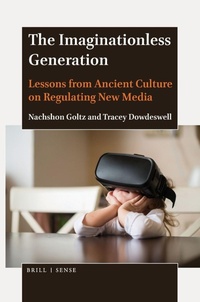
The Imaginationless Generation
Lessons from Ancient Culture on Regulating New Media
Published on 28. March 2019
Book
Paperback/Softback
202 pages
978-90-04-39886-3 (ISBN)
Description
In the present-day Tower of Babylon-the all-encompassing virtual world built of image layered upon image-children are the most vulnerable users. If we permit them unfettered access to media that promotes corporate and consumer values, while suppressing their cognitive development and creative imagination, then an 'imaginationless generation' may be our grim and inevitable future.
This book takes the reader, whether an academic, a parent or an educator, through a startling journey from the harms lurking in the virtual worlds-to children's health and well-being, to how they deal with representations of violence and sexuality, as well as exposure to cyberbullying, advertising, Internet Addiction Disorder, and even exploitation. The most dangerous harm is unseen, and affects the innermost realm of a child's psyche: the imagination. The authors discuss the current global regulatory framework that makes the protection of children ever more challenging. They discuss lessons learned from the ways that courts have negotiated free speech issues, as well as the research on parental mediation of children's Internet use in the home. Finally, they move towards a bold new attempt at understanding regulation, by drawing lessons for new media from ancient culture.
In The Imagionationless Generation, the authors pioneer an attempt to address the real harms that children face in virtual realities by presenting a new and paradigm shifting theory-the Media Engagement. They follow the theory's insights and predictions to offer a new perspective on a burning question of our time-how to protect children online. This multidisciplinary intellectual voyage and its insights are only possible by standing on the shoulders of scholars who have gone before, such as Ellul, Baudrillard, McLuhan, Postman and Piaget, to name a few.
As academics, parents and concerned human beings, the authors present here the results of more than twenty years of research in a way that should appeal to a wide variety of readers, as they stretch our understanding of the human-machine interface beyond right and wrong. This book shapes our understanding of media in the digital age in much the same way that McLuhan's Understanding Media did for a previous generation.
This book takes the reader, whether an academic, a parent or an educator, through a startling journey from the harms lurking in the virtual worlds-to children's health and well-being, to how they deal with representations of violence and sexuality, as well as exposure to cyberbullying, advertising, Internet Addiction Disorder, and even exploitation. The most dangerous harm is unseen, and affects the innermost realm of a child's psyche: the imagination. The authors discuss the current global regulatory framework that makes the protection of children ever more challenging. They discuss lessons learned from the ways that courts have negotiated free speech issues, as well as the research on parental mediation of children's Internet use in the home. Finally, they move towards a bold new attempt at understanding regulation, by drawing lessons for new media from ancient culture.
In The Imagionationless Generation, the authors pioneer an attempt to address the real harms that children face in virtual realities by presenting a new and paradigm shifting theory-the Media Engagement. They follow the theory's insights and predictions to offer a new perspective on a burning question of our time-how to protect children online. This multidisciplinary intellectual voyage and its insights are only possible by standing on the shoulders of scholars who have gone before, such as Ellul, Baudrillard, McLuhan, Postman and Piaget, to name a few.
As academics, parents and concerned human beings, the authors present here the results of more than twenty years of research in a way that should appeal to a wide variety of readers, as they stretch our understanding of the human-machine interface beyond right and wrong. This book shapes our understanding of media in the digital age in much the same way that McLuhan's Understanding Media did for a previous generation.
More details
Language
English
Place of publication
Leiden
Netherlands
Target group
Professional and scholarly
Product notice
Paperback (trade)
Unsewn / adhesive bound
Dimensions
Height: 234 mm
Width: 152 mm
Thickness: 13 mm
Weight
295 gr
ISBN-13
978-90-04-39886-3 (9789004398863)
Copyright in bibliographic data and cover images is held by Nielsen Book Services Limited or by the publishers or by their respective licensors: all rights reserved.
Schweitzer Classification
Other editions
Additional editions
Nachshon Goltz | Tracey Dowdeswell
The Imaginationless Generation
Lessons from Ancient Culture on Regulating New Media
Book
03/2019
Brill
€138.50
Shipment within 10-20 days
Persons
Nachshon Goltz, Ph.D. (2017), Osgoode Hall Law School, York University, is a Senior Lecturer at Edith Cowan University. He is a Canadian and Israeli lawyer and is the co-founder of Global-Regulation.com, the world's largest search engine of laws.
Tracey Dowdeswell, Ph.D. (2016), Osgoode Hall Law School of York University, is a lawyer and author who lives and works in Vancouver, BC, where she writes about topics at the interface of science, law, and ethics.
Tracey Dowdeswell, Ph.D. (2016), Osgoode Hall Law School of York University, is a lawyer and author who lives and works in Vancouver, BC, where she writes about topics at the interface of science, law, and ethics.
Content
Preface
Introduction
1 Children & Challenges of New Media
?Introduction: New Media, Old Problems
?The Media Diet
?Bringing It All Together: Culture, Values & Moral Development
2 Understanding the Laws of Media Engagement
?What Are the Laws of Media Engagement?
?Introduction to Media Engagement
?The Five Laws of Media Engagement
3 The Imaginationless Generation
?Introduction
?The Imagination
?The Visualization Hypothesis
?Conclusion
4 Internet Regulation: Could & Should the Internet be Regulated?
?Introduction: A Need for Internet Regulation?
?Internet Infrastructure
?Control of the Internet
?Conclusion
5 Freedom of Speech & Online Harm to Children
?Introduction
?Canadian Law: Irwin Toy v. Quebec
?U.S. First Amendment Jurisprudence: Brown v. Entertainment
?Conclusion
6 Parental Regulation
?Introduction
?Parents, Children & Media in the Home
?Parental Mediation Styles
?Conclusion
7 The Cultural Regulation of Technology
?Introduction: Technology & Spirituality
?The Tower & the Image
?Technology's Commandments
8 Conclusion: Coming down from the Tower
References
Index
Introduction
1 Children & Challenges of New Media
?Introduction: New Media, Old Problems
?The Media Diet
?Bringing It All Together: Culture, Values & Moral Development
2 Understanding the Laws of Media Engagement
?What Are the Laws of Media Engagement?
?Introduction to Media Engagement
?The Five Laws of Media Engagement
3 The Imaginationless Generation
?Introduction
?The Imagination
?The Visualization Hypothesis
?Conclusion
4 Internet Regulation: Could & Should the Internet be Regulated?
?Introduction: A Need for Internet Regulation?
?Internet Infrastructure
?Control of the Internet
?Conclusion
5 Freedom of Speech & Online Harm to Children
?Introduction
?Canadian Law: Irwin Toy v. Quebec
?U.S. First Amendment Jurisprudence: Brown v. Entertainment
?Conclusion
6 Parental Regulation
?Introduction
?Parents, Children & Media in the Home
?Parental Mediation Styles
?Conclusion
7 The Cultural Regulation of Technology
?Introduction: Technology & Spirituality
?The Tower & the Image
?Technology's Commandments
8 Conclusion: Coming down from the Tower
References
Index