


The Psychology of Group Aggression
1st Edition
Published on 27. June 2002
Book
Hardback
208 pages
978-0-470-84515-8 (ISBN)
Description
People in groups act aggressively as a group, not as a collection of individuals. The Psychology of Group Aggression's comprehensive journey starts with group dynamics theory and research by reviewing its relationship to aggression.
Arnold P. Goldstein then provides a unique and valuable insight into the different types and levels of intensity of anti-social behavior, examines its causes and considers its costs. In separate chapters he considers low intensity aggression, including ostracism, hazing, teasing; mid-intensity, e.g. bullying, harassment; and high intensity aggression e.g. mobs and gangs. In a final section, he considers management and intervention techniques, both those widely employed and emerging methods.
An important work for both a pure and an applied audience, this will be a key reference for many, including clinical and forensic psychologists, psychiatrists, criminal justice workers, social psychologists and academics and students in criminology, psychology and sociology.
Published in the Wiley Series in Forensic Clinical Psychology
Series Editors:
Professor Clive Hollin, University of Leicester, UK
and Dr Mary McMurran, Cardiff University, UK
More details
Series
Edition
1., Auflage
Language
English
Place of publication
Chichester
United Kingdom
Publishing group
John Wiley and Sons Ltd
Target group
Professional and scholarly
Illustrations
Ill.
Dimensions
Height: 25.2 cm
Width: 17 cm
Weight
538 gr
ISBN-13
978-0-470-84515-8 (9780470845158)
Schweitzer Classification
Other editions
Additional editions
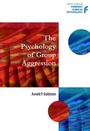
Arnold P. Goldstein
The Psychology of Group Aggression
E-Book
11/2002
Wiley
€62.99
Available for download
Content
Part I. Introduction
Aggression-Relevant Group Dynamics
Part II. Forms and Formulations
Low-level Group Aggression
Bullying and Harassment
Delinquent Gangs
The Mob
Part III. Intervention
Established and Emerging Interventions