


Pincher Martin
Published on 7. April 2005
Book
Paperback/Softback
208 pages
978-0-571-22545-3 (ISBN)
Description
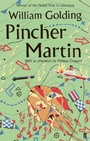
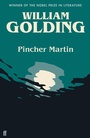
Drowning in the freezing North Atlantic, Christopher Hadley Martin, temporary lieutenant, happens upon a grotesque rock, an island that appears only on weather charts. To drink there is a pool of rain water; to eat there are weeds and sea-anemones. Through the long hours with only himself to talk to, Martin must try to assemble the truth of his fate, piece by terrible piece. From the author of "Lord of the Flies", "Pincher Martin" is a terrifying and unforgettable journey into one man's mind.
More details
Other editions
New editions
Book
08/2013
Faber & Faber
€11.50
Article exhausted; check for reprint
Additional editions
E-Book
08/2013
Faber & Faber
€10.99
Available for download
Person
William Golding was born in Cornwall in 1911 and was educated at Marlborough Grammar School and at Brasenose College, Oxford. Before he became a schoolmaster he was an actor, a lecturer, a small-boat sailor and a musician. A now rare volume, Poems, appeared in 1934. In 1940 he joined the Royal Navy and saw action against battleships, and also took part in the pursuit of the Bismarck. He finished the war as a Lieutenant in command of a rocket ship, which was off the French coast for the D-Day invasion, and later at the island of Welcheren. After the war he returned to Bishop Wordsworth's School in Salisbury and was there when his first novel, Lord of the Flies, was published in 1954. He gave up teaching in 1961. Lord of the Flies was filmed by Peter Brook in 1963. Golding listed his hobbies as music, chess, sailing, archaeology and classical Greek (which he taught himself). Many of these subjects appear in his essay collections The Hot Gates and A Moving Target. He won the Booker Prize for his novel Rites of Passage in 1980, and was awarded the Nobel Prize for Literature in 1983. He was knighted in 1988. He died at his home in the summer of 1993. The Double Tongue, a novel left in draft at his death, was published in June 1995.