

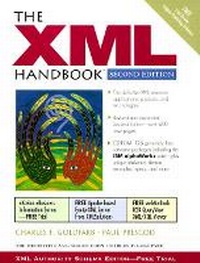
The XML Handbook
2nd Edition
Published on 3. December 1999
Book
Paperback/Softback
1013 pages
978-0-13-014714-1 (ISBN)
Description
This is the only definitive XML guide for Web professionals and their managers. Now totally revised to reflect the newest advances in XML technology, this new Second Edition is all you need to master the latest XML tools, standards, and applications! Two renowned XML experts start with an accurate, easy-to-understand explanation of XML, its components, structure, and goals. Review powerful XML applications, including personalized web sites, e-commerce, supply chain integration, language translation, securities regulation, and help desk automation. The book presents seven detailed case studies, from the Washington Post, Hitachi Semiconductor, and other leading-edge implementers. Compare today's best XML tools, including ADEPT Editor, XMetaL, DynaTag, Astoria, XML Styler, and POET Content Management Suite. Finally, preview new XML technologies, including Xlink, XSL, WIDI, and XML RPC. Bonus CD-ROM contains 110 freeware XML packages, including IBM's Alphaworks Suite and Exeter's XML Web Server.
More details
Edition
2nd edition
Language
English
Place of publication
Upper Saddle River
United States
Publishing group
Pearson Education (US)
Target group
College/higher education
Dimensions
Height: 235 mm
Width: 178 mm
Thickness: 36 mm
Weight
1507 gr
ISBN-13
978-0-13-014714-1 (9780130147141)
Copyright in bibliographic data and cover images is held by Nielsen Book Services Limited or by the publishers or by their respective licensors: all rights reserved.
Schweitzer Classification
Other editions
New editions
Charles F. Goldfarb | Paul Prescod
Charles F. Goldfarb's XML Handbook
Book
01/2002
4th Edition
Prentice Hall
€49.64
Article exhausted; check for reprint
Previous edition

Charles F. Goldfarb | Paul Prescod
The XML Handbook
Book
07/1998
Prentice Hall PTR
€45.55
Article exhausted; check different version
Persons
Charles F. Goldfarb is the inventor of the SGML standard on which XML and HTML are based. Paul Prescod is a leading XML consultant and W3C team member.
Content
I. THE WHO, WHAT, AND WHY OF XML.
1. Why XML?
2. Just enough XML.
3. Where is XML going?
4. XML in the real world.
5. XML Jargon Demystifier?
II. MIDDLE-TIER SERVERS.
6. Personalized frequent-flyer website.
7. Building an online auction website.
8. eXcelon: Serving information.
9. XML-Server: Serving dynamic data.
10. California UnRealty.
11. Wells Fargo & Company.
III. E-COMMERCE.
12. XML and EDI: The new Web commerce.
13. XML and EDI: Working together.
14. Supply chain integration.
15. Bright Lighting Company.
16. Building a schema for a product catalog.
17. Agent Discovery.
IV. PORTALS.
18. DataChannel: Enterprise portals.
19. Sequoia: Portal development system.
20. ibm.com.
21. RxML: Your prescription for healthcare.
22. XMLNews: A syndication document type.
23. Wavo Corporation.
V. PUBLISHING.
24. Hitachi Semiconductor.
25. Frank Russell Company.
26. City Of Providence.
27. PC World Online.
28. MTU-DaimlerChrysler Aerospace.
29. FrameMaker+ SGML: Editing+ composition.
VI.CONTENT MANAGEMENT.
30. Tweddle Litho Company.
31. Epic: Efficient content management.
32. BladeRunner: The content life cycle.
33. SigmaLink: Links and workflow.
34. Oracle8i: Enterprise data management.
35. Congressional Quarterly.
VII. CONTENT ACQUISITION.
36. WordPerfect: The information supply chain.
37. Documentor: Hyperlinked XML editing.
38. DynaTag: Visual conversion environment.
39. Planning for document conversion.
40. Integrating legacy data.
VIII.STYLESHEETS.
41. INSIGHT: The role of stylesheets.
42. Stylesheets for interactive applications.
43. Designing website stylesheets.
IX. NAVIGATION.
44. Extended linking.
45. B2B QueryView: XQL search tool.
46. Topic maps: Knowledge navigation aids.
47. The universal collaborative Web.
X. XML AND PROGRAMMING.
48. Java technology for XML development.
49. Distributed programming through XML.
50. WIDL and XML RPC.
51. Bean Markup Language (BML).
52. Luxembourg Police.
XI. XML TUTORIALS.
53. XML basics.
54. Creating a document type definition.
55. Entities: Breaking up is easy to do.
56. Advanced features of XML.
57. Reading the XML specification.
XII.RELATED TUTORIALS.
58. Namespaces.
59. XML Path Language (XPath).
60. Extensible Stylesheet Language (XSL).
61. XML Pointer Language (XPointer).
62. XML Linking Language (XLink).
63. Datatypes.
64. XML Schemas.
XIII. RESOURCES.
65. Free resources on the CD-ROM.
66. Other XML-related books.
1. Why XML?
2. Just enough XML.
3. Where is XML going?
4. XML in the real world.
5. XML Jargon Demystifier?
II. MIDDLE-TIER SERVERS.
6. Personalized frequent-flyer website.
7. Building an online auction website.
8. eXcelon: Serving information.
9. XML-Server: Serving dynamic data.
10. California UnRealty.
11. Wells Fargo & Company.
III. E-COMMERCE.
12. XML and EDI: The new Web commerce.
13. XML and EDI: Working together.
14. Supply chain integration.
15. Bright Lighting Company.
16. Building a schema for a product catalog.
17. Agent Discovery.
IV. PORTALS.
18. DataChannel: Enterprise portals.
19. Sequoia: Portal development system.
20. ibm.com.
21. RxML: Your prescription for healthcare.
22. XMLNews: A syndication document type.
23. Wavo Corporation.
V. PUBLISHING.
24. Hitachi Semiconductor.
25. Frank Russell Company.
26. City Of Providence.
27. PC World Online.
28. MTU-DaimlerChrysler Aerospace.
29. FrameMaker+ SGML: Editing+ composition.
VI.CONTENT MANAGEMENT.
30. Tweddle Litho Company.
31. Epic: Efficient content management.
32. BladeRunner: The content life cycle.
33. SigmaLink: Links and workflow.
34. Oracle8i: Enterprise data management.
35. Congressional Quarterly.
VII. CONTENT ACQUISITION.
36. WordPerfect: The information supply chain.
37. Documentor: Hyperlinked XML editing.
38. DynaTag: Visual conversion environment.
39. Planning for document conversion.
40. Integrating legacy data.
VIII.STYLESHEETS.
41. INSIGHT: The role of stylesheets.
42. Stylesheets for interactive applications.
43. Designing website stylesheets.
IX. NAVIGATION.
44. Extended linking.
45. B2B QueryView: XQL search tool.
46. Topic maps: Knowledge navigation aids.
47. The universal collaborative Web.
X. XML AND PROGRAMMING.
48. Java technology for XML development.
49. Distributed programming through XML.
50. WIDL and XML RPC.
51. Bean Markup Language (BML).
52. Luxembourg Police.
XI. XML TUTORIALS.
53. XML basics.
54. Creating a document type definition.
55. Entities: Breaking up is easy to do.
56. Advanced features of XML.
57. Reading the XML specification.
XII.RELATED TUTORIALS.
58. Namespaces.
59. XML Path Language (XPath).
60. Extensible Stylesheet Language (XSL).
61. XML Pointer Language (XPointer).
62. XML Linking Language (XLink).
63. Datatypes.
64. XML Schemas.
XIII. RESOURCES.
65. Free resources on the CD-ROM.
66. Other XML-related books.