

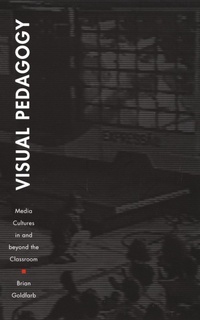
Visual Pedagogy
Media Cultures in and Beyond the Classroom
Published on 18. October 2002
Book
Paperback/Softback
280 pages
978-0-8223-2964-0 (ISBN)
Description
In classrooms, museums, health clinics and beyond, the educational uses of visual media have proliferated over the past fifty years. Film, video, television, and digital media have been integral to the development of new pedagogical theories and practices, globalization processes, and identity and community formation. Yet, Brian Goldfarb argues, the educational roles of visual technologies have not been fully understood or appreciated. He contends that in order to understand the intersections of new media and learning, we need to recognize the sweeping scope of the technologically infused visual pedagogy-both in and outside the classroom. From Samoa to the United States mainland to Africa and Brazil, from museums to city streets, Visual Pedagogy explores the educational applications of visual media in different institutional settings during the past half century. Looking beyond the popular media texts and mainstream classroom technologies that are the objects of most analyses of media and education, Goldfarb encourages readers to see a range of media subcultures as pedagogical tools. The projects he analyzes include media produced by AIDS/HIV advocacy groups and social services agencies for classroom use in the 1990s; documentary and fictional cinemas of West Africa used by the French government and then by those resisting it; museum exhibitions; and TV Anhembi, a municipally sponsored collaboration between the television industry and community-based videographers in SAo Paolo, Brazil.
Combining media studies, pedagogical theory, and art history, and including an appendix of visual media resources and ideas about the most productive ways to utilize visual technologies for educational purposes, Visual Pedagogy will be useful to educators, administrators, and activists.
Combining media studies, pedagogical theory, and art history, and including an appendix of visual media resources and ideas about the most productive ways to utilize visual technologies for educational purposes, Visual Pedagogy will be useful to educators, administrators, and activists.
Reviews / Votes
"The topic of this book, pedagogy in light of media technologies, is of utmost importance. Equally important is Brian Goldfarb's attention to the success (or lack thereof) of educators and cultural activists in using these technologies to elicit the active, critical engagement of the citizenry in the project of learning."-Michael Renov, coeditor of Collecting Visible EvidenceMore details
Language
English
Place of publication
North Carolina
United States
Target group
Professional and scholarly
Edition type
Annotated edition
Product notice
Paperback (trade)
Illustrations
28 b&w photos
Dimensions
Height: 239 mm
Width: 154 mm
Thickness: 20 mm
Weight
467 gr
ISBN-13
978-0-8223-2964-0 (9780822329640)
Copyright in bibliographic data and cover images is held by Nielsen Book Services Limited or by the publishers or by their respective licensors: all rights reserved.
Schweitzer Classification
Other editions
Additional editions
E-Book
10/2002
1st Edition
De Gruyter
€198.99
Available for download
Person
Brian Goldfarb is Assistant Professor of Communication at the University of California, San Diego. He was Curator of Education at the New Museum of Contemporary Art in New York City from 1993 to 1997.
Content
Acknowledgments
Introduction: An Ethos of Visual Pedagogy
Part One. Historicizing New Technologies in the Classroom
1. Media and Global Education: Television's Debut in Classrooms from Washington, D.C., to American Samoa
2. Students as Producers: Critical Video Production
3. Critical Pedagogy at the End of the Rainbow Curriculum: Media Activism in the Sphere of Sex Ed
4. Peer Education and Interactivity: Youth Cultures and New Media Technologies in Schools and Beyond
Part Two. Visual Pedagogy beyond Schools
5. Museum Pedagogy: The Blockbuster Exhibition as Educational Technology
6. A Pedagogical Cinema: Development Theory, Colonialism, and Postliberation African Film
7. Local Television and Community Politics in Brazil: Sao Paulo's TV Anhembi
Appendix: An Annotated List of Media Organizations, Distributors, and Resources
Notes
Bibliography
Index
Introduction: An Ethos of Visual Pedagogy
Part One. Historicizing New Technologies in the Classroom
1. Media and Global Education: Television's Debut in Classrooms from Washington, D.C., to American Samoa
2. Students as Producers: Critical Video Production
3. Critical Pedagogy at the End of the Rainbow Curriculum: Media Activism in the Sphere of Sex Ed
4. Peer Education and Interactivity: Youth Cultures and New Media Technologies in Schools and Beyond
Part Two. Visual Pedagogy beyond Schools
5. Museum Pedagogy: The Blockbuster Exhibition as Educational Technology
6. A Pedagogical Cinema: Development Theory, Colonialism, and Postliberation African Film
7. Local Television and Community Politics in Brazil: Sao Paulo's TV Anhembi
Appendix: An Annotated List of Media Organizations, Distributors, and Resources
Notes
Bibliography
Index