

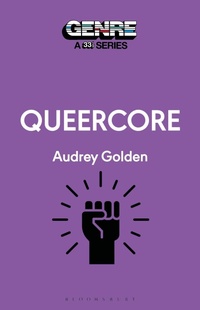
Queercore
Will be published approx. on 11. June 2026
Book
Paperback/Softback
208 pages
979-8-7651-2585-4 (ISBN)
Description
Transatlantic knowledge of the queer underground punk scene that ultimately became queercore developed through the spirit of DIY resistance that guided earlier feminist artists as queer musicians pushed back against the homophobia and sexism that remained pervasive in hardcore punk.
Queercore officially got its name in the mid-1980s when G.B. Jones and Bruce LaBruce named it in their revolutionary zine J.D.s, but the movement began years earlier with bands like Wayne County and the Electric Chairs, Nervous Gender, and Fifth Column. The scene exploded into the next decade with the popularity of bands that often crossed over into the riot grrrl scene, including Tribe 8, Team Dresch, Sister George, and Huggy Bear. Their revolution took the form of zine and cassette creation, which they distributed far and wide. Those documents became like guidebooks for queer punks in small towns throughout North America, Europe, Australia, and Japan.
This book explores queercore as a genre that was never intended to be a genre, but instead an underground resistance movement centered around punk. It identifies the key players in the queercore lexicon, from musicians and filmmakers to record labels and zine-makers, and it documents their histories through original interviews and archival research. Ultimately, the book guides readers through the beginnings of queercore into the present, where the legacy of this unlikely genre looms loudly for LGBTQIA+ artists and all those marginalized by the mainstream.
Queercore officially got its name in the mid-1980s when G.B. Jones and Bruce LaBruce named it in their revolutionary zine J.D.s, but the movement began years earlier with bands like Wayne County and the Electric Chairs, Nervous Gender, and Fifth Column. The scene exploded into the next decade with the popularity of bands that often crossed over into the riot grrrl scene, including Tribe 8, Team Dresch, Sister George, and Huggy Bear. Their revolution took the form of zine and cassette creation, which they distributed far and wide. Those documents became like guidebooks for queer punks in small towns throughout North America, Europe, Australia, and Japan.
This book explores queercore as a genre that was never intended to be a genre, but instead an underground resistance movement centered around punk. It identifies the key players in the queercore lexicon, from musicians and filmmakers to record labels and zine-makers, and it documents their histories through original interviews and archival research. Ultimately, the book guides readers through the beginnings of queercore into the present, where the legacy of this unlikely genre looms loudly for LGBTQIA+ artists and all those marginalized by the mainstream.
More details
Series
Language
English
Place of publication
New York
United States
Publishing group
Bloomsbury Publishing Plc
Dimensions
Height: 216 mm
Width: 135 mm
Thickness: 18 mm
Weight
218 gr
ISBN-13
979-8-7651-2585-4 (9798765125854)
Copyright in bibliographic data and cover images is held by Nielsen Book Services Limited or by the publishers or by their respective licensors: all rights reserved.
Schweitzer Classification
Other editions
Person
Audrey Golden is an arts and culture writer with a focus in music, cinema, and politics based in New York, USA. She is the author of I Thought I Heard You Speak: Women at Factory Records (2023) and Shouting Out Loud: Lives of the Raincoats (2025).
Content
Introduction
1. Zines
2. Queercore in Context
3. Defining Queer(core)
4. Queercore Bands
5. The Sound of Queercore
6. Queercore Spy Work: Reclaiming Queercoding
7. Record Labels to the Rescue
8. Queercore Happenings
9. Queercore on Screen
10. Moving Mainstream
11. Post-Queercore?
12. Queering the Archive
Ten Essential Tracks
Acknowledgements
Works Cited
1. Zines
2. Queercore in Context
3. Defining Queer(core)
4. Queercore Bands
5. The Sound of Queercore
6. Queercore Spy Work: Reclaiming Queercoding
7. Record Labels to the Rescue
8. Queercore Happenings
9. Queercore on Screen
10. Moving Mainstream
11. Post-Queercore?
12. Queering the Archive
Ten Essential Tracks
Acknowledgements
Works Cited