

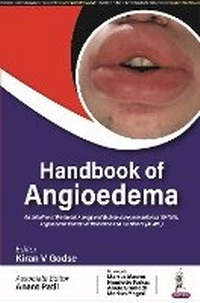
Handbook of Angioedema
Published on 31. January 2023
Book
Paperback/Softback
210 pages
978-93-5696-164-7 (ISBN)
Description
Angioedema is sudden swelling that is often caused by an allergic reaction. It can be very serious if the throat becomes swollen and breathing is affected. Treatment can help keep the swelling under control. If an allergic reaction is the cause of swelling, a raised, itchy rash (hives) is usually present. Areas of the body commonly affected include the face (particularly the lips, tongue and eyelids), the hands or feet, and genitals. Less commonly, the throat can swell up, leading to breathing difficulties.
An initiative of the Global Allergy and Asthma European Network (GA (2)LEN) Angioedema Centres of Reference and Excellence (ACARE), this handbook is a complete guide to the diagnosis and treatment of angioedema.
Beginning with an overview of the condition, its pathophysiology and clinical presentation, the following chapters cover the many different causes of angioedema, and its subsequent management.
Authored by worldwide, renowned experts, the book is highly illustrated with clinical images, tables and figures, further enhancing the comprehensive text.
An initiative of the Global Allergy and Asthma European Network (GA (2)LEN) Angioedema Centres of Reference and Excellence (ACARE), this handbook is a complete guide to the diagnosis and treatment of angioedema.
Beginning with an overview of the condition, its pathophysiology and clinical presentation, the following chapters cover the many different causes of angioedema, and its subsequent management.
Authored by worldwide, renowned experts, the book is highly illustrated with clinical images, tables and figures, further enhancing the comprehensive text.
More details
Language
English
Place of publication
New Delhi
India
Target group
Professional and scholarly
Dimensions
Height: 241 mm
Width: 159 mm
Thickness: 13 mm
Weight
400 gr
ISBN-13
978-93-5696-164-7 (9789356961647)
Copyright in bibliographic data and cover images is held by Nielsen Book Services Limited or by the publishers or by their respective licensors: all rights reserved.
Schweitzer Classification
Persons
Kiran V Godse MD PhD FRCP (Glasgow)
Professor, Department of Dermatology, Dr DY Patil Medical College, Navi Mumbai; Consultant Dermatologist, Apollo Hospital, Navi Mumbai, Maharashtra, India
Anant Patil MD
Associate Professor, Department of Pharmacology, Dr DY Patil Medical College, Navi Mumbai, Maharashtra, India
Professor, Department of Dermatology, Dr DY Patil Medical College, Navi Mumbai; Consultant Dermatologist, Apollo Hospital, Navi Mumbai, Maharashtra, India
Anant Patil MD
Associate Professor, Department of Pharmacology, Dr DY Patil Medical College, Navi Mumbai, Maharashtra, India
Content
Chapter 1: Introduction and Classification
Chapter 2: Prevalence of Angioedema in Patients with Chronic Urticaria
Chapter 3: The Role of Mast Cells in Angioedema
Chapter 4: Pathophysiology of Angioedema
Chapter 5: Hereditary Angioedema with Normal C1 Inhibitor
Chapter 6: Women Specificities and Hereditary Angioedema
Chapter 7: Acquired Angioedema
Chapter 8: Angioedema Related to Fruit Allergies
Chapter 9: Drug-induced Angioedema
Chapter 10: Vibratory Angioedema
Chapter 11: Palpebral Angioedema in Cholinergic Urticaria
Chapter 12: Angioedema due to Acquired C1-inhibitor Deficiency
Chapter 13: Hereditary Angioedema: The Genomic Challenge
Chapter 14: Quality of Life and Burden of Disease
Chapter 15: Diagnostic Methodologies for C1-inhibitor Deficiency
Chapter 16: Laboratory Investigation of Nonhistaminergic Angioedema
Chapter 17: Differential Diagnosis of Angioedema
Chapter 18: Treatment of Histaminergic Angioedema
Chapter 19: Management of Bradykinin-mediated Angioedema
Chapter 20: Predictive Factors of Angioedema and Its Severity
Chapter 21: Preventive Measures for Hereditary Angioedema Attacks
Chapter 22: Treatment of Hereditary Angioedema in Childhood:Acute Treatment
Chapter 23: Treatment of Hereditary Angioedema in Childhood: Long-term Preventive Treatment
Chapter 24: Patient-reported Outcome in Recurrent Angioedema
Chapter 25: Patient Information on Angioedema (Both Histamine and Bradykinin Angioedema)
Chapter 26: Hereditary Angioedema
Chapter 27: A Simplified Approach to a Patient of Angioedema: Differentiate Between Mast Cell Mediator-induced and Bradykinin-mediated Angioedema
Chapter 2: Prevalence of Angioedema in Patients with Chronic Urticaria
Chapter 3: The Role of Mast Cells in Angioedema
Chapter 4: Pathophysiology of Angioedema
Chapter 5: Hereditary Angioedema with Normal C1 Inhibitor
Chapter 6: Women Specificities and Hereditary Angioedema
Chapter 7: Acquired Angioedema
Chapter 8: Angioedema Related to Fruit Allergies
Chapter 9: Drug-induced Angioedema
Chapter 10: Vibratory Angioedema
Chapter 11: Palpebral Angioedema in Cholinergic Urticaria
Chapter 12: Angioedema due to Acquired C1-inhibitor Deficiency
Chapter 13: Hereditary Angioedema: The Genomic Challenge
Chapter 14: Quality of Life and Burden of Disease
Chapter 15: Diagnostic Methodologies for C1-inhibitor Deficiency
Chapter 16: Laboratory Investigation of Nonhistaminergic Angioedema
Chapter 17: Differential Diagnosis of Angioedema
Chapter 18: Treatment of Histaminergic Angioedema
Chapter 19: Management of Bradykinin-mediated Angioedema
Chapter 20: Predictive Factors of Angioedema and Its Severity
Chapter 21: Preventive Measures for Hereditary Angioedema Attacks
Chapter 22: Treatment of Hereditary Angioedema in Childhood:Acute Treatment
Chapter 23: Treatment of Hereditary Angioedema in Childhood: Long-term Preventive Treatment
Chapter 24: Patient-reported Outcome in Recurrent Angioedema
Chapter 25: Patient Information on Angioedema (Both Histamine and Bradykinin Angioedema)
Chapter 26: Hereditary Angioedema
Chapter 27: A Simplified Approach to a Patient of Angioedema: Differentiate Between Mast Cell Mediator-induced and Bradykinin-mediated Angioedema