

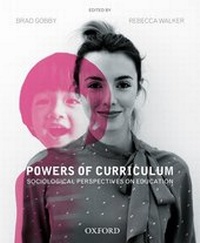
Powers of Curriculum
Sociological Perspectives on Education
Published on 5. October 2017
Book
Paperback/Softback
544 pages
978-0-19-030370-9 (ISBN)
Description
Curriculum is powerful because it shapes what children and young people experience in educational settings. Educators are central to this as more often than not they have the most direct influence on learners' curriculum experiences. Powers of Curriculum explores the many issues surrounding curriculum in order to equip future educators with ideas, concepts and perspectives that can make a positive difference to the lives of children and young people in the
early childhood, primary and secondary phases of education.
The book explores a diverse range of topics related to curriculum, the experiences of learners, and how these experiences are shaped by powers within and beyond the field of education. The text is organised into three sections: Understanding Curriculum; Unpacking Curriculum Issues; and Using and Enacting Curriculum. The first section introduces the notion of curriculum and its conceptualisation. The second section introduces a range of socio-cultural issues from a sociological perspective. The
final section considers the practical dimension to learning about curriculum. The authors of the chapters encourage readers to reflect on their opinions and experiences, and to explore the concepts and ideas used in the chapters to open education up to new thoughts and practices.
early childhood, primary and secondary phases of education.
The book explores a diverse range of topics related to curriculum, the experiences of learners, and how these experiences are shaped by powers within and beyond the field of education. The text is organised into three sections: Understanding Curriculum; Unpacking Curriculum Issues; and Using and Enacting Curriculum. The first section introduces the notion of curriculum and its conceptualisation. The second section introduces a range of socio-cultural issues from a sociological perspective. The
final section considers the practical dimension to learning about curriculum. The authors of the chapters encourage readers to reflect on their opinions and experiences, and to explore the concepts and ideas used in the chapters to open education up to new thoughts and practices.
More details
Language
English
Place of publication
Melbourne
Australia
Publishing group
Oxford University Press Australia
Target group
College/higher education
Professional and scholarly
Illustrations
b/w illus.
Dimensions
Height: 249 mm
Width: 205 mm
Thickness: 20 mm
Weight
1074 gr
ISBN-13
978-0-19-030370-9 (9780190303709)
Copyright in bibliographic data and cover images is held by Nielsen Book Services Limited or by the publishers or by their respective licensors: all rights reserved.
Schweitzer Classification
Persons
Dr Brad Gobby is a Lecturer at Curtin University in Western Australia. He has experience as a secondary school teacher and currently researches and teaches in the areas of government policy, school reform and curriculum.
Dr Rebecca Walker is a Lecturer at Curtin University in Western Australia. She has had extensive teaching experience both in the metropolitan and rural areas of Western Australia and overseas. Her current research focuses on assessment and feedback; digital technologies and learning; and trauma-informed and restorative practices.
Dr Rebecca Walker is a Lecturer at Curtin University in Western Australia. She has had extensive teaching experience both in the metropolitan and rural areas of Western Australia and overseas. Her current research focuses on assessment and feedback; digital technologies and learning; and trauma-informed and restorative practices.
Content
Part One: Understanding CurriculumWhat is Curriculum?Schooling, Its History and PowerQuestioning How and What We Know: New Concepts to Approach EducationEducators' Philosophies: Encountering and Weaving ImagesCritically Reflective Practice: What Is It and Why Is It Needed Now?Neoliberalism, Education and CurriculumPart Two: Unpacking Curriculum ContextsThe Education System and SES: Mapping DisadvantageThe Trap of Binary Thinking: Problematising Gender and Social DisadvantagePsychology, Psychiatry and Neuroscience in EducationIdentity Formation: Consumerism and Popular CultureRethinking Australia's Cultural DiversityUnderstanding the Techniques of Colonialism: Indigenous Educational JusticeTesting Times for Assessment and PedagogyPart Three: Enacting Curriculum ExperiencesLearner Diversity and School PracticesThe Virtual Schoolbag and Pedagogies of EngagementEnvironment: The Third TeacherPlanning, Programming and Embedding CurriculumStudent-centred Approaches to Planning in Primary and Secondary SchoolsGlossary