


Introduction to Strain-Based Structural Health Monitoring of Civil Structures
1st Edition
Published on 11. July 2024
Book
Hardback
368 pages
978-1-118-49535-3 (ISBN)
Description
A comprehensive introduction to strain-based structural health monitoring of civil structures, with focus on measurement and data analysis
Introduction to Strain-Based Structural Health Monitoring of Civil Structures focuses on the SHM of Civil Structures and Infrastructure, and develops the relevant topics of measurement and data analysis from a fundamental to advanced level.
The book contains an overview of the available and emerging strain monitoring technologies, for example, traditional strain-gauges and vibrating wire sensors, discrete and distributed fiber optic sensors, and large area electronics. The fundamentals of error analysis, as well as typical sources of errors in measurements are discussed. Sources of strain in typical construction materials such concrete, steel, timber, and composite materials are also discussed, and both basic and advanced data interpretation and analysis for static and dynamic monitoring are presented in detail.
Methods applicable to a large spectrum of structural elements and civil structures, such as bridges, buildings, and pipelines are summarized. These methods are developed at three scales: local material scale, global structural scale, and integrity scale, and illustrated with practical examples.
Key features:
Introduces strain-based structural health monitoring of civil structures, with focus on measurement and data analysis.
Covers the physical principles, advantages and limitations of various types of sensors.
Covers fundamental error analysis and presents typical sources of errors.
Covers the sources of short- and long-term strain, and how to interpret the strain measurement.
Includes basic and advanced methods for data analysis.
Contains the basic strain-based SHM methods for monitoring various types of structures at local, global, and integrity scale.
Explores the potential and benefits as well as the limitations of SHM.
Suitable as a guide for practicing engineers, reference for infrastructure owners, and textbook for researchers and SHM university courses.
Introduction to Strain-Based Structural Health Monitoring of Civil Structures is essential, state-of-the-art reading for civil and structural engineers and professionals in SHM, as well as teachers, researchers and students in civil engineering.
Introduction to Strain-Based Structural Health Monitoring of Civil Structures focuses on the SHM of Civil Structures and Infrastructure, and develops the relevant topics of measurement and data analysis from a fundamental to advanced level.
The book contains an overview of the available and emerging strain monitoring technologies, for example, traditional strain-gauges and vibrating wire sensors, discrete and distributed fiber optic sensors, and large area electronics. The fundamentals of error analysis, as well as typical sources of errors in measurements are discussed. Sources of strain in typical construction materials such concrete, steel, timber, and composite materials are also discussed, and both basic and advanced data interpretation and analysis for static and dynamic monitoring are presented in detail.
Methods applicable to a large spectrum of structural elements and civil structures, such as bridges, buildings, and pipelines are summarized. These methods are developed at three scales: local material scale, global structural scale, and integrity scale, and illustrated with practical examples.
Key features:
Introduces strain-based structural health monitoring of civil structures, with focus on measurement and data analysis.
Covers the physical principles, advantages and limitations of various types of sensors.
Covers fundamental error analysis and presents typical sources of errors.
Covers the sources of short- and long-term strain, and how to interpret the strain measurement.
Includes basic and advanced methods for data analysis.
Contains the basic strain-based SHM methods for monitoring various types of structures at local, global, and integrity scale.
Explores the potential and benefits as well as the limitations of SHM.
Suitable as a guide for practicing engineers, reference for infrastructure owners, and textbook for researchers and SHM university courses.
Introduction to Strain-Based Structural Health Monitoring of Civil Structures is essential, state-of-the-art reading for civil and structural engineers and professionals in SHM, as well as teachers, researchers and students in civil engineering.
More details
Language
English
Place of publication
New York
United States
Target group
Professional and scholarly
Product notice
sewn/stitched
Cloth over boards
Dimensions
Height: 258 mm
Width: 183 mm
Thickness: 27 mm
Weight
838 gr
ISBN-13
978-1-118-49535-3 (9781118495353)
Copyright in bibliographic data and cover images is held by Nielsen Book Services Limited or by the publishers or by their respective licensors: all rights reserved.
Schweitzer Classification
Other editions
Additional editions
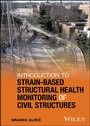
E-Book
06/2024
1st Edition
Wiley-ISTE
€73.99
Available for download
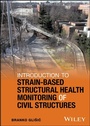
E-Book
06/2024
1st Edition
Wiley-ISTE
€73.99
Available for download
Person
Branko Glisic is an Assistant Professor of Civil and Environmental Engineering at Princeton University, USA. His main areas of interest are SHM methods, advanced sensory systems, smart structures, SHM data management, and sustainable engineering.
He was previously employed at SMARTEC SA, Switzerland, where he was involved in research and engineering in numerous structural health monitoring projects.
He was previously employed at SMARTEC SA, Switzerland, where he was involved in research and engineering in numerous structural health monitoring projects.