

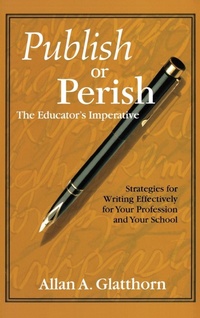
Publish or Perish - The Educator's Imperative
Strategies for Writing Effectively for Your Profession and Your School
1st Edition
Published on 27. June 2002
Book
Hardback
256 pages
978-0-7619-7866-4 (ISBN)
Description
The definitive guide to writing for publication (and more)!
Successfully translating thoughts and ideas into the printed word can seem daunting to even the most experienced educator. Step-by-step, author and scholar Allan A. Glatthorn guides education professionals through the basics of the writing process, empowering them with the tools to create and enhance their own professional submissions and writings. The down-to-earth, conversational tone helps to effectively convey and outline specific writing strategies for contributions to research journals, articles, op-ed pieces, manuscripts, literature reviews, theses, funding proposals, internal organizational writing.
Key features include:
Finding a topic
Correctly identifying your audience
Choosing the appropriate forum
Revising and editing
Working with editors and publishers
Maximizing use of the Internet and other technological tools
Allan A. Glatthorn taught writing for more than 25 years and was a Distinguished Research Professor Emeritus at East Carolina University. During his prolific 55-year teaching career, he authored more than 50 texts on writing and more than 30 professional books. In Publish or Perish-The Educator's Imperative, he shared his wealth of knowledge and experience about professional publishing and the writing process, in hopes that his work would help readers achieve their own goals and imperatives.
Successfully translating thoughts and ideas into the printed word can seem daunting to even the most experienced educator. Step-by-step, author and scholar Allan A. Glatthorn guides education professionals through the basics of the writing process, empowering them with the tools to create and enhance their own professional submissions and writings. The down-to-earth, conversational tone helps to effectively convey and outline specific writing strategies for contributions to research journals, articles, op-ed pieces, manuscripts, literature reviews, theses, funding proposals, internal organizational writing.
Key features include:
Finding a topic
Correctly identifying your audience
Choosing the appropriate forum
Revising and editing
Working with editors and publishers
Maximizing use of the Internet and other technological tools
Allan A. Glatthorn taught writing for more than 25 years and was a Distinguished Research Professor Emeritus at East Carolina University. During his prolific 55-year teaching career, he authored more than 50 texts on writing and more than 30 professional books. In Publish or Perish-The Educator's Imperative, he shared his wealth of knowledge and experience about professional publishing and the writing process, in hopes that his work would help readers achieve their own goals and imperatives.
Reviews / Votes
Superbly organized and presented . . .Publish or Perish is the definitive and strongly recommended introduction to converting ideas into the printed world in order to establish and achieve professional goals through the process of writing and being published. -- Midwest Book Review, August 2003More details
Language
English
Place of publication
Thousand Oaks
United States
Target group
Professional and scholarly
Dimensions
Height: 235 mm
Width: 157 mm
Thickness: 18 mm
Weight
526 gr
ISBN-13
978-0-7619-7866-4 (9780761978664)
Copyright in bibliographic data and cover images is held by Nielsen Book Services Limited or by the publishers or by their respective licensors: all rights reserved.
Schweitzer Classification
Other editions
Additional editions
Allan A. Glatthorn
Publish or Perish - The Educator's Imperative
Strategies for Writing Effectively for Your Profession and Your School
Book
05/2002
1st Edition
SAGE Publications Inc
€41.40
Shipment within 15-20 days
Person
Allan A. Glatthorn (1924-2007) was a major contributor to the third and fourth editions; his research used in the preparation of the first and second editions of Writing the Winning Thesis or Dissertation: A Step-by-Step Guide was the foundation for the third edition. He was the Distinguished Research Professor of Education (Emeritus) in the College of Education of East Carolina University, where he advised doctoral students, chaired dissertations, and taught courses in supervision and curriculum. He was formerly Professor of Education at the Graduate School of Education of the University of Pennsylvania. Prior to his university assignments, he was a high school teacher and principal. In his work as a professor, he chaired close to 100 dissertations. He is the author of numerous professional books, several of which have been published by Corwin.
Content
Preface
Acknowledgments
About the Author
Part I: Getting Started
1. Becoming a Published Writing Professional
The Reasons for Writing and Publishing
The Drawbacks of Writing
Learning to Write
The Organization of This Work
2. Focusing and Planning for the Long Term
Finding a Focus
A Rationale for Finding a Focus
Making the Long-Term Plan
Complete the Writing Life Stream
Complete the Research Life Stream
A Final Note
3. Using the Tools of the Writer's Craft
Books and Journals
A Writer's Notebook
Computer, Printer, and Word Processing Software
Other Uses of the Technology
Other Hardware
A Final Note
Part II: Mastering the Writing Process
4. Finding a Topic
Write About What You Know
Study Professional Journals
Use the Focus Finder
Go Against the Grain
Find a Problem
5. Building the Knowledge Base
Make Preparations
Use a Comprehensive Retrieval Process
Continue to Update Your Files
6. Organizing Your Writing
The Nature of Reader-Centered Organization
Identify Type of Writing and the Audience
Review the Literature
Make Visual Presentations
Make Your Organization Known to Your Reader
7. Writing the First Draft
Get Ready to Write
Listen to Your Writing
Be Aware of Paragraph Length and Topic Sentences as You Write
Integrate the Knowledge Base
Focus on Results
8. Revising and Editing
Knowing When to Revise and Edit
Getting Help in Revising and Editing
Revising Effectively
Editing Carefully
9. Publishing: Working With Editors and Publishers
Choosing the Right Venue
Choosing a Publisher
Understanding the Publishing Process
Knowing the People in the Process
Working With Editors
Writing the Query Letter
Developing the Proposal
Signing Contracts
Publishing in Journals
A Concluding Note
Part III: Writing for the Profession
10. Writing for Practitioners' Journals
Study and Select the Journal
Decide About a Query Letter
Build the Knowledge Base
Write and Effective Introduction
Understand the Types of Practitioner Articles
Take Care of the Final Details
A Concluding Note
11. Writing for Research Journals
Take Care of Preliminary Matters
Follow General Guidelines
Write the Abstract
Write the Introduction
Review of the Literature
Explain the Methodology
Report the Results
Summarize and Discuss the Results
A Concluding Note
12. Writing the Opinion Piece
Handling Preliminary Matters
Writing the Introduction
Stating Your Arguments
Writing the Rebuttal
Writing the Conclusion
Revising as Necessary
A Concluding Note
13. Writing the Big Book
Getting Ready to Write
Writing the Big Book
Writing the Front Matter
Writing the Remaining Chapters
Taking Care of Final Matters
Revising and Preparing for Submission
Promoting the Published Book
14. Using the Internet
Learning From the Internet
Seeking Funding
Communicating With Others
Publishing on the Internet
Part IV: Writing in Academic Settings
15. Writing the Review of the Literature
Planning the Review
Writing the First Draft of the Review
Meeting Requirements of Special Uses
16. Responding to Your Reading
Before You Read
Read Appreciatively and Critically
Write Your Response
17. Mastering the Academic Style: Research Proposal, Thesis, and Dissertation
Writing the Academic Style: Organization
Making the Organization Clear
Choosing the Right Words
Mastering Sentences
Mastering the Paragraph
Some Final Reminders
Part V: Writing in the Organization
18. Publishing in the Local Paper - Sharon Schlegel and Allan Glatthorn
Cultivating Local Sources
Establishing Contact
Writing the News Release
Writing Letters to the Editor
Writing Feature Articles
Working With a Reporter or Journalist
Writing the Feature Yourself
Writing a Column
19. Writing Successful Proposals for Funding
Before You Start Writing
Writing the Proposal
Resources
Part VI: Conclusion
20. A Look Behind and A Look Ahead
A Look Behind
A Look Ahead
Index
Acknowledgments
About the Author
Part I: Getting Started
1. Becoming a Published Writing Professional
The Reasons for Writing and Publishing
The Drawbacks of Writing
Learning to Write
The Organization of This Work
2. Focusing and Planning for the Long Term
Finding a Focus
A Rationale for Finding a Focus
Making the Long-Term Plan
Complete the Writing Life Stream
Complete the Research Life Stream
A Final Note
3. Using the Tools of the Writer's Craft
Books and Journals
A Writer's Notebook
Computer, Printer, and Word Processing Software
Other Uses of the Technology
Other Hardware
A Final Note
Part II: Mastering the Writing Process
4. Finding a Topic
Write About What You Know
Study Professional Journals
Use the Focus Finder
Go Against the Grain
Find a Problem
5. Building the Knowledge Base
Make Preparations
Use a Comprehensive Retrieval Process
Continue to Update Your Files
6. Organizing Your Writing
The Nature of Reader-Centered Organization
Identify Type of Writing and the Audience
Review the Literature
Make Visual Presentations
Make Your Organization Known to Your Reader
7. Writing the First Draft
Get Ready to Write
Listen to Your Writing
Be Aware of Paragraph Length and Topic Sentences as You Write
Integrate the Knowledge Base
Focus on Results
8. Revising and Editing
Knowing When to Revise and Edit
Getting Help in Revising and Editing
Revising Effectively
Editing Carefully
9. Publishing: Working With Editors and Publishers
Choosing the Right Venue
Choosing a Publisher
Understanding the Publishing Process
Knowing the People in the Process
Working With Editors
Writing the Query Letter
Developing the Proposal
Signing Contracts
Publishing in Journals
A Concluding Note
Part III: Writing for the Profession
10. Writing for Practitioners' Journals
Study and Select the Journal
Decide About a Query Letter
Build the Knowledge Base
Write and Effective Introduction
Understand the Types of Practitioner Articles
Take Care of the Final Details
A Concluding Note
11. Writing for Research Journals
Take Care of Preliminary Matters
Follow General Guidelines
Write the Abstract
Write the Introduction
Review of the Literature
Explain the Methodology
Report the Results
Summarize and Discuss the Results
A Concluding Note
12. Writing the Opinion Piece
Handling Preliminary Matters
Writing the Introduction
Stating Your Arguments
Writing the Rebuttal
Writing the Conclusion
Revising as Necessary
A Concluding Note
13. Writing the Big Book
Getting Ready to Write
Writing the Big Book
Writing the Front Matter
Writing the Remaining Chapters
Taking Care of Final Matters
Revising and Preparing for Submission
Promoting the Published Book
14. Using the Internet
Learning From the Internet
Seeking Funding
Communicating With Others
Publishing on the Internet
Part IV: Writing in Academic Settings
15. Writing the Review of the Literature
Planning the Review
Writing the First Draft of the Review
Meeting Requirements of Special Uses
16. Responding to Your Reading
Before You Read
Read Appreciatively and Critically
Write Your Response
17. Mastering the Academic Style: Research Proposal, Thesis, and Dissertation
Writing the Academic Style: Organization
Making the Organization Clear
Choosing the Right Words
Mastering Sentences
Mastering the Paragraph
Some Final Reminders
Part V: Writing in the Organization
18. Publishing in the Local Paper - Sharon Schlegel and Allan Glatthorn
Cultivating Local Sources
Establishing Contact
Writing the News Release
Writing Letters to the Editor
Writing Feature Articles
Working With a Reporter or Journalist
Writing the Feature Yourself
Writing a Column
19. Writing Successful Proposals for Funding
Before You Start Writing
Writing the Proposal
Resources
Part VI: Conclusion
20. A Look Behind and A Look Ahead
A Look Behind
A Look Ahead
Index