

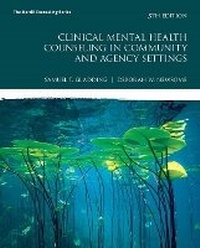
MyLab Counseling with Pearson eText -- Access Card -- for Clinical Mental Health Counseling in Community and Agency Settings
5th Edition
Published on 19. April 2017
Book
Mixed media product
978-0-13-452412-2 (ISBN)
Description
NOTE: Before purchasing, check with your instructor to ensure you select the correct ISBN. Several versions of Pearson's MyLab products exist for each title, and registrations are not transferable. To register for and use Pearson's MyLab products, you will also need a Course ID, which your instructor will provide.
Used books, rentals, and purchases made outside of Pearson
If purchasing or renting from companies other than Pearson, the access codes for Pearson's MyLab products may not be included, may be incorrect, or may be previously redeemed. Check with the seller before completing your purchase.
For courses in Community/Agency Counseling.
This access code card provides access to MyCounselingLab (R) with Pearson eText.
A strong foundation for building counseling skills that addresses the latest CACREP standards.
Rapid changes in our world compel changes in the way mental health counselors must practice. Focusing on approaches that promote prevention, early intervention, wellness, and advocacy, Clinical Mental Health Counseling in Community and Agency Settings gives today's counseling students a user-friendly yet scholarly approach to all aspects of their future profession.
The Council for the Accreditation of Counseling and Related Educational Programs (CACREP) now recognizes only Clinical Mental Health Counseling (CMHC) programs that have met the accreditation standards; therefore, the authors now focus exclusively on clinical mental health counseling to give students a strong base in this specialty area. Gladding and Newsome examine the history and professional foundations of counseling, legal and ethical issues, counseling with diverse populations, multiple roles and functions of clinical mental health counselors, and the many settings in which clinical mental health counselors practice.
Information presented in the chapters is supplemented with narratives supplied by mental health professionals employed across counseling settings, who share their views of the rewards and challenges associated with the services they provide. In addition, case studies in each chapter provide opportunities for students to grapple with challenging issues faced by clinical mental health counselors.
Personalize learning with Pearson MyLab Counseling
Pearson MyLab Counseling is an online homework, tutorial, and assessment program designed to work with the text to engage students and improve results. Within its structured environment, students see key concepts demonstrated through real classroom video footage, practice what they learn, test their understanding, and receive feedback to guide their learning and ensure they master key learning outcomes.
Used books, rentals, and purchases made outside of Pearson
If purchasing or renting from companies other than Pearson, the access codes for Pearson's MyLab products may not be included, may be incorrect, or may be previously redeemed. Check with the seller before completing your purchase.
For courses in Community/Agency Counseling.
This access code card provides access to MyCounselingLab (R) with Pearson eText.
A strong foundation for building counseling skills that addresses the latest CACREP standards.
Rapid changes in our world compel changes in the way mental health counselors must practice. Focusing on approaches that promote prevention, early intervention, wellness, and advocacy, Clinical Mental Health Counseling in Community and Agency Settings gives today's counseling students a user-friendly yet scholarly approach to all aspects of their future profession.
The Council for the Accreditation of Counseling and Related Educational Programs (CACREP) now recognizes only Clinical Mental Health Counseling (CMHC) programs that have met the accreditation standards; therefore, the authors now focus exclusively on clinical mental health counseling to give students a strong base in this specialty area. Gladding and Newsome examine the history and professional foundations of counseling, legal and ethical issues, counseling with diverse populations, multiple roles and functions of clinical mental health counselors, and the many settings in which clinical mental health counselors practice.
Information presented in the chapters is supplemented with narratives supplied by mental health professionals employed across counseling settings, who share their views of the rewards and challenges associated with the services they provide. In addition, case studies in each chapter provide opportunities for students to grapple with challenging issues faced by clinical mental health counselors.
Personalize learning with Pearson MyLab Counseling
Pearson MyLab Counseling is an online homework, tutorial, and assessment program designed to work with the text to engage students and improve results. Within its structured environment, students see key concepts demonstrated through real classroom video footage, practice what they learn, test their understanding, and receive feedback to guide their learning and ensure they master key learning outcomes.
More details
Edition
5th edition
Language
English
Place of publication
United States
Publishing group
Pearson Education (US)
Target group
College/higher education
Professional and scholarly
Dimensions
Height: 221 mm
Width: 152 mm
Thickness: 3 mm
Weight
45 gr
ISBN-13
978-0-13-452412-2 (9780134524122)
Copyright in bibliographic data and cover images is held by Nielsen Book Services Limited or by the publishers or by their respective licensors: all rights reserved.
Schweitzer Classification
Other editions
Previous edition
Debbie W. Newsome | Samuel T. Gladding
Clinical Mental Health Counseling in Community and Agency Settings
Book
10/2013
4th Edition
Pearson
€126.47
Article exhausted; check for reprint
Persons
Samuel T. Gladding is a professor in the Department of Counseling at Wake Forest University in Winston-Salem, North Carolina. He is a fellow in the American Counseling Association and its former president (2004-2005). He has also served as president of the Association for Counselor Education and Supervision (ACES), the Association for Specialists in Group Work (ASGW), the American Association of State Counseling Boards, and Chi Sigma Iota. He is the former editor of the Journal for Specialists in Group Work, a past member of the American Counseling Association Foundation, and a past member of the North Carolina Board of Licensed Professional Counselors.
Dr. Gladding has authored numerous professional publications, including 45 books. In 1999, he was cited as being in the top 1% of contributors to the flagship periodical of the American Counseling Association: the Journal of Counseling and Development. A National Certified Counselor (NCC), a Certified Clinical Mental Health Counselor (CCMHC), and a Licensed Professional Counselor (North Carolina), Dr. Gladding's specialty in counseling is creativity. He is married to Claire Tillson Gladding and is the father of three adult sons. In his spare time, he enjoys swimming, writing poetry, listening to music, and reading humor and history.
Deborah W. Newsome is an associate professor in the Department of Counseling at Wake Forest University in Winston-Salem, North Carolina, where she serves as the clinical mental health program director. She served on the Executive Board of the Association for Assessment in Counseling and Education (AACE) for 6 years and is a member of several divisions of the American Counseling Association (ACA). She is a National Certified Counselor (NCC), a Licensed Professional Counselor (LPC), and a Licensed North Carolina School Counselor. She teaches courses in clinical mental health counseling, counseling skill development, assessment, and career development and counseling. She also supervises graduate students' clinical experiences and volunteers at a local nonprofit counseling center.
Dr. Newsome has coauthored three books and over 25 book chapters and journal articles. In 2005, she received Wake Forest University's Graduate Student Association Faculty Excellence Award. She and her husband, David Newsome, are the parents of two young adults-David, Jr., and Jennifer. Debbie is an avid runner and swimmer and enjoys playing the flute for various community organizations.
Dr. Gladding has authored numerous professional publications, including 45 books. In 1999, he was cited as being in the top 1% of contributors to the flagship periodical of the American Counseling Association: the Journal of Counseling and Development. A National Certified Counselor (NCC), a Certified Clinical Mental Health Counselor (CCMHC), and a Licensed Professional Counselor (North Carolina), Dr. Gladding's specialty in counseling is creativity. He is married to Claire Tillson Gladding and is the father of three adult sons. In his spare time, he enjoys swimming, writing poetry, listening to music, and reading humor and history.
Deborah W. Newsome is an associate professor in the Department of Counseling at Wake Forest University in Winston-Salem, North Carolina, where she serves as the clinical mental health program director. She served on the Executive Board of the Association for Assessment in Counseling and Education (AACE) for 6 years and is a member of several divisions of the American Counseling Association (ACA). She is a National Certified Counselor (NCC), a Licensed Professional Counselor (LPC), and a Licensed North Carolina School Counselor. She teaches courses in clinical mental health counseling, counseling skill development, assessment, and career development and counseling. She also supervises graduate students' clinical experiences and volunteers at a local nonprofit counseling center.
Dr. Newsome has coauthored three books and over 25 book chapters and journal articles. In 2005, she received Wake Forest University's Graduate Student Association Faculty Excellence Award. She and her husband, David Newsome, are the parents of two young adults-David, Jr., and Jennifer. Debbie is an avid runner and swimmer and enjoys playing the flute for various community organizations.
Content
BRIEF TABLE OF CONTENTS
PART I. HISTORICAL AND PROFESSIONAL FOUNDATIONS OF CLINICAL MENTAL HEALTH COUNSELING
1. History of and Professional Identity in Clinical Mental Health Counseling
2. Ethical and Legal Aspects of Counseling?
3. Clinical Mental Health Counseling in a Diverse Society
PART II. ROLES AND FUNCTIONS OF CLINICAL MENTAL HEALTH COUNSELORS?
4. The Counseling Process?
5. Client Assessment and Diagnosis?
6. Holistic Approaches to Clinical Mental Health Counseling?
7. Consultation, Advocacy, and Evaluation
8. Dealing with Crises, Disasters, and Suicide, while Managing Stress, and Avoiding Burnout?
III. WORKING WITH SPECIFIC POPULATIONS
9. Working with Groups?
10. Couples and Family Counseling?
11. Counseling Children and Adolescents
12. Counseling Adults??
IV. CLINICAL MENTAL HEALTH COUNSELING: SETTINGS AND SERVICES?
13. College and Career Counseling
14. Community Agencies, Medical Settings, and Other Specialized Clinical Settings??
15. Employee Assistance Programs, Private Practice, Coaching and Managed Care?
Epilogue
Appendix - ACA Code of Ethics (2014)
References
Name Index
Subject Index
DETAILED TABLE OF CONTENTS
PART 1:Historical and Professional Foundations of Clinical Mental Health Counseling?
Chapter 1.History of and Professional Identity in Clinical Mental Health Counseling
Historical Roots of Clinical Mental Health Counseling?
A Chronological Overview of Professional Counseling?
Before 1900?
1900-1909?
1910s?
1920s?
1930s?
1940s?
1950s?
1960s?
1970s?
1980s?
1990s?
2000-2009?
2010-2016??
Professional Identity??
Defining Therapeutic Professionals
Nonprofessionals
General Human Services Workers
Professional Helpers?
Defining Counseling
Legal Recognition of Counseling as a Profession?
Professional Identification through Credentialing
Inspection
Registration,
Certification
Licensure
Identifying and Defining Therapeutic Professionals
Social Work
Psychiatry
Psychiatric Mental Health Nurses
Psychologists
Clinical Mental Health Counseling?
Clinical Mental Health Practice Settings and Services
Direct client services,
Indirect client services,
Direct community services
Indirect community services
Summary and Conclusion?
Chapter 2.Ethical and Legal Aspects of Counseling?
Definitions: Ethics, Morality, and Law
Ethics and Counseling?
Purpose of Ethical Codes
The ACA Code of Ethics?
Overview of Changes Made to the 2014 ACA Code of Ethics?
NBCC Code of Ethics?
Limitations of Ethical Codes?
Making Ethical Decisions
Other Guidelines for Acting Ethically
Unethical Behavior
The Law and Counseling?
Criminal, Civil, and Administrative Law?
Malpractice?
Other Reasons for Court Appearances?
Common Ethical and Legal Concerns?
Privacy, Confidentiality, and Privileged Communication?
Informed Consent?
Professional Boundaries and Roles with Clients?
Professional Competence?
End-of-Life Decisions?
The Use of Technology?
Using Technology-Assisted Counseling Responsibly?
Summary and Conclusion?
Chapter 3.Clinical Mental Health Counseling in a Diverse Society?
Culture and Ethnicity?
Defining Culture and Multicultural Counseling?
Challenges and Issues in Multicultural Counseling?
Developing Multicultural Counseling Competencies?
Becoming Ethnically Responsive Counselors: Integrating Awareness, Knowledge, and Skills?
Sexual Orientation and Gender Identity?
Definitions and Terminology?
Homophobia and Heterosexism?
Sexual Identity Development and Coming Out
Other Counseling Issues and Implications
Working with Transgender Clients?
Differing Abilities?
Definitions and Terminology?
Factors Associated with Increased Rates of Disability?
Attitudes and Myths about Disabilities?
Federal Regulation Related to Disability?
Counseling Goals and Interventions?
Training, Roles, and Functions of Rehabilitation Counselors?
Counseling Issues and Implications?
Socioeconomic Status and Social Class?
Definitions and Terminology?
SES as a Risk Factor?
Poverty and Social Class Fluidity?
Counseling Implications?
Summary and Conclusion?
PART 2:Roles and Functions of Clinical Mental Health Counselors?
Chapter 4.The Counseling Process?
The Physical Setting of Counseling?
Aesthetic Qualities and Room Design?
Initial Sessions: Building a Counseling Relationship?
Seriousness of the Presenting Problem?
Structure
Initiative?
Initial Counseling Interviews?
Relationship Building during Initial Sessions?
Case Conceptualization?
Client Records?
The Working Phase of Counseling?
Treatment Plans?
Interventions, Skills, and Techniques?
Case Notes?
Documenting Work with High-Risk Clients?
Closing Counseling Relationships?
Why Closing Is Important?
Timing of Closing?
Facilitating Closing?
Documenting Closing?
Following Up?
Referring and Recycling
Summary and Conclusion?
Chapter 5.Client Assessment and Diagnosis?
Assessment in Counseling?
Assessment Defined?
Methods of Assessment?
Purposes of Assessment?
Principles of Sound Assessment?
Issues Related to Assessment?
Diagnosis?
Using the DSM-5 in Counseling?
Overview of Mental Disorders and Conditions?
Diagnosis and Treatment??
Biopsychosocial Assessment and Diagnosis?
Biopsychosocial Assessment and Reporting?
Summary and Conclusion?
Chapter 6.Holistic Approaches to Clinical Mental Health Counseling?
The Biopsychosocial Model?
Biological Components?
Psychological Components?
Social Components?
Assessment and Treatment Planning?
Spirituality?
Terminology?
Benefits Associated with Spirituality?
Spirituality and the Counseling Process?
Mindfulness?
Wellness?
Wellness Models: The Wheel of Wellness and the Indivisible Self?
Ways to Use the Indivisible Self Model in Counseling?
Prevention?
Definition of Prevention?
Rationale for Prevention?
Prevention Models?
Stress Management?
Summary and Conclusion?
Chapter 7.Consultation, Advocacy, and Evaluation?
Mental Health Consultation?
What Is Mental Health Consultation??
Caplan's Four Types of Mental Health Consultation?
Key Characteristics of Successful Consultants?
Advocacy?
What Is Advocacy??
Empowerment?
Social Action?
ACA Advocacy Competencies?
Advocacy Skills and Attributes?
Challenges of Advocacy?
Advocacy for the Profession?
Client Outcome Evaluation?
Definition and Purpose of Client Outcome Evaluation?
Multifaceted Approaches to Client Outcome Evaluation?
Challenges and Benefits of Client Outcome Evaluation?
Program Evaluation?
Purposes of Program Evaluation?
Steps in Evaluation?
Process and Program Outcome Evaluation?
Quality Assurance?
Issues and Challenges of Program Evaluation?
Summary and Conclusion?
Chapter 8.Crises and Disasters, Managing Suicide Risk, Stress, and Burnout?
Crisis and Disaster Response?
Definition of Crisis
Definition of Crisis Intervention?
Crisis Assessment?
Six-Step Model of Crisis Intervention?
Disaster Mental Health Training
Compassion Fatigue, Secondary Traumatic Stress, and Vicarious Traumatization?
Suicide Assessment and Intervention?
Data Related to Suicide Prevalence?
Talking with Clients about Suicide?
Suicide Assessment
Identifying Risk and Protective Factors?
Immediate Interventions?
Responding to Risk Assessment?
Maintaining Effectiveness as a Counselor: Managing Stress and Avoiding Burnout?
Stress and Burnout in Counseling?
Establishing Limits?
Modeling Self-Care?
Cultivating Self-Awareness?
Maintaining a Sense of Humor?
Summary and Conclusion?
PART 3:Working with Specific Populations?
Chapter 9.Working with Groups?
The Place of Groups in Counseling?
Types of Groups?
Psychoeducational Groups?
Counseling Groups?
Psychotherapy Groups?
Task/Work Groups?
Mixed Groups?
Realities and Misperceptions about Groups?
Uses, Advantages, and Limitations of Groups?
Uses of Groups?
Advantages of Groups
Limitations of Groups?
Theoretical Approaches in Conducting Groups?
Stages in Groups?
Issues in Groups?
Selection and Preparation of Group Members?
Group Size and Duration?
Open versus Closed Groups?
Confidentiality?
Physical Structure?
Coleaders?
Self-Disclosure?
Feedback?
Follow-Up?
Qualities of Effective Group Leaders?
Group Organizations?
Summary and Conclusion?
Chapter 10.Couples and Family Counseling?
What Is a Family??
Family Life and the Family Life Cycle?
Different Types of Families and Their Issues?
Minority Ethnic Families?
Dual-Career Families?
Single-Parent Families?
Childless Families?
Remarried Families?
Gay and Lesbian Families?
Aging Families
Multigenerational Families?
Military Families?
Family Life Stressors?
Expected Life Stressors?
Unexpected Life Stressors?
Couples Counseling?
Psychoanalytic Theory?
Social-Learning Theory?
Bowen Family Systems Theory?
Structural-Strategic Theory?
Rational Emotive Behavior Theory?
Emotionally Focused Therapy?
Family Counseling?
Psychodynamic Family Counseling?
Experiential Family Counseling?
Behavioral Family Counseling?
Structural Family Counseling?
Strategic Family Counseling?
Brief Solution-Focused Family Counseling?
Narrative Family Therapy?
Couple and Family Enrichment?
Research and Associations?
Summary and Conclusion??
Chapter 11. Counseling Children and Adolescents?
Developmental Considerations?
Early Childhood
Middle Childhood?
Adolescence?
Bioecological Considerations?
Psychological, Biological, and Genetic Influences?
Contextual Influences?
Counseling Considerations?
Building a Counseling Relationship?
Assessment and Evaluation?
Designing and Implementing a Treatment Plan?
Creative Interventions?
Concerns Affecting Children and Adolescents?
Depression?
Eating Disorders?
Attention-Deficit/Hyperactivity Disorder?
Specific Issues of Concern?
Summary and Conclusion?
Chapter 12. Counseling Adults?
The Transition Framework?
Emerging Adulthood?
Counseling Implications for Emerging Adults?
Early Adulthood?
Developmental Issues?
Early Adult Lifestyles?
Counseling Implications for Young Adults?
Middle Adulthood?
Physical Changes?
Psychosocial Issues?
Midlife Relationships?
Counseling Implications?
Later Adulthood
Developmental Issues?
Activities in Late Adulthood?
Relationships?
Response to Adversity?
Ageism?
What Is Ageism??
How Is Ageism Expressed??
Gender-Aware Counseling?
Counseling Women?
Counseling Men?
Summary and Conclusion
PART 4:Clinical Mental Health Counseling: Settings and Services?
Chapter 13.College and Career Counseling?
Counseling in College and University Settings?
History of College Counseling?
Campus Counseling Centers and Areas of Clinical Focus?
Prevalent Mental Health Issues among College Students?
Severe Mental Illness and Suicide?
Crisis Management on College Campuses?
Other Issues of Concern?
Career Counseling?
The Need for Career Development Services?
Career Development Process?
Career Counseling and Related Terminology?
Career Development Theories?
Career Counseling Process and Skills??
Summary and Conclusion
Chapter 14.Community Agencies, Medical Settings, and Other Specialized Clinical Settings?
Community Mental Health Centers and Agencies?
Evolution of Community Mental Health Centers?
Service Delivery?
Direct and Indirect Services?
Professional Affiliation and Certification?
Hospitals and Other Healthcare Settings?
Inpatient Medical Settings?
Other Behavioral Health/Psychiatric Services?
Cancer Patient Support Services?
Memory Assessment Counseling Services?
Other Hospital-Based Counseling Services?
Other Specialized Clinical Settings?
Hospice and Palliative Care?
Substance Abuse Treatment Programs?
Child and Family Service Agencies?
Other Clinical Services?
Summary and Conclusion??
Chapter 15.Employee Assistance Programs, Private Practice, Coaching, and Managed Care?
Employee Assistance Programs?
Becoming an EAP Counselor?
Serving as an EAP Counselor?
Private Practice Counseling?
Private Practice Work Settings?
Services Offered by Private Practitioners?
Pragmatic Considerations?
Tips for Building a Successful Private Practice?
Coaching?
What Is Coaching??
Clinical Mental Health Counseling and Coaching?
Different Types of Coaching?
Regulation of Coaching
Managed Care?
The Development of Managed Care Systems?
What Is Managed Care??
Implications for Counselors?
Advantages and Disadvantages of Managed Care?
Ethical Considerations?
Recommendations for Counselors?
Summary and Conclusion?
Epilogue
Appendix: ACA Code of Ethics (2014)?
References?
Name Index?
Subject Index?
PART I. HISTORICAL AND PROFESSIONAL FOUNDATIONS OF CLINICAL MENTAL HEALTH COUNSELING
1. History of and Professional Identity in Clinical Mental Health Counseling
2. Ethical and Legal Aspects of Counseling?
3. Clinical Mental Health Counseling in a Diverse Society
PART II. ROLES AND FUNCTIONS OF CLINICAL MENTAL HEALTH COUNSELORS?
4. The Counseling Process?
5. Client Assessment and Diagnosis?
6. Holistic Approaches to Clinical Mental Health Counseling?
7. Consultation, Advocacy, and Evaluation
8. Dealing with Crises, Disasters, and Suicide, while Managing Stress, and Avoiding Burnout?
III. WORKING WITH SPECIFIC POPULATIONS
9. Working with Groups?
10. Couples and Family Counseling?
11. Counseling Children and Adolescents
12. Counseling Adults??
IV. CLINICAL MENTAL HEALTH COUNSELING: SETTINGS AND SERVICES?
13. College and Career Counseling
14. Community Agencies, Medical Settings, and Other Specialized Clinical Settings??
15. Employee Assistance Programs, Private Practice, Coaching and Managed Care?
Epilogue
Appendix - ACA Code of Ethics (2014)
References
Name Index
Subject Index
DETAILED TABLE OF CONTENTS
PART 1:Historical and Professional Foundations of Clinical Mental Health Counseling?
Chapter 1.History of and Professional Identity in Clinical Mental Health Counseling
Historical Roots of Clinical Mental Health Counseling?
A Chronological Overview of Professional Counseling?
Before 1900?
1900-1909?
1910s?
1920s?
1930s?
1940s?
1950s?
1960s?
1970s?
1980s?
1990s?
2000-2009?
2010-2016??
Professional Identity??
Defining Therapeutic Professionals
Nonprofessionals
General Human Services Workers
Professional Helpers?
Defining Counseling
Legal Recognition of Counseling as a Profession?
Professional Identification through Credentialing
Inspection
Registration,
Certification
Licensure
Identifying and Defining Therapeutic Professionals
Social Work
Psychiatry
Psychiatric Mental Health Nurses
Psychologists
Clinical Mental Health Counseling?
Clinical Mental Health Practice Settings and Services
Direct client services,
Indirect client services,
Direct community services
Indirect community services
Summary and Conclusion?
Chapter 2.Ethical and Legal Aspects of Counseling?
Definitions: Ethics, Morality, and Law
Ethics and Counseling?
Purpose of Ethical Codes
The ACA Code of Ethics?
Overview of Changes Made to the 2014 ACA Code of Ethics?
NBCC Code of Ethics?
Limitations of Ethical Codes?
Making Ethical Decisions
Other Guidelines for Acting Ethically
Unethical Behavior
The Law and Counseling?
Criminal, Civil, and Administrative Law?
Malpractice?
Other Reasons for Court Appearances?
Common Ethical and Legal Concerns?
Privacy, Confidentiality, and Privileged Communication?
Informed Consent?
Professional Boundaries and Roles with Clients?
Professional Competence?
End-of-Life Decisions?
The Use of Technology?
Using Technology-Assisted Counseling Responsibly?
Summary and Conclusion?
Chapter 3.Clinical Mental Health Counseling in a Diverse Society?
Culture and Ethnicity?
Defining Culture and Multicultural Counseling?
Challenges and Issues in Multicultural Counseling?
Developing Multicultural Counseling Competencies?
Becoming Ethnically Responsive Counselors: Integrating Awareness, Knowledge, and Skills?
Sexual Orientation and Gender Identity?
Definitions and Terminology?
Homophobia and Heterosexism?
Sexual Identity Development and Coming Out
Other Counseling Issues and Implications
Working with Transgender Clients?
Differing Abilities?
Definitions and Terminology?
Factors Associated with Increased Rates of Disability?
Attitudes and Myths about Disabilities?
Federal Regulation Related to Disability?
Counseling Goals and Interventions?
Training, Roles, and Functions of Rehabilitation Counselors?
Counseling Issues and Implications?
Socioeconomic Status and Social Class?
Definitions and Terminology?
SES as a Risk Factor?
Poverty and Social Class Fluidity?
Counseling Implications?
Summary and Conclusion?
PART 2:Roles and Functions of Clinical Mental Health Counselors?
Chapter 4.The Counseling Process?
The Physical Setting of Counseling?
Aesthetic Qualities and Room Design?
Initial Sessions: Building a Counseling Relationship?
Seriousness of the Presenting Problem?
Structure
Initiative?
Initial Counseling Interviews?
Relationship Building during Initial Sessions?
Case Conceptualization?
Client Records?
The Working Phase of Counseling?
Treatment Plans?
Interventions, Skills, and Techniques?
Case Notes?
Documenting Work with High-Risk Clients?
Closing Counseling Relationships?
Why Closing Is Important?
Timing of Closing?
Facilitating Closing?
Documenting Closing?
Following Up?
Referring and Recycling
Summary and Conclusion?
Chapter 5.Client Assessment and Diagnosis?
Assessment in Counseling?
Assessment Defined?
Methods of Assessment?
Purposes of Assessment?
Principles of Sound Assessment?
Issues Related to Assessment?
Diagnosis?
Using the DSM-5 in Counseling?
Overview of Mental Disorders and Conditions?
Diagnosis and Treatment??
Biopsychosocial Assessment and Diagnosis?
Biopsychosocial Assessment and Reporting?
Summary and Conclusion?
Chapter 6.Holistic Approaches to Clinical Mental Health Counseling?
The Biopsychosocial Model?
Biological Components?
Psychological Components?
Social Components?
Assessment and Treatment Planning?
Spirituality?
Terminology?
Benefits Associated with Spirituality?
Spirituality and the Counseling Process?
Mindfulness?
Wellness?
Wellness Models: The Wheel of Wellness and the Indivisible Self?
Ways to Use the Indivisible Self Model in Counseling?
Prevention?
Definition of Prevention?
Rationale for Prevention?
Prevention Models?
Stress Management?
Summary and Conclusion?
Chapter 7.Consultation, Advocacy, and Evaluation?
Mental Health Consultation?
What Is Mental Health Consultation??
Caplan's Four Types of Mental Health Consultation?
Key Characteristics of Successful Consultants?
Advocacy?
What Is Advocacy??
Empowerment?
Social Action?
ACA Advocacy Competencies?
Advocacy Skills and Attributes?
Challenges of Advocacy?
Advocacy for the Profession?
Client Outcome Evaluation?
Definition and Purpose of Client Outcome Evaluation?
Multifaceted Approaches to Client Outcome Evaluation?
Challenges and Benefits of Client Outcome Evaluation?
Program Evaluation?
Purposes of Program Evaluation?
Steps in Evaluation?
Process and Program Outcome Evaluation?
Quality Assurance?
Issues and Challenges of Program Evaluation?
Summary and Conclusion?
Chapter 8.Crises and Disasters, Managing Suicide Risk, Stress, and Burnout?
Crisis and Disaster Response?
Definition of Crisis
Definition of Crisis Intervention?
Crisis Assessment?
Six-Step Model of Crisis Intervention?
Disaster Mental Health Training
Compassion Fatigue, Secondary Traumatic Stress, and Vicarious Traumatization?
Suicide Assessment and Intervention?
Data Related to Suicide Prevalence?
Talking with Clients about Suicide?
Suicide Assessment
Identifying Risk and Protective Factors?
Immediate Interventions?
Responding to Risk Assessment?
Maintaining Effectiveness as a Counselor: Managing Stress and Avoiding Burnout?
Stress and Burnout in Counseling?
Establishing Limits?
Modeling Self-Care?
Cultivating Self-Awareness?
Maintaining a Sense of Humor?
Summary and Conclusion?
PART 3:Working with Specific Populations?
Chapter 9.Working with Groups?
The Place of Groups in Counseling?
Types of Groups?
Psychoeducational Groups?
Counseling Groups?
Psychotherapy Groups?
Task/Work Groups?
Mixed Groups?
Realities and Misperceptions about Groups?
Uses, Advantages, and Limitations of Groups?
Uses of Groups?
Advantages of Groups
Limitations of Groups?
Theoretical Approaches in Conducting Groups?
Stages in Groups?
Issues in Groups?
Selection and Preparation of Group Members?
Group Size and Duration?
Open versus Closed Groups?
Confidentiality?
Physical Structure?
Coleaders?
Self-Disclosure?
Feedback?
Follow-Up?
Qualities of Effective Group Leaders?
Group Organizations?
Summary and Conclusion?
Chapter 10.Couples and Family Counseling?
What Is a Family??
Family Life and the Family Life Cycle?
Different Types of Families and Their Issues?
Minority Ethnic Families?
Dual-Career Families?
Single-Parent Families?
Childless Families?
Remarried Families?
Gay and Lesbian Families?
Aging Families
Multigenerational Families?
Military Families?
Family Life Stressors?
Expected Life Stressors?
Unexpected Life Stressors?
Couples Counseling?
Psychoanalytic Theory?
Social-Learning Theory?
Bowen Family Systems Theory?
Structural-Strategic Theory?
Rational Emotive Behavior Theory?
Emotionally Focused Therapy?
Family Counseling?
Psychodynamic Family Counseling?
Experiential Family Counseling?
Behavioral Family Counseling?
Structural Family Counseling?
Strategic Family Counseling?
Brief Solution-Focused Family Counseling?
Narrative Family Therapy?
Couple and Family Enrichment?
Research and Associations?
Summary and Conclusion??
Chapter 11. Counseling Children and Adolescents?
Developmental Considerations?
Early Childhood
Middle Childhood?
Adolescence?
Bioecological Considerations?
Psychological, Biological, and Genetic Influences?
Contextual Influences?
Counseling Considerations?
Building a Counseling Relationship?
Assessment and Evaluation?
Designing and Implementing a Treatment Plan?
Creative Interventions?
Concerns Affecting Children and Adolescents?
Depression?
Eating Disorders?
Attention-Deficit/Hyperactivity Disorder?
Specific Issues of Concern?
Summary and Conclusion?
Chapter 12. Counseling Adults?
The Transition Framework?
Emerging Adulthood?
Counseling Implications for Emerging Adults?
Early Adulthood?
Developmental Issues?
Early Adult Lifestyles?
Counseling Implications for Young Adults?
Middle Adulthood?
Physical Changes?
Psychosocial Issues?
Midlife Relationships?
Counseling Implications?
Later Adulthood
Developmental Issues?
Activities in Late Adulthood?
Relationships?
Response to Adversity?
Ageism?
What Is Ageism??
How Is Ageism Expressed??
Gender-Aware Counseling?
Counseling Women?
Counseling Men?
Summary and Conclusion
PART 4:Clinical Mental Health Counseling: Settings and Services?
Chapter 13.College and Career Counseling?
Counseling in College and University Settings?
History of College Counseling?
Campus Counseling Centers and Areas of Clinical Focus?
Prevalent Mental Health Issues among College Students?
Severe Mental Illness and Suicide?
Crisis Management on College Campuses?
Other Issues of Concern?
Career Counseling?
The Need for Career Development Services?
Career Development Process?
Career Counseling and Related Terminology?
Career Development Theories?
Career Counseling Process and Skills??
Summary and Conclusion
Chapter 14.Community Agencies, Medical Settings, and Other Specialized Clinical Settings?
Community Mental Health Centers and Agencies?
Evolution of Community Mental Health Centers?
Service Delivery?
Direct and Indirect Services?
Professional Affiliation and Certification?
Hospitals and Other Healthcare Settings?
Inpatient Medical Settings?
Other Behavioral Health/Psychiatric Services?
Cancer Patient Support Services?
Memory Assessment Counseling Services?
Other Hospital-Based Counseling Services?
Other Specialized Clinical Settings?
Hospice and Palliative Care?
Substance Abuse Treatment Programs?
Child and Family Service Agencies?
Other Clinical Services?
Summary and Conclusion??
Chapter 15.Employee Assistance Programs, Private Practice, Coaching, and Managed Care?
Employee Assistance Programs?
Becoming an EAP Counselor?
Serving as an EAP Counselor?
Private Practice Counseling?
Private Practice Work Settings?
Services Offered by Private Practitioners?
Pragmatic Considerations?
Tips for Building a Successful Private Practice?
Coaching?
What Is Coaching??
Clinical Mental Health Counseling and Coaching?
Different Types of Coaching?
Regulation of Coaching
Managed Care?
The Development of Managed Care Systems?
What Is Managed Care??
Implications for Counselors?
Advantages and Disadvantages of Managed Care?
Ethical Considerations?
Recommendations for Counselors?
Summary and Conclusion?
Epilogue
Appendix: ACA Code of Ethics (2014)?
References?
Name Index?
Subject Index?