

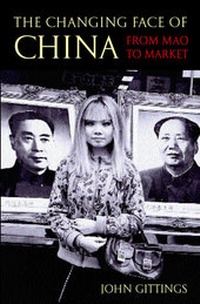
The Changing Face of China
From Mao to Market
Published on 1. October 2005
Book
Hardback
384 pages
978-0-19-280612-3 (ISBN)
Description
Where is China heading in the 21st century? Can its Communist Party survive or is it being challenged by growing inequality and unrest? Will the US and China cooperate or compete in a dangerous future? Will China's economic boom be brought to a halt by environmental catastrophe? In this highly readable account, John Gittings provides the essential information to help answer these vital questions for the world. In the 60 years since Mao Zedong took the road to victory, China has undergone not one but two revolutions. The first swept away the old corrupt society and sought to build a 'spotless' new socialism behind closed doors; the second since Mao's death has focused on an economic agenda which accepts the goals of global capitalism. From Mao to the global market, Gittings charts this complex but epic tale and concludes with some hard questions for the future.
Reviews / Votes
This is a book that deserves to be read widely. Gittings knows his China, and we can all be the wiser for reading him... this book provides us with a wealth of knowledge and experience. Martin Jacques, The Guardian no book on China has so effectively set out, analysed, reflected upon and finally summarised the great Chinese conundrum as intelligently and objectively as Gittings. A piece of classic scholarship. Geoffrey Goodman, Tribune Magisterial... Impressive... David Rennie, Daily TelegraphMore details
Language
English
Place of publication
Oxford
United Kingdom
Illustrations
8 s/w Bildtafeln
8 black and white plates
Dimensions
Height: 234 mm
Width: 156 mm
ISBN-13
978-0-19-280612-3 (9780192806123)
Copyright in bibliographic data and cover images is held by Nielsen Book Services Limited or by the publishers or by their respective licensors: all rights reserved.
Schweitzer Classification
Content
1. Introduction: The 'New China'; 2. Search for Socialism: from Liberation to Utopia; 3. Mao Zedong versus the Party: from cult to Cultural Revolution; 4. The Rebel Alternative: from 1919 to the Red Guards; 5. Second Cultural Revolution: the abortive Great Debate; 6. Economics in Command: the modernization of China; 7. Peasant China Transformed: the rise of rural enterprise; 8. The Growth of Dissent: poets and democracy; 9. The Party under Pressure: reform and reaction; 10. The Scholars Speak Out: humanism or bourgeios liberalism?; 11. The Door Opens: foreign trade and economic zones; 12. Tiananmen Square, 1989: turning-point for China; 13. Into the New Millennium: China transformed; 14. China and the World: from Mao to market; Chronology; China's Political Leaders; Bibliography