

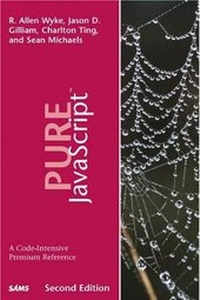
Pure JavaScript
2nd Edition
Published on 15. August 2001
Book
Mixed media product
1616 pages
978-0-672-32141-2 (ISBN)
Description
Pure JavaScript, Second Edition is a substantial and focused reference for experienced Web developers. This book begins with an accelerated introduction to the newest features of JavaScript so that experienced Web developers can quickly understand the concepts of JavaScript and begin developing their own JavaScript solutions immediately.
Pure JavaScript, Second Edition contains concise descriptions of JavaScript forms, cookies, windows, and layers. Beyond the brief descriptions and short syntax snippets found in most references, this book also provides real-life, well-commented JavaScript examples for each documented object, property, method, and event handler. This not only helps the reader's understanding of the syntax, but also provides a contextual aid in determining how and why a specific object or method may be used. It also includes a special reference section dedicated to server-side JavaScript, coverage of JScript and Active Scripting, and a complete reference to browser-supported JavaScript.
Pure JavaScript, Second Edition contains concise descriptions of JavaScript forms, cookies, windows, and layers. Beyond the brief descriptions and short syntax snippets found in most references, this book also provides real-life, well-commented JavaScript examples for each documented object, property, method, and event handler. This not only helps the reader's understanding of the syntax, but also provides a contextual aid in determining how and why a specific object or method may be used. It also includes a special reference section dedicated to server-side JavaScript, coverage of JScript and Active Scripting, and a complete reference to browser-supported JavaScript.
More details
Edition
2nd edition
Language
English
Place of publication
Indianapolis
United States
Publishing group
Pearson Education (US)
Target group
College/higher education
Illustrations
illustrations
ISBN-13
978-0-672-32141-2 (9780672321412)
Copyright in bibliographic data and cover images is held by Nielsen Book Services Limited or by the publishers or by their respective licensors: all rights reserved.
Schweitzer Classification
Other editions
Previous edition
Jason D. Gilliam | R. Allen Wyke | Charlton Ting
Pure JavaScript
Book
08/1999
Sams Publishing
€31.57
Article exhausted; check for reprint
Persons
R. Allen Wyke, of Durham, North Carolina is vice president of Research and Development at the eMarketing solutions company Engage, where he works with product managers, product marketing, and engineering to help ensure that their products have the proper vision and direction in both online and offline worlds. He has also developed intranet Web pages for a leading telecommunications and networking company, as well as worked on several Internet sites.
Wyke is the author of seven books on various Internet technologies including Perl, JavaScript, and PHP. In the past, he has also written the monthly Webmaster column for SunWorld, and a weekly article, "Integrating Windows and Unix," for ITworld.com.
Jason D. Gilliam is a software developer at ichat, Inc. At ichat, he develops Web-based chat and discussion group software using C++, JavaScript, HTML, and various other Internet technologies. In addition to his work at ichat, he has developed intranet Web pages and numerous C++ applications for a leading telecommunications company and has worked on several Internet sites for other organizations. Gilliam is also a contributing author to JavaScript Unleashed, Third Edition. He holds a bachelorOs degree in Computer Engineering from North Carolina State University. Jason and his wife live in Cary, North Carolina.
Charlton Ting, of Vienna, Virginia is a software engineer for KOZ Inc who began programming in JavaScript with its first beta release. He has worked extensively with many Internet technologies while developing Internet telephony solutions at Lucent Technologies. His programming experience includes a variety of languages such as Java, C++, Smalltalk, Perl, HTML, XML, and Pascal. Ting holds degrees in Computer Engineering and Electrical Engineering from North Carolina State University.
Sean Michaels is a software engineer at Avesair, Inc. where he designs and implements next generation mobile commerce applications. He has been in the Internet space since 1994 and has a depth of experience in developing highly distributed fault tolerant applications. He has used Java, C++, and XML extensively over the years. Previously, he coauthored the Official Netscape ONE book and the Official Netscape Technologies Developer Guide from Netscape Press. Michaels holds a degree in Latin from Millsaps College in Jackson, MS and a degree in Computer Science from Mississippi College.
Wyke is the author of seven books on various Internet technologies including Perl, JavaScript, and PHP. In the past, he has also written the monthly Webmaster column for SunWorld, and a weekly article, "Integrating Windows and Unix," for ITworld.com.
Jason D. Gilliam is a software developer at ichat, Inc. At ichat, he develops Web-based chat and discussion group software using C++, JavaScript, HTML, and various other Internet technologies. In addition to his work at ichat, he has developed intranet Web pages and numerous C++ applications for a leading telecommunications company and has worked on several Internet sites for other organizations. Gilliam is also a contributing author to JavaScript Unleashed, Third Edition. He holds a bachelorOs degree in Computer Engineering from North Carolina State University. Jason and his wife live in Cary, North Carolina.
Charlton Ting, of Vienna, Virginia is a software engineer for KOZ Inc who began programming in JavaScript with its first beta release. He has worked extensively with many Internet technologies while developing Internet telephony solutions at Lucent Technologies. His programming experience includes a variety of languages such as Java, C++, Smalltalk, Perl, HTML, XML, and Pascal. Ting holds degrees in Computer Engineering and Electrical Engineering from North Carolina State University.
Sean Michaels is a software engineer at Avesair, Inc. where he designs and implements next generation mobile commerce applications. He has been in the Internet space since 1994 and has a depth of experience in developing highly distributed fault tolerant applications. He has used Java, C++, and XML extensively over the years. Previously, he coauthored the Official Netscape ONE book and the Official Netscape Technologies Developer Guide from Netscape Press. Michaels holds a degree in Latin from Millsaps College in Jackson, MS and a degree in Computer Science from Mississippi College.
Content
Introduction.
I. A PROGRAMMER'S OVERVIEW OF JAVASCRIPT.
1. What Is JavaScript to a Programmer?
Welcome to JavaScript. Object-Based Technology. Object-Oriented Programming. Security. Advantages of JavaScript. When to Use JavaScript. JavaScript Resources. Moving On.
2. Details of the Language.
Things to Know about JavaScript Syntax. Data Types and Variables. Operators. Loops and Conditionals. Functions. Moving On.
II. PROGRAMMING IN JAVASCRIPT.
3. Programming Techniques.
Pattern Matching. Events and Event Handlers. Exceptions. Debugging. Moving On.
4. Client-Side Scripting.
Supporting Browsers and Their Issues. Extended Browser Functionality. Form Processing. Cookie Handling. Windows in Action. Dynamic Documents. XML-Based User Interface Language (XUL). Moving On.
5. JavaScript on the Server-Side.
How Does Server-Side Differ from Client-Side? Netscape's Server-Side JavaScript. Microsoft's ASP Environment. Uses of Server-Side JavaScript. Moving On.
6. Windows Scripting.
Windows Script Host. Windows Script Components. Remote Scripting. Moving On.
III. JAVASCRIPT REFERENCE.
7. Core Language.
8. Client-Side.
9. Server-Side
Index. CD-ROM Only Chapters.
10. DOM Core.
11. DOM HTML.
12. DOM Events
13. DOM CSS.
14. JScript RunTime.
15. Windows Script Host.
I. A PROGRAMMER'S OVERVIEW OF JAVASCRIPT.
1. What Is JavaScript to a Programmer?
Welcome to JavaScript. Object-Based Technology. Object-Oriented Programming. Security. Advantages of JavaScript. When to Use JavaScript. JavaScript Resources. Moving On.
2. Details of the Language.
Things to Know about JavaScript Syntax. Data Types and Variables. Operators. Loops and Conditionals. Functions. Moving On.
II. PROGRAMMING IN JAVASCRIPT.
3. Programming Techniques.
Pattern Matching. Events and Event Handlers. Exceptions. Debugging. Moving On.
4. Client-Side Scripting.
Supporting Browsers and Their Issues. Extended Browser Functionality. Form Processing. Cookie Handling. Windows in Action. Dynamic Documents. XML-Based User Interface Language (XUL). Moving On.
5. JavaScript on the Server-Side.
How Does Server-Side Differ from Client-Side? Netscape's Server-Side JavaScript. Microsoft's ASP Environment. Uses of Server-Side JavaScript. Moving On.
6. Windows Scripting.
Windows Script Host. Windows Script Components. Remote Scripting. Moving On.
III. JAVASCRIPT REFERENCE.
7. Core Language.
8. Client-Side.
9. Server-Side
Index. CD-ROM Only Chapters.
10. DOM Core.
11. DOM HTML.
12. DOM Events
13. DOM CSS.
14. JScript RunTime.
15. Windows Script Host.