

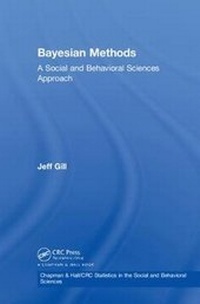
Bayesian Methods
A Social and Behavioral Sciences Approach
1st Edition
Published on 29. May 2002
Book
Hardback
480 pages
978-1-58488-288-6 (ISBN)
Description
Despite increasing interest in Bayesian approaches, especially across the social sciences, it has been virtually impossible to find a text that introduces Bayesian data analysis in a manner accessible to social science students. The Bayesian paradigm is ideally suited to the type of data analysis they will have to perform, but the associated mathematics can be daunting.
Bayesian Methods: A Social and Behavioral Sciences Approach presents the basic principles of Bayesian statistics in a treatment designed specifically for students in the social sciences and related fields. Requiring few prerequisites, it first introduces Bayesian statistics and inference with detailed descriptions of setting up a probability model, specifying prior distributions, calculating a posterior distribution, and describing the results. This is followed by explicit guidance on assessing model quality and model fit using various diagnostic techniques and empirical summaries. Finally, it introduces hierarchical models within the Bayesian context, which leads naturally to Markov Chain Monte Carlo computing techniques and other numerical methods.
The author emphasizes practical computing issues, includes specific details for Bayesian model building and testing, and uses the freely available R and BUGS software for examples and exercise problems. The result is an eminently practical text that is comprehensive, rigorous, and ideally suited to teaching future empirical social scientists.
Bayesian Methods: A Social and Behavioral Sciences Approach presents the basic principles of Bayesian statistics in a treatment designed specifically for students in the social sciences and related fields. Requiring few prerequisites, it first introduces Bayesian statistics and inference with detailed descriptions of setting up a probability model, specifying prior distributions, calculating a posterior distribution, and describing the results. This is followed by explicit guidance on assessing model quality and model fit using various diagnostic techniques and empirical summaries. Finally, it introduces hierarchical models within the Bayesian context, which leads naturally to Markov Chain Monte Carlo computing techniques and other numerical methods.
The author emphasizes practical computing issues, includes specific details for Bayesian model building and testing, and uses the freely available R and BUGS software for examples and exercise problems. The result is an eminently practical text that is comprehensive, rigorous, and ideally suited to teaching future empirical social scientists.
More details
Series
Language
English
Place of publication
Bosa Roca
United States
Publishing group
Taylor & Francis Inc
Target group
College/higher education
Professional and scholarly
Students, researchers, and practitioners in the social and behavioral sciences
Illustrations
24 s/w Tabellen, 27 s/w Abbildungen
24 Tables, black and white; 27 Illustrations, black and white
Dimensions
Height: 235 mm
Width: 156 mm
Weight
785 gr
ISBN-13
978-1-58488-288-6 (9781584882886)
Copyright in bibliographic data and cover images is held by Nielsen Book Services Limited or by the publishers or by their respective licensors: all rights reserved.
Schweitzer Classification
Other editions
New editions
Book
11/2007
2nd Edition
Chapman & Hall/CRC
€99.22
Article exhausted; check for reprint
Person
Content
BACKGROUND AND INTRODUCTION
Introduction
Motivation and Justification
Why Are We Uncertain about Probability
Bayes Law
Bayes Law and Conditional Inference
Historical Comments
The Scientific Process in Our Social Sciences
LIKELIHOOD INFERENCE AND THE GENERALIZED LINEAR MODEL
Motivation
Likelihood Theory and Estimation
The Generalized Linear Model
Numerical Maximum Likelihood
Advanced Topics
THE BAYESIAN SETUP
The Basic Framework
Context and Controversy
Rivals for Power
Example: The Timing of Polls
THE NORMAL AND STUDENT'S-T MODELS
Why Be Normal
The Normal Model with Variance Known
The Normal Model with Mean Known
Multivariate Normal Model When m and S Are Both Unknown
Final Normal Comments
The Students-t Model
Advanced Topics
THE BAYESIAN PRIOR
A Prior Discussion of Priors
A Plethora of Priors
ASSESSING MODEL QUALITY
Motivation
The Bayesian Linear Regression Model
Example: The 2000 US Election in Palm Beach County
Sensitivity Analysis
Robustness Evaluation
Comparing Data to the Posterior Predictive Distribution
Concluding Remarks
Advanced Topics
BAYESIAN HYPOTHESIS TESTING AND THE BAYES FACTOR
Motivation
Bayesian Inference and Hypothesis Testing
The Bayes Factor as Evidence
The Bayesian Information Criterion
Things about the Bayes Factor That Do Not Work
Concluding Remarks
Advanced Topics
BAYESIAN POSTERIOR SIMULATION
Background
Basic Monte Carlo Integration
Rejection Sampling
Classical Numerical Integration
Importance Sampling/Sampling Importance Resampling
Mode Finding and the EM Algorithm
Concluding Remarks
Advanced Topics
BASICS OF MARKOV CHAIN MONTE CARLO
Who is Markov and What is He Doing with Chains?
General Properties of Markov Chains
The Gibbs Sampler
The Metropolis-Hastings Algorithm
Data Augmentation
Practical Considerations and Admonitions
Historical Comments
BAYESIAN HIERARCHICAL MODELS
Introduction to Hierarchical Models
A Poisson-Gamma Hierarchical Model
The Role of Priors and Hyperpriors
Specifying Hierarchical Models
Exchangeability
Computational Issues
Advanced Topics
PRACTICAL MARKOV CHAIN MONTE CARLO
The Problem of Assessing Convergence
Model Checking and Assessment
Improving Mixing and Convergence
Hybrid Markov Chains
Answers to the Really Practical Questions
Advanced Topics
Each chapter also contains References and Exercises
Introduction
Motivation and Justification
Why Are We Uncertain about Probability
Bayes Law
Bayes Law and Conditional Inference
Historical Comments
The Scientific Process in Our Social Sciences
LIKELIHOOD INFERENCE AND THE GENERALIZED LINEAR MODEL
Motivation
Likelihood Theory and Estimation
The Generalized Linear Model
Numerical Maximum Likelihood
Advanced Topics
THE BAYESIAN SETUP
The Basic Framework
Context and Controversy
Rivals for Power
Example: The Timing of Polls
THE NORMAL AND STUDENT'S-T MODELS
Why Be Normal
The Normal Model with Variance Known
The Normal Model with Mean Known
Multivariate Normal Model When m and S Are Both Unknown
Final Normal Comments
The Students-t Model
Advanced Topics
THE BAYESIAN PRIOR
A Prior Discussion of Priors
A Plethora of Priors
ASSESSING MODEL QUALITY
Motivation
The Bayesian Linear Regression Model
Example: The 2000 US Election in Palm Beach County
Sensitivity Analysis
Robustness Evaluation
Comparing Data to the Posterior Predictive Distribution
Concluding Remarks
Advanced Topics
BAYESIAN HYPOTHESIS TESTING AND THE BAYES FACTOR
Motivation
Bayesian Inference and Hypothesis Testing
The Bayes Factor as Evidence
The Bayesian Information Criterion
Things about the Bayes Factor That Do Not Work
Concluding Remarks
Advanced Topics
BAYESIAN POSTERIOR SIMULATION
Background
Basic Monte Carlo Integration
Rejection Sampling
Classical Numerical Integration
Importance Sampling/Sampling Importance Resampling
Mode Finding and the EM Algorithm
Concluding Remarks
Advanced Topics
BASICS OF MARKOV CHAIN MONTE CARLO
Who is Markov and What is He Doing with Chains?
General Properties of Markov Chains
The Gibbs Sampler
The Metropolis-Hastings Algorithm
Data Augmentation
Practical Considerations and Admonitions
Historical Comments
BAYESIAN HIERARCHICAL MODELS
Introduction to Hierarchical Models
A Poisson-Gamma Hierarchical Model
The Role of Priors and Hyperpriors
Specifying Hierarchical Models
Exchangeability
Computational Issues
Advanced Topics
PRACTICAL MARKOV CHAIN MONTE CARLO
The Problem of Assessing Convergence
Model Checking and Assessment
Improving Mixing and Convergence
Hybrid Markov Chains
Answers to the Really Practical Questions
Advanced Topics
Each chapter also contains References and Exercises