

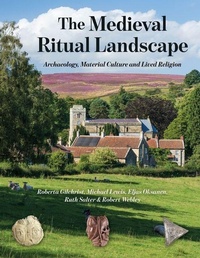
The Medieval Ritual Landscape
Archaeology, Material Culture and Lived Religion
Will be published approx. on 24. September 2027
Book
Hardback
400 pages
979-8-88857-265-8 (ISBN)
Description
This monograph reports on the Medieval Ritual Landscape project (MeRit), a collaboration between the University of Reading and the British Museum, funded by the AHRC. It brings novel sources of evidence and methods of analysis to the investigation of medieval lived religion, revealing the deep history of ritual practices performed by ordinary people as part of their everyday lives. The focus is on later medieval England (mid-11th to mid-16th century).
The key source of evidence comprises public finds reported to the Portable Antiquities Scheme (PAS) mainly by metal-detectorists who collaborate with archaeologists in recording evidence that would otherwise be lost. In England and Wales, c. 337,000 medieval finds and their find-spots were reported between 1997 and 2023, when PAS data was uploaded to the MeRit database. Little previous research has been conducted on later medieval PAS finds particularly from the perspective of religious beliefs. This untapped archaeological resource affords a unique opportunity to extend the study of lived religion beyond the home and church and into the medieval landscape, offering glimpses into regional differences and change over time, including the impacts on ritual practice of extended social and economic events such as the Black Death and the Protestant Reformation. Our interdisciplinary approach integrates archaeological, historical and digital humanities analyses and situates the English material in comparative perspective with wider British and Continental practices.
Archaeological perspectives on medieval lived religion provide original new insights in several respects. First, we can identify everyday religious practices that were seldom, if ever, recorded in medieval documents; second, we can extend the understanding of Christian materiality to a broader range of material culture that was accessible to ordinary people; finally, we can add novel spatial and landscape perspectives to complement historical understanding of religious practices that took place within the confines of the church and the home, revealing the agency of people, objects, landscapes and the divine.
The research was designed to address key questions including: in what ways did the material practices of lived religion intersect with gender, family and community? Can we identify distinctive patterns in the biographies of religious objects? How can archaeological finds be used to identify change over time, responses to social and political upheavals, or major transitions in the material practices of lived religion? To what extent did North-western Europe share a common repertoire of medieval religious objects and ritual practices?
The key source of evidence comprises public finds reported to the Portable Antiquities Scheme (PAS) mainly by metal-detectorists who collaborate with archaeologists in recording evidence that would otherwise be lost. In England and Wales, c. 337,000 medieval finds and their find-spots were reported between 1997 and 2023, when PAS data was uploaded to the MeRit database. Little previous research has been conducted on later medieval PAS finds particularly from the perspective of religious beliefs. This untapped archaeological resource affords a unique opportunity to extend the study of lived religion beyond the home and church and into the medieval landscape, offering glimpses into regional differences and change over time, including the impacts on ritual practice of extended social and economic events such as the Black Death and the Protestant Reformation. Our interdisciplinary approach integrates archaeological, historical and digital humanities analyses and situates the English material in comparative perspective with wider British and Continental practices.
Archaeological perspectives on medieval lived religion provide original new insights in several respects. First, we can identify everyday religious practices that were seldom, if ever, recorded in medieval documents; second, we can extend the understanding of Christian materiality to a broader range of material culture that was accessible to ordinary people; finally, we can add novel spatial and landscape perspectives to complement historical understanding of religious practices that took place within the confines of the church and the home, revealing the agency of people, objects, landscapes and the divine.
The research was designed to address key questions including: in what ways did the material practices of lived religion intersect with gender, family and community? Can we identify distinctive patterns in the biographies of religious objects? How can archaeological finds be used to identify change over time, responses to social and political upheavals, or major transitions in the material practices of lived religion? To what extent did North-western Europe share a common repertoire of medieval religious objects and ritual practices?
More details
Language
English
Place of publication
United States
Target group
Professional and scholarly
Product notice
sewn/stitched
Cloth over boards
Illustrations
250 illus mostly colour
Dimensions
Height: 280 mm
Width: 216 mm
ISBN-13
979-8-88857-265-8 (9798888572658)
Copyright in bibliographic data and cover images is held by Nielsen Book Services Limited or by the publishers or by their respective licensors: all rights reserved.
Schweitzer Classification
Persons
Roberta Gilchrist is Professor of Archaeology at the University of Reading, a Fellow of the British Academy, the Society of Antiquaries and an Honorary Fellow of Jesus College, Cambridge. Her research focuses on the archaeology of medieval religion, gender, magic, burial and religious communities, including detailed studies of Glastonbury Abbey and Norwich Cathedral. Michael Lewis is Head of Portable Antiquities & Treasure at the British Museum, a Visiting Professor at the universities of Exeter, Helsinki and Reading, and a Fellow of the Society of Antiquaries of London. His personal research focuses on material culture related to medieval religion and everyday life. Eljas Oksanen is a medieval historian and archaeologist specialising in digital humanities and the application of quantitative and data science methodologies. He holds a PhD from the University of Cambridge and is Adjunct Professor in Archaeology at the University of Helsinki. Ruth Salter is Lecturer in Medieval History at the University of Reading. Her research focuses on the high Middle Ages and on experiences of health, ill health, and healing, including miraculous cures, medieval lived religion, medieval women and childhood. Robert Webley holds a PhD from the University of York and has worked extensively with the Portable Antiquities Scheme. He is an expert on archaeological small finds with research interests in medieval material culture, especially religious and equestrian metal artefacts.
Content
Part 1: The Material Study of Lived Religion: Archaeological and Historical Perspectives
1. Medieval Lived Religion: Materiality, Agency and Landscape
2. Historical Perspectives: Documentary Sources Case Study
3. Archaeological Perspectives: York and North Yorkshire Case Study
Part 2: Medieval Religious Objects: Public Finds Perspectives on Lived Religion
4. Introduction to Public Finds
5. Religious Objects and their Material Worlds: Object Case Studies
1) Pilgrim Signs and Souvenirs
2) Devotional Objects
3) Finger-rings
4) Everyday, Personal Objects with Devotional Inscriptions and Imagery
5) Ecclesiastical Objects
6) Papal Bullae
7) Folded Numismatica and Paranumismatica
6. Comparative Analyses Across Object Categories
7. Comparative Analyses with Public Finds in Northwest Europe
Part 3: The Medieval Ritual Landscape: Spatial Perspectives on Lived Religion
8. Introduction to Spatial Statistical Analyses of Medieval Public Finds
9. Ritual Movement Across the Landscape
10. Ritual Reuse: Topography and Persistence
11. Intentional Deposition as Ritual Place-making
Part 4: Discussion and Conclusions
Part 5: Bibliography and Appendices
The MeRit Database/Archive
1. Medieval Lived Religion: Materiality, Agency and Landscape
2. Historical Perspectives: Documentary Sources Case Study
3. Archaeological Perspectives: York and North Yorkshire Case Study
Part 2: Medieval Religious Objects: Public Finds Perspectives on Lived Religion
4. Introduction to Public Finds
5. Religious Objects and their Material Worlds: Object Case Studies
1) Pilgrim Signs and Souvenirs
2) Devotional Objects
3) Finger-rings
4) Everyday, Personal Objects with Devotional Inscriptions and Imagery
5) Ecclesiastical Objects
6) Papal Bullae
7) Folded Numismatica and Paranumismatica
6. Comparative Analyses Across Object Categories
7. Comparative Analyses with Public Finds in Northwest Europe
Part 3: The Medieval Ritual Landscape: Spatial Perspectives on Lived Religion
8. Introduction to Spatial Statistical Analyses of Medieval Public Finds
9. Ritual Movement Across the Landscape
10. Ritual Reuse: Topography and Persistence
11. Intentional Deposition as Ritual Place-making
Part 4: Discussion and Conclusions
Part 5: Bibliography and Appendices
The MeRit Database/Archive