

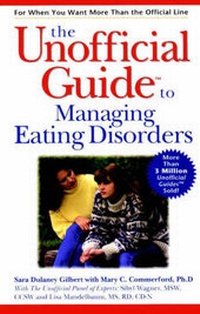
The Unofficial Guide to Eating Disorders
Published on 15. January 2000
Book
Paperback/Softback
304 pages
978-0-02-862913-1 (ISBN)
Description
More than seven million women and one million men in the United States are affected with an eating disorder, including anorexia nervosa, bulimia, binge eating, and compulsive exercise. Forty percent of third grade girls said that they were dieting to lose weight; among fifth graders, that figure climbs to an alarming 75 per cent. Eating disorders also affect one in four college-age women, and 10 per cent of adult women. The Unofficial Guide to Managing Eating Disorders covers the medical and the psychological angles, and readers learn here how to be proactive in identifying the problem and in finding out the methods that work for overcoming eating disorders in their families.
Such information revealed includes: The different kinds of eating disorders illuminated and explained How to find and select a good treatment team: internist, nutritionist, and psychotherapist The lowdown on programs, therapies, and treatments The current antidepressants used to treat anorexia and bulimia analyzed How joining team sports can boost a girl's self-esteem and help combat eating disorders How not to substitute food for attention and how to balance nutrition and weight with a healthy body image How interaction, support, and encouragement from families and friends can play an important role in the success of the treatment program
Such information revealed includes: The different kinds of eating disorders illuminated and explained How to find and select a good treatment team: internist, nutritionist, and psychotherapist The lowdown on programs, therapies, and treatments The current antidepressants used to treat anorexia and bulimia analyzed How joining team sports can boost a girl's self-esteem and help combat eating disorders How not to substitute food for attention and how to balance nutrition and weight with a healthy body image How interaction, support, and encouragement from families and friends can play an important role in the success of the treatment program
More details
Series
Language
English
Place of publication
Foster City
United States
Publishing group
John Wiley & Sons Inc
Product notice
Paperback (UK-trade)
Dimensions
Height: 209 mm
Width: 133 mm
Weight
283 gr
ISBN-13
978-0-02-862913-1 (9780028629131)
Copyright in bibliographic data and cover images is held by Nielsen Book Services Limited or by the publishers or by their respective licensors: all rights reserved.
Schweitzer Classification
Persons
About the Authors Sara Dulaney Gilbert is the author of 25 self--help and useful--service books including, Fat Free and You are What you Eat. She has become a specialist in helping readers of all ages find their way through personal and physical changes and major life events. She has worked extensively in the field of higher education and holds a Master's degree from the Graduate School of Education at New York University. She resides in Cold Spring, New York. Mary C. Commerford, Ph.D., a clinical psychologist, is the coordinator of the Eating Disorders Treatment Program at New York University. Prior to that, she was on the faculty at Cornell University Medical College, where she was involved with both treatment and research in eating disorders. She is the author of articles published in academic journals such as The International Journal of Eating Disorders and Eating Disorders: Treatment and Prevention. In addition, Dr. Commerford maintains a private practice in Manhattan.
Content
The Unofficial Guide Reader's Bill of Rights.; The Unofficial Guide Panel of Experts.; Introduction.; I. Food, Body Image, and Self--Esteem.; 1. The Causes of Eating Disorders.; Body Image: A Reflection of Inner Feelings.; Narrowing the Profile.; Overwhelming Drives.; A Crazy Kind of Sense.; Pathological Patterns.; Hungry for What?; The Power of the Family.; Family Messages and Self--Esteem.; Socially Acceptable Disorders.; The Dieting Dilemma.; Peer Pressure.; Screening Images.; Just the Facts.; 2. Body Image.; Who Says You're Too Fat or Too Thin?; Exploding the Myths About Weight.; Destroying Distorted Body Images.; Equal Opportunity Impact.; Never Too Young to Feel "Too Fat".; When the Mirror Lies: Negative Body Image.; Telltale Signs.; Reality Check.; Just the Facts.; 3. Our Relationship with Food.; Mixed Messages About Food.; Market--Driven Eating.; Disordered Eating Patterns.; Using Food as a Crutch.; Using Food as a Defense.; How Dieting Triggers Food Disorders.; How the Obsession Spreads.; Four Degrees of Separation.; The Hidden Game Plan: It's Not About Food.; Why Food?; Drawing the Line.; Just the Facts.; II. Eating Disorders.; 4. Anorexia Nervosa.; The Doctors' Definition.; What Anorexia Looks Like.; What Anorexia Feels Like.; Physical Realities.; Personal Effects.; When It Isn't Anorexia.; Warning Signs of Anorexia.; Who Has Anorexia?; Psychological Profile.; The Family Connection.; Emotional Components.; Two Personal Views.; Just the Facts.; 5. Bulimia Nervosa.; The Doctors' Definition.; What Bulimia Looks Like.; The Warning Signs of Bulimia.; The Purging Pattern.; What Bulimia Feels Like.; Physical Consequences.; The Anorexia--Bulimia Connection.; Psychological Patterns.; A Possible Family Link.; Who Has Bulimia?; Two Views from the Inside.; Just the Facts.; 6. Other Eating Disorders.; Binge Eating Disorder.; The Doctors' Definition.; Who's at Risk?; What's Behind BED?; Physical Consequences of Bingeing.; E.D. - Not Otherwise Specified.; Who Has an ED--NOS?; Compulsive Overeating.; Night Eating and Other Disordered Eating Patterns.; Common Threads.; The Diabetes Connection.; So What Is a Normal Eating Pattern?; Familiar Stories.; Just the Facts.; 7. Exercise Disorders.; Exercise Is Good, Isn't It?; Exercise Assets.; Exercise Liabilities.; When Exercise Becomes Too Much of a Good Thing.; An Unhealthy Relationship.; Is It an Addiction?; Over the Line.; The Connection with Eating Disorders.; Who Overdoes It?; Eating Disorders in Athletes.; Different Risks for Male and Female Athletes.; The Inside Scoop.; Just the Facts.; III. Responding to Danger Signals.; 8. How to Read the Telltale Signs.; Why Clues Are Hidden.; The Power of Denial.; The Culture of Food Control.; Tricky Symptoms.; Who's at Risk?; Personal Characteristics.; Family Background.; Clues to Pay Attention To.; Beyond Normal.; Just the Facts.; 9. What to Do If Someone You Know Has an Eating Disorder.; Gaining Awareness.; How to Relate to Someone Who Has an Eating Disorder.; What Doesn't Work.; Choosing Another Approach.; Things You Can Do.; Be Direct.; Be Cautious.; Taking Immediate Action.; Stage by Stage.; Reading Matters.; Blunting a Disorder's Dangerous Effects.; Getting into Treatment.; Getting Help.; Helping Yourself.; Being There: Living with Someone Who Has an Eating Disorder.; Just the Facts.; IV. Treatments for Eating Disorders.; 10. The Treatment Process.; An Overview of Treatments.; Methods of Treatment.; How the Treatments Work.; Treatment Goals.; Emergency Treatment.; Tailoring Therapy to the Individual.; Entering Treatment.; Psychotherapy.; Cognitive Behavior Therapy (CBT).; Other Psychological Approaches to Eating Disorders.; Drug Therapies.; Feeling Full.; Dealing with the Scale.; Collaborating with a Dietitian.; Challenges to Treatment.; Denial.; Personal Progress.; Signs of Recovery.; An Inside Look.; Side Benefits.; Just the Facts.; 11. Selecting Treatment.; Choosing an Approach to Therapy.; Individual and Group Approaches to Therapy.; Matchups.; Evaluating the Therapist.; Questions to Ask.; Networking.; Rating the Resources.; How Much Will It Cost?; Money Matters.; Price--Conscious Treatments.; Self--Help.; Warnings.; A Positive Spin.; Just the Facts.; 12. Keeping On.; Expanding the Goals of Recovery.; Getting Back to "Normal".; Family Therapy.; Relapse Prevention.; Taking Life Easy.; Steps Ahead.; What It Feels Like.; Beyond Coping.; Just the Facts.; V. Living with Someone Who Has an Eating Disorder.; 13. How to Help Someone You Love.; Separating Feelings from Facts.; Taking Action.; Calming Down.; First Steps.; What to Do Over the Long Run.; Just for Parents.; Managing Daily Life.; Managing Mealtimes.; Bottom--Line Protections.; More Matter--of--Factness.; In Case of a Relapse.; What Is Gained.; What Recovery Feels Like.; Just the Facts.; 14. Helping Yourself.; Why You Need Help.; A Life of Its Own.; Why What You Can't Do Can Hurt You.; The Family Balance.; Would Therapy Help?; Untangling Knots.; Choosing a Course for the Family.; Focusing on Yourself.; Letting Go.; What's on the Web?; From the Inside.; Just the Facts.; 15. How to Prevent Eating Disorders.; The Parent Factor.; Changing the Message.; Listening to Yourself.; Do What I Do.; Healthier Messages.; Keeping Food Rules Neutral.; It's Not About Food.; Patterns to Watch.; Good Health Is a Family Affair - Enjoy It!; At the Table.; Getting Everyone into the Kitchen.; Making Exercise Fun.; Just the Facts.; 16. In Balance.; Hunger and Satiety.; Why Dieting Doesn't Work.; Set Point.; Off Balance.; More Chemical Matters.; The Basics of a Healthful Diet.; Positive Eating Strategies.; The Right Kind of Attention.; Natural Regulation.; Building a Diet on Good Nutrition.; The Food Guide Pyramid.; Balancing Food Groups.; Nondieting Guidelines.; Are All Calories Alike?; How Many Calories Do You Need?; Why It's Important to Plan Meals.; Determining an Ideal Weight.; Body Mass Index (BMI).; The Exercise Factor.; Just the Facts.; 17. Looking Ahead.; Improving the Outlook.; Facts to Remember.; Keys to Recovery.; What It Means to Recover.; From the Beginning.; The Value of Support.; Just the Facts.; A. Glossary.; B. Resource Guide.; Index.