


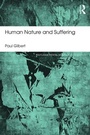
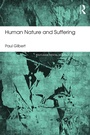
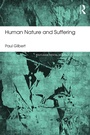
Human Nature and Suffering
1st Edition
Published on 10. August 2016
Book
Hardback
404 pages
978-1-138-95475-5 (ISBN)
Description
Human Nature and Suffering is a profound comment on the human condition, from the perspective of evolutionary psychology. Paul Gilbert explores the implications of humans as evolved social animals, suggesting that evolution has given rise to a varied set of social competencies, which form the basis of our personal knowledge and understanding.
Gilbert shows how our primitive competencies become modified by experience - both satisfactorily and unsatisfactorily. He highlights how cultural factors may modify and activate many of these primitive competencies, leading to pathology proneness and behaviours that are collectively survival threatening. These varied themes are brought together to indicate how the social construction of self arises from the organization of knowledge encoded within the competencies.
This Classic Edition features a new introduction from the author, bringing Gilbert's early work to a new audience. The book will be of interest to clinicians, researchers and historians in the field of psychology.
Gilbert shows how our primitive competencies become modified by experience - both satisfactorily and unsatisfactorily. He highlights how cultural factors may modify and activate many of these primitive competencies, leading to pathology proneness and behaviours that are collectively survival threatening. These varied themes are brought together to indicate how the social construction of self arises from the organization of knowledge encoded within the competencies.
This Classic Edition features a new introduction from the author, bringing Gilbert's early work to a new audience. The book will be of interest to clinicians, researchers and historians in the field of psychology.
Reviews / Votes
"Human Nature and Suffering is a landmark work that sets the stage for decades of research and practice of a psychotherapy better suited to the realities of evolved human motivation and emotion. The re-release of this classic is a godsend for this generation of psychologists and the next." - Dennis Tirch PhD, Founder, The Center for Compassion Focused TherapyMore details
Series
Language
English
Place of publication
London
United Kingdom
Publishing group
Taylor & Francis Ltd
Target group
College/higher education
Professional and scholarly
Postgraduate, Professional, and Professional Practice & Development
Illustrations
10 s/w Zeichnungen, 15 s/w Tabellen
15 Tables, black and white; 10 Line drawings, black and white
Dimensions
Height: 240 mm
Width: 161 mm
Thickness: 28 mm
Weight
816 gr
ISBN-13
978-1-138-95475-5 (9781138954755)
Copyright in bibliographic data and cover images is held by Nielsen Book Services Limited or by the publishers or by their respective licensors: all rights reserved.
Schweitzer Classification
Other editions
Additional editions
Paul Gilbert
Human Nature and Suffering
Book
08/2016
1st Edition
Routledge
€80.65
Shipment within 10-20 days
Person
Paul Gilbert, OBE is Professor of Clinical Psychology at the University of Derby and has been actively involved in research and treating people with shame-based and mood disorders for over 30 years. He is a past President of the British Association for Cognitive and Behavioural Psychotherapy and a fellow of the British Psychological Society. He was awarded the OBE for contributions to mental health in 2011.
Content
Acknowledgments Introduction to Classic Edition 1. Introduction and Overview. 2. A Legacy from the Past: The Role of Human Nature. 3. The Mapping of Human Nature. 4. The Psychobiology of some Basic Mechanisms. 5. The Psychobiology of Peripheral Systems. 6. Care Eliciting and Attachment Strategies. 7. Care Eliciting and Theories of Psychopathology. 8. Care Giving and Nurturance. 9. Disorders of Care Giving. 10. Co-Operation. 11. Co-Operation: Some Blocks and Pathologies. 12. Competition: Status, Power and Dominance. 13. Some Psychopathologies of Power and Dominance. 14. Beyond the Power of Reason. 15. Personal Reflections. Appendices.