

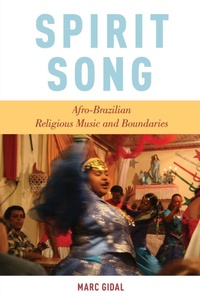
Spirit Song
Afro-Brazilian Religious Music and Boundaries
Published on 18. February 2016
Book
Paperback/Softback
238 pages
978-0-19-936822-8 (ISBN)
Description
In Spirit Song: Afro-Brazilian Religious Music and Boundaries, ethnomusicologist Marc Gidal explains how and why a multi-faith community in southern Brazil uses music to combine and segregate three Afro-Brazilian religions: Umbanda, Quimbanda, and Batuque. Spirit Song will be the first book in any language about the music of Umbanda and its close relative Quimbanda-twentieth-century fusions of European Spiritism, Afro-Brazilian religion, and Folk Catholicism-as well as the first publication in English about the music of the African-derived Batuque religion and "Afro-gaucho" identity, a local term that celebrates the contributions of African descendants to the cowboy culture of southernmost Brazil.
Combining ethnomusicology and symbolic boundary studies, Gidal advances a theory of musical boundary-work: the use of music to reinforce, bridge, or blur boundaries, whether for personal, social, spiritual, or political purposes. The Afro-gaucho religious community uses music and rituals to varisuly promote innovation and egalitarianism in Umbanda and Quimbanda, whereas it reinforces musical preservation and hierarchies in Batuque. Religious and musical leaders carefully restrict the cosmologies, ceremonial sequences, and sung prayers of one religion from affecting the others so as to safeguard Batuque's African heritage. Members of disenfranchised populations have also used the religions as vehicles for empowerment, whether based on race-ethnicity, gender, or religious belief; and innovations in ritual music reflect this activism. Gidal explains these points by describing and interpreting spirit-mediumship rituals and their musical accompaniment, drawing on the perspectives of participants, with video and audio examples available on the book's companion website.
The first book in English to explore music in Afro-Brazilian religions, Spirit Song is a landmark study that will be of interest to ethnomusicologists, anthropologists, and religious studies scholars.
Combining ethnomusicology and symbolic boundary studies, Gidal advances a theory of musical boundary-work: the use of music to reinforce, bridge, or blur boundaries, whether for personal, social, spiritual, or political purposes. The Afro-gaucho religious community uses music and rituals to varisuly promote innovation and egalitarianism in Umbanda and Quimbanda, whereas it reinforces musical preservation and hierarchies in Batuque. Religious and musical leaders carefully restrict the cosmologies, ceremonial sequences, and sung prayers of one religion from affecting the others so as to safeguard Batuque's African heritage. Members of disenfranchised populations have also used the religions as vehicles for empowerment, whether based on race-ethnicity, gender, or religious belief; and innovations in ritual music reflect this activism. Gidal explains these points by describing and interpreting spirit-mediumship rituals and their musical accompaniment, drawing on the perspectives of participants, with video and audio examples available on the book's companion website.
The first book in English to explore music in Afro-Brazilian religions, Spirit Song is a landmark study that will be of interest to ethnomusicologists, anthropologists, and religious studies scholars.
Reviews / Votes
Gidal engages in important theoretical debates about ethnomusicology, race, ethnicity, and the role of music in enforcing boundaries: these debates should be of interest to any scholar attempting to work through the role of music in ritual in a different racial paradigm. * Kariann GoldSchmitt, Music and Letters * Marc Gidal offers a ground-breaking study of the musical traditions of Brazils Afro-Brazilian religions ... The technical aspects of the musical boundary-work he describes should not prevent the student of Afro-Brazilian religions from thoroughly enjoying this book. Gidal has added to our understanding of how these Afro-Brazilian religious traditions clarify their distinct and overlapping histories. This study should be of interest to students of Afro-Brazilian religion, history, ethnography, and anthropology. * Patricia Barker Lerch, Nova Religio *More details
Language
English
Place of publication
New York
United States
Target group
College/higher education
Dimensions
Height: 234 mm
Width: 156 mm
Thickness: 13 mm
Weight
368 gr
ISBN-13
978-0-19-936822-8 (9780199368228)
Copyright in bibliographic data and cover images is held by Nielsen Book Services Limited or by the publishers or by their respective licensors: all rights reserved.
Schweitzer Classification
Other editions
Additional editions
Book
02/2016
Oxford University Press Inc
€185.10
Shipment within 15-20 days
E-Book
01/2016
1st Edition
OUP eBook
€14.49
Available for download
E-Book
01/2016
1st Edition
OUP eBook
€14.49
Available for download
Person
Marc Gidal is Associate Professor of Music and Musicology at Ramapo College of New Jersey. His work has appeared in the journals Ethnomusicology, Ethnomusicology Forum, Latin American Music Review, and The Yearbook for Traditional Music. He holds degrees in ethnomusicology from Harvard and Tufts Universities, and in religious studies from the University of Oregon.
Content
Table of Contents
Acknowledgments
Note on Names
Companion Website
Introduction
1. Ethnic Spiritual Heritage in the Afro-Gaucho Religious Community
2. Music, Mediumship, and Religious Work
3. Musicians and Foundations
4. Drums, Rhythms, and Nations
5. Ritual Music and Innovation in Umbanda
6. Musical Participation, Spiritual Evolution, and the Quimbanda Revival
7. Old Black Spirits, Africa, and Reinventing Umbanda for Social Change
8. Gypsy Soul and an Unconventional Music
Conclusion: Musical Boundary-Work in a Multi-Faith Community
Notes
Glossary
List of Interviews
Bibliography
Index
Acknowledgments
Note on Names
Companion Website
Introduction
1. Ethnic Spiritual Heritage in the Afro-Gaucho Religious Community
2. Music, Mediumship, and Religious Work
3. Musicians and Foundations
4. Drums, Rhythms, and Nations
5. Ritual Music and Innovation in Umbanda
6. Musical Participation, Spiritual Evolution, and the Quimbanda Revival
7. Old Black Spirits, Africa, and Reinventing Umbanda for Social Change
8. Gypsy Soul and an Unconventional Music
Conclusion: Musical Boundary-Work in a Multi-Faith Community
Notes
Glossary
List of Interviews
Bibliography
Index