

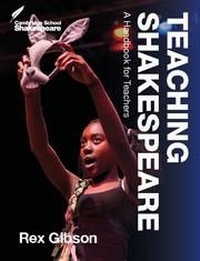
Teaching Shakespeare
A Handbook for Teachers
2nd Edition
Published on 21. April 2016
Book
Paperback/Softback
237 pages
978-1-316-60987-3 (ISBN)
Description
Teaching Shakespeare has been a major contribution to the knowledge and expertise of all teachers of Shakespeare from primary upwards for two decades. This full-colour second edition is in a larger format, updated to reflect modern classroom practice. It includes new contributions by leading practitioners from Shakespeare's Globe, the Shakespeare Schools Festival, the Shakespeare Birthplace Trust and the Cambridge School Shakespeare editorial team. Teaching Shakespeare makes explicit the 'Active Shakespeare' principles which underpin Cambridge School Shakespeare and includes activities and advice to help teachers develop their existing good practice, making the learning of Shakespeare valuable and enjoyable for all involved.
Teaching Shakespeare has been a major contribution to the knowledge and expertise of all teachers of Shakespeare from primary upwards for two decades. This full-colour second edition is in a larger format, updated to reflect modern classroom practice. It includes new contributions by leading practitioners from Shakespeare's Globe, the Shakespeare Schools Festival, the Shakespeare Birthplace Trust and the Cambridge School Shakespeare editorial team. Teaching Shakespeare makes explicit the 'Active Shakespeare' principles which underpin Cambridge School Shakespeare and includes activities and advice to help teachers develop their existing good practice, making the learning of Shakespeare valuable and enjoyable for all involved.
Teaching Shakespeare has been a major contribution to the knowledge and expertise of all teachers of Shakespeare from primary upwards for two decades. This full-colour second edition is in a larger format, updated to reflect modern classroom practice. It includes new contributions by leading practitioners from Shakespeare's Globe, the Shakespeare Schools Festival, the Shakespeare Birthplace Trust and the Cambridge School Shakespeare editorial team. Teaching Shakespeare makes explicit the 'Active Shakespeare' principles which underpin Cambridge School Shakespeare and includes activities and advice to help teachers develop their existing good practice, making the learning of Shakespeare valuable and enjoyable for all involved.
More details
Series
Edition
2nd Revised edition
Language
English
Place of publication
Cambridge
United Kingdom
Target group
Primary & secondary/elementary & high school
Edition type
Revised edition
Product notice
Paperback (trade)
Illustrations
Worked examples or Exercises
Dimensions
Height: 244 mm
Width: 187 mm
Thickness: 12 mm
Weight
467 gr
ISBN-13
978-1-316-60987-3 (9781316609873)
Copyright in bibliographic data and cover images is held by Nielsen Book Services Limited or by the publishers or by their respective licensors: all rights reserved.
Schweitzer Classification
Other editions
Additional editions
Previous edition
Book
02/1998
Cambridge University Press
€41.00
Shipment within 15-20 days
Content
Foreword; Introduction: Active methods; Teaching Shakespeare: an overview; 1. Why teach Shakespeare?: Abiding and familiar concerns; Student development; Language; Otherness; 2. Principles: Treat Shakespeare as a script; Make Shakespeare learner-centred; Shakespeare is social; Shakespeare celebrates imagination; Shakespeare is physical; Make Shakespeare exploratory; Address the distinctive qualities of the play; Choice and variety; Shakespeare and plurality; Negative capability; Shakespeare is about enjoyment; 3. Perspectives: Feminism; Psychoanalysis; Structuralism; Deconstruction; Political perspectives; Reception theory; Using perspectives; 4. Shakespeare's language: Introduction; Dramatic language; Imagery; Personification; Antithesis; Repetition; Rhyme; Lists; Verse; Prose; Rhetoric; Bombast; Hyperbole; Irony; Oxymoron; Puns; Malapropism; Monosyllables; Pronouns; Changing language; Inventing language; Everyday language; Two types of language; The development of Shakespeare's language; The Sonnets; 5. Story: The Story of the play; Enacting the story; Stories in the play; Recapitulating the story; Point of view narratives; Ariel's story; 6. Character: Introduction; Fundamental questions; Complexity of character; Language and character; Introduction to activities; Cast the play; Job interviews; Absent characters; This is your life; Obituaries; Point of view; Hot-seating; Public and private; Props; Free-wheeling associations; List of characters; Ranking characters; Journeys through the play; Relationships; Exploring character; Character types; Character names; 7. Themes: Introduction; Four common themes; Levels; Particular themes; Fathers and daughters; Acting and theatre; 8. Stagecraft: Introduction; Stage directions; Critical incidents; Creating atmosphere; Opening scenes; 9. Active methods: Content; The teacher's role; Organising the classroom; Introduction to activities; Acting a scene; Beginning the play; Sense units; Speaking Shakespeare; Teacher leading; Five investigations; Sections and headlines; Student as director; Point of view: theory; Improvisations; Warm-ups; A memory game; Tableaux; Chroal speaking; Insults; Using films; Trials and inquiries; Writing and design; Sequencing; Shakespeare's life and times; Theatre visits; Staging a Shakespeare play; Shakespeare festivals; Researching the classics; Other resources; 10. Shakespeare for younger students: Introduction; Shakespeare's life and times; Storytelling; Dramatic storytelling; A co-ordinated approach across the curriculum; A Shakespeare term; A puppet Macbeth; 11. Assessment: Process or product? Principles; Student self-assessment; Assessment of performance; Essays; Assessment tasks; Examinations; Evaluating a lesson; Quotations used in the text; Index