

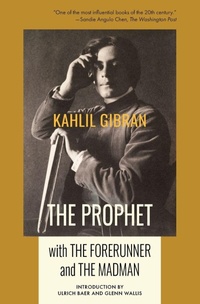
The Prophet with The Forerunner and The Madman
Published on 21. January 2019
Book
Paperback/Softback
170 pages
978-1-7335616-0-0 (ISBN)
Description
This essential trilogy gathers Kahlil Gibran's The Madman (1918), The Forerunner (1920), and his masterpiece, The Prophet (1923). Together these works compound the mesmerizing, heart-haunting effects that have made The Prophet so inspiring for millions. It is probably the most influential and best-selling wisdom book of the last 100 years and remains as relevant today as ever. In The Madman Gibran introduces the themes that preoccupy his subsequent writings-among them truth, love, forgiveness, grief, work, pleasure, death, and freedom. Gibran's second collection of parables and poems, The Forerunner, anticipates The Prophet both in its concerns and its mastery of Gibran's timeless, pure, lyrical style. Approachable, profound, and wise, The Prophet remains a work of singular transcendence.
A new introduction by Ulrich Baer and Glenn Wallis illumines Gibran's beguilingly simple poems and tales, drawing attention to the radical proposal they contain. Also included is a biographical timeline that provides a succinct overview of Gibran's personal life and the key events of his artistic career.
More details
Language
English
Product notice
Paperback (trade)
Unsewn / adhesive bound
Illustrations
Illustrations, black and white
Dimensions
Height: 203 mm
Width: 133 mm
Thickness: 10 mm
Weight
199 gr
ISBN-13
978-1-7335616-0-0 (9781733561600)
Copyright in bibliographic data and cover images is held by Nielsen Book Services Limited or by the publishers or by their respective licensors: all rights reserved.
Schweitzer Classification
Persons
Gibran Khalil Gibran, known in English as Kahlil Gibran, was born on January 6, 1883, in Bsharri, Lebanon, to Kamila Gibran and Khalil Gibran. He immigrated with his family to the United States in the late 19th century, settling in Boston, where his early experiences shaped his multicultural identity. He explored both Arabic and English literary traditions and developed a distinct voice blending Eastern mysticism with Western romanticism. Gibran studied art in Paris and maintained a lifelong commitment to visual expression alongside his writing. His creative output included poetry, essays, parables, and philosophical reflections, characterized by lyrical language and spiritual overtones. He was particularly drawn to themes of love, freedom, sorrow, and the soul s journey, often addressing them through allegorical and symbolic forms. Though often labeled a philosopher, he preferred to be seen as an artist of the heart and spirit. His works gained broad appeal, especially among those seeking emotional and spiritual insight. He died in New York on April 10, 1931, at age 48, and was later buried in his hometown. His legacy continues through his enduring influence on both Middle Eastern and Western literary landscapes.