

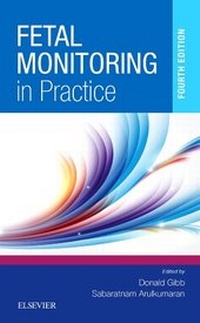
Fetal Monitoring in Practice
4th Edition
Published on 5. May 2017
Book
Paperback/Softback
272 pages
978-0-7020-4348-2 (ISBN)
Description
Prepared by editors of international renown, the latest edition of Fetal Monitoring in Practice has been fully updated throughout and now presents the latest information in colour! Retaining the features that characterised the success of previous editions - an accessible writing style, basic CTG interpretation, use of correct terminology, common pitfalls associated with equipment usage, underlying pathophysiology, clinical trial data and relevant clinical scenarios - new features include an expanded author team to provide an international perspective, the latest guidelines from NICE and FIGO, new and expanded information on clinical assessment and medical litigation, and a new chapter on competency testing in CTG interpretation prior to practice.
Clear and friendly writing style makes a potentially challenging subject straightforward and accessible
Explains the correct use of terminology to help ensure safe and accurate communication
Emphasizes the importance of using monitoring techniques within the context of detailed clinical assessment
Explains the basics of interpretation including the influence of drugs used for pain relief
Explains common pitfalls associated with equipment usage and provides practical advice on how to avoid them
Explains the underlying pathophysiology associated with abnormal changes seen on the CTG
Explains and contextualizes relevant clinical trial data
Clinical scenarios demonstrate common presentations such as breech birth, twin pregnancies, brow presentation, hypertension, and eclampsia
Real CTG traces demonstrate more complex presentations such as prolonged deceleration, placental abruption, and fetal bleeding
Perfect for candidates undertaking the Advanced Training Skills?Module of the RCOGs 'Advanced Labour Ward Practice'
Incorporates the latest guidelines from the National Institute for Health and Care Excellence and the International Federation of Gynecology and Obstetrics
Expanded author team provides an international perspective
Includes new and expanded information on clinical assessment, complications including infection, anaemia and bleeding and medical litigation,
Contains a new chapter on competency testing in CTG interpretation prior to practice
Clear and friendly writing style makes a potentially challenging subject straightforward and accessible
Explains the correct use of terminology to help ensure safe and accurate communication
Emphasizes the importance of using monitoring techniques within the context of detailed clinical assessment
Explains the basics of interpretation including the influence of drugs used for pain relief
Explains common pitfalls associated with equipment usage and provides practical advice on how to avoid them
Explains the underlying pathophysiology associated with abnormal changes seen on the CTG
Explains and contextualizes relevant clinical trial data
Clinical scenarios demonstrate common presentations such as breech birth, twin pregnancies, brow presentation, hypertension, and eclampsia
Real CTG traces demonstrate more complex presentations such as prolonged deceleration, placental abruption, and fetal bleeding
Perfect for candidates undertaking the Advanced Training Skills?Module of the RCOGs 'Advanced Labour Ward Practice'
Incorporates the latest guidelines from the National Institute for Health and Care Excellence and the International Federation of Gynecology and Obstetrics
Expanded author team provides an international perspective
Includes new and expanded information on clinical assessment, complications including infection, anaemia and bleeding and medical litigation,
Contains a new chapter on competency testing in CTG interpretation prior to practice
Reviews / Votes
Amazon Review comments of previous editionThis book is so interesting. I originally purchased it to write an assignment but as I referred to it I would find another interesting bit and get lost in it for another 30 minutes. It will now be my new bible on the delivery suite!
If you are a midwifery student this book is completely worth getting. It is easy to read and explains CTGs in an understandable way. It helps a lot in practice on the acute wards!
This is a 'must have' for all midwives and doctors working in the labour ward environment. It is also an important learning tool for both midwifery and medical students.
This is an excellent book which really helped me with my interpretation of CTGs.
I would highly recommend this book. As a midwifery student I find this book - while detailed - very easy to follow.
More details
Edition
4th edition
Language
English
Place of publication
London
United Kingdom
Publishing group
Elsevier Health Sciences
Target group
College/higher education
Midwives - qualified and in training - and junior obstetricians
Illustrations
200 illustrations; Illustrations
Dimensions
Height: 216 mm
Width: 133 mm
Weight
360 gr
ISBN-13
978-0-7020-4348-2 (9780702043482)
Copyright in bibliographic data and cover images is held by Nielsen Book Services Limited or by the publishers or by their respective licensors: all rights reserved.
Schweitzer Classification
Other editions
New editions
Donald Gibb | Sabaratnam Arulkumaran
Fetal Monitoring in Practice
Book
05/2023
5th Edition
Churchill Livingstone Inc
€46.00
Shipment within 10-15 days
Additional editions
Donald Gibb | Sabaratnam Arulkumaran
Fetal Monitoring in Practice E-Book
Fetal Monitoring in Practice E-Book
E-Book
03/2017
4th Edition
Churchill Livingstone
€35.99
Available for download
Previous edition
Donald Gibb | Sabaratnam Arulkumaran
Fetal Monitoring in Practice
Book
12/2007
3rd Edition
Churchill Livingstone
€40.84
Article exhausted; check for reprint
Persons
Sir Sabaratnam Arulkumaran, PhD, DSc, FRCOG, FRCS, FACOG, Emeritus Professor of Obstetrics and Gynaecology (O&G) of St. George's University, London; Foundation Professor of O&G, University of Nicosia, Visiting Professor, Institute of Global Health Innovation, Imperial College, London; Past President of the Royal College of Obstetricians and Gynaecologists (2007-2010); President: International Federation of Obstetrics & Gynaecology (FIGO) 2012-2015; Head, Dept. of Obstetrics & Gynaecology, St George's University Hospital, London, UK (1997-2013). National award recipient of Knight Bachelor in the UK and Sri Lanka Ranjana in Sri Lanka for services to Medicine.
Content
1 Introduction
2 Clinical assessment and recording
3 Auscultation of the fetal heart rate
4 Electronic fetal monitoring - terminology and Interpretation
5 Pathophysiology of Fetal Heart Rate (FHR)
6 NICE and FIGO guidelines for Interpretation of FHR patterns
7 Antepartum Fetal Surveillance
8 The admission test by cardiotocography or by auscultation
9 Assessment of uterine contractions
10 Oxytocin and fetal heart rate changes
11 Meconium, infection, anaemia, bleeding
12 Cardiotocographic interpretation: additional clinical scenarios
13 Cardiotocographic interpretation: more difficult problems
14 Fetal scalp blood sampling pH and lactate
15 Fetal ECG waveform analysis
16 Medico legal issues with CTG and current strategies to reduce litigation
17 Competency Testing in CTG Interpretation Prior to Practice
2 Clinical assessment and recording
3 Auscultation of the fetal heart rate
4 Electronic fetal monitoring - terminology and Interpretation
5 Pathophysiology of Fetal Heart Rate (FHR)
6 NICE and FIGO guidelines for Interpretation of FHR patterns
7 Antepartum Fetal Surveillance
8 The admission test by cardiotocography or by auscultation
9 Assessment of uterine contractions
10 Oxytocin and fetal heart rate changes
11 Meconium, infection, anaemia, bleeding
12 Cardiotocographic interpretation: additional clinical scenarios
13 Cardiotocographic interpretation: more difficult problems
14 Fetal scalp blood sampling pH and lactate
15 Fetal ECG waveform analysis
16 Medico legal issues with CTG and current strategies to reduce litigation
17 Competency Testing in CTG Interpretation Prior to Practice